




Are you a journalist? Please sign up here for our press releases
Subscribe to our monthly newsletter:









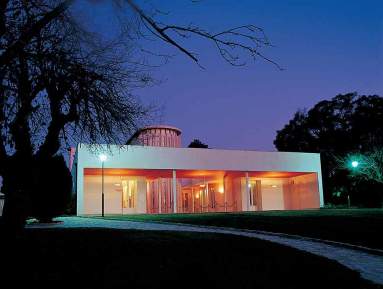
Built in 1936, the Weizmann House was the private residence of Dr. Chaim Weizmann (1874-1952) and his wife Dr. Vera Weizmann (1881-1966). Designed by Erich Mendelsohn (1887-1953), the Weizmann House was his first project in the Land of Israel.
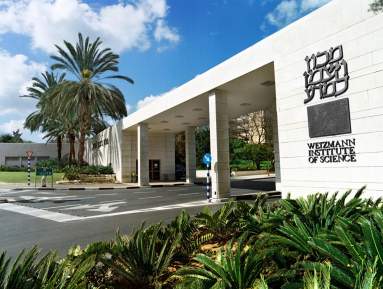
In 1949, on Dr. Chaim Weizmann’s 75th birthday, and with the blessing of the Sieff family, the Sieff Institute was renamed the Weizmann Institute of Science. The new Institute consisted of departments of mathematics, physics, chemistry and life sciences.
Dr. Chaim Weizmann passed away on November 9, 1952, at the age of 78. In accordance with his wishes, he was buried on the estate of his home in Rehovot.

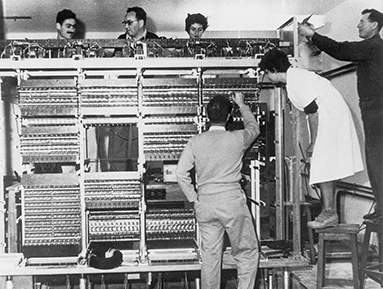
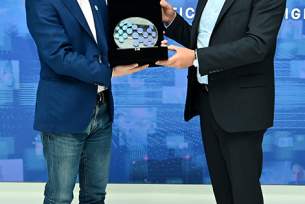
WEIZAC, one of the world’s earliest electronic computers was designed and built at the Weizmann Institute. On December 5, 2006, WEIZAC was recognized by the IEEE as a milestone in the history of electrical engineering and computing, and the team who built it was awarded the “WEIZAC Medal.”
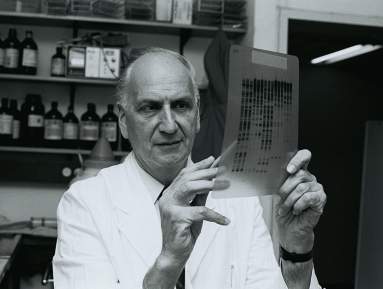
Weizmann Institute’s Prof. Leo Sachs and his colleagues published a scientific paper that led to the development of amniocentesis.
The Feinberg Graduate School – the educational arm of the Weizmann Institute of Science – was founded in 1958. It awards MSc and PhD degrees and trains students for senior positions in academia, research, industry, education and administration.
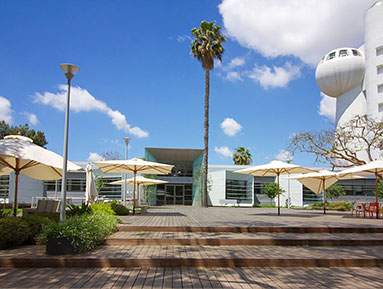
Yeda Research and Development Company Ltd., which promotes the industrial applications stemming from Weizmann Institute inventions, was founded in 1959. Although the focus of the Weizmann Institute is on basic research, it is no mistake that the first technology transfer company in the country was founded at the Weizmann Institute.

PERACH (Hebrew for “Flower” as well as the acronym of "Tutoring Project"), currently administered by the Davidson Institute of Science Education, was initiated in 1972 by a handful of students from the Weizmann Institute of Science, who tutored children in need. Since then it has expanded enormously, both in scale and in the scope of its activities. Today, approximately 15% of all students in Israel's institutes of higher education and tens of thousands of children take part in the project each year. In 2008, on the occasion of Israel's 60th anniversary, PERACH was awarded the Israel Prize for its ongoing contribution to the state and to society.

Prof. Haim Harari suggests for the first time that the material universe consists of six species of quarks and six species of leptons. This “Standard Model” is still accepted today.
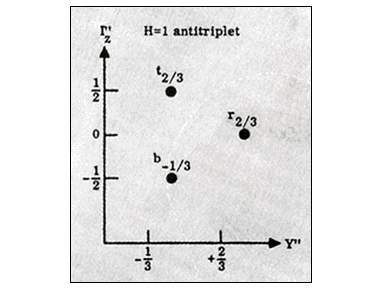
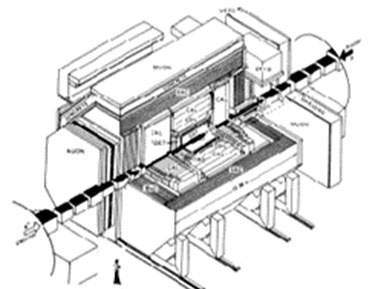
A group of Weizmann Institute scientists participate in research proving the existence of gluons - the particles responsible for the strongest force in nature: the force which holds the nucleus of the atom together.
One of the most important tumor suppressor genes, p53, was cloned by a Weizmann Institute scientist, Prof. Moshe Oren. Defective copies of this gene are found in more than half of all human cancers.
The first leukemia patient was successfully treated in Italy using a method developed by Prof. Yair Reisner for bone marrow transplants from mismatched donors.

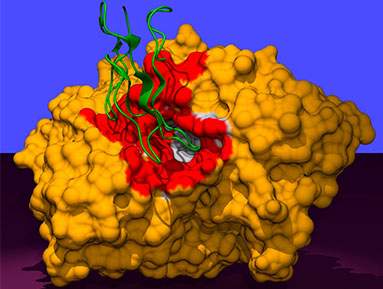
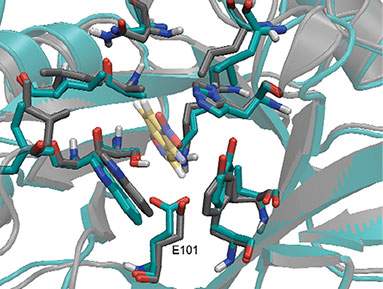
Profs Joel Sussman and Israel Silman discovered the molecular 3-D structure of the enzyme acetylcholinesterase (AChE), which breaks down acetylcholine, a substance involved in Alzheimer’s disease.
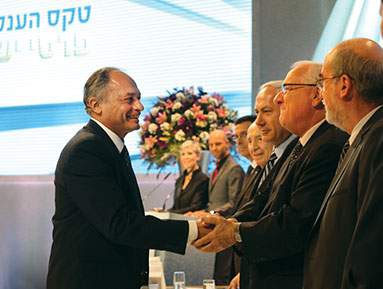
Weizmann Institute of Science’s Mathematician, the late Prof. Amir Pneuli, received the 1996 A.M. Turing Award - the world's most prestigious prize in computer science – for “seminal work introducing temporal logic into computing science and for outstanding contributions to program and system verification.” He is one of three members of the Weizmann Institute to receive the prestigious award; the others are Profs. Adi Shamir (2002) and Shafi Goldwasser (2013).
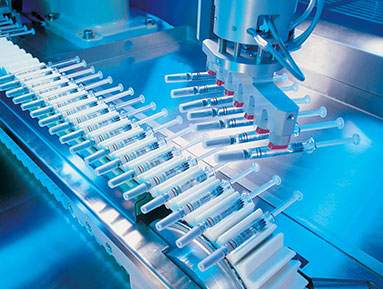
Copaxone, a drug for multiple sclerosis developed at the Weizmann Institute, was approved by the U.S. Food and Drug Administration.
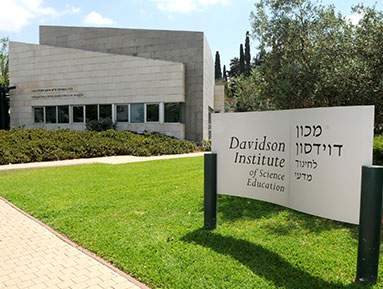
The Davidson Institute of Science Education – the educational arm of the Weizmann Institute of Science – was established in 1999. The Davidson Institute specializes in the field of mathematics, natural science and technology education, exploiting knowledge and experience gained from implementing a wide variety of programs in areas such as teachers’ training, science programs for school classes, unconventional programs for teens at risk and teens with low academic achievements and popular science programs for the general public.
Prof. Adi Shamir, a computer scientist at the Weizmann Institute of Science, is recipient of the 2002 A.M. Turing Award, in recognition of his contributions to cryptography. He is one of three members of the Weizmann Institute to receive the prestigious award; the others are the late Prof. Amir Pnueli (1996) and Prof. Shafi Goldwasser (2013).
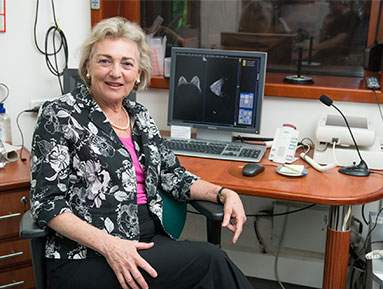
3TP, a non-invasive, MRI-based diagnostic method developed by the Weizmann Institute’s Prof. Hadassa Degani, received FDA clearance for use in the detection of breast and prostate cancer.
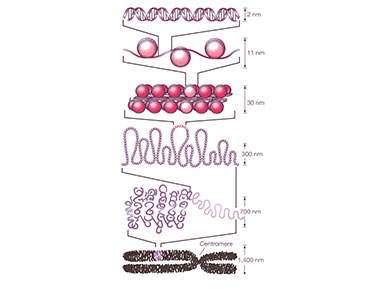
Prof. Eran Segal revealed that the positioning of the nucleosomes – spheres of DNA strung like beads along the length of the chromosomes – is encoded in the genes themselves. This discovery may help in designing gene therapies.
A team of Weizmann scientists headed by Prof. Dan Tawfik succeeded in designing artificial enzymes that undergo “evolution” in a test tube, improving their reaction rates a million-fold.
A team of Weizmann physicists headed by Prof. Moty Heiblum demonstrated, for the first time, the existence of “quasiparticles” with one-quarter the charge of an electron. This finding could be a step toward creating exotic types of quantum computers.
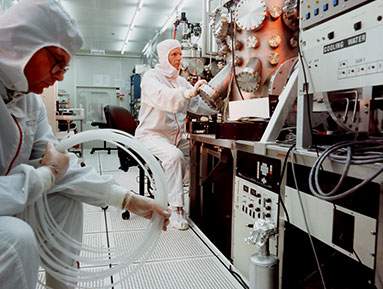
A technique invented in 2009 by Prof. David Milstein and his group splits water into oxygen and hydrogen using light. In 2012, Milstein was awarded the Israel Prize for chemistry and physics for his work on catalysts that effect efficient, low-waste, green chemical reactions.
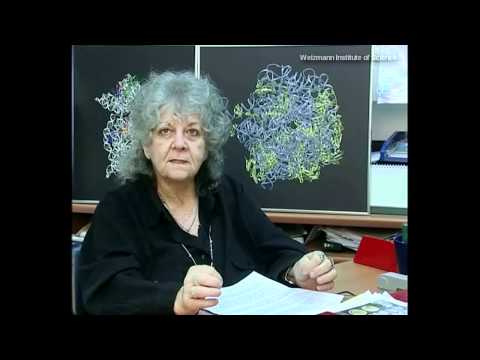
Weizmann Institute researcher Prof. Ada Yonath was awarded the Nobel Prize in Chemistry for her work on deciphering the structure of the ribosome, the cell’s protein factory. The achievement helps, among other things, to clarify the exact mode of action of antibiotic drugs and may facilitate the development of improved antibiotics.
Prof. Shafi Goldwasser is awarded an A.M. Turing Award for “transformative work that laid the complexity-theoretic foundations for the science of cryptography.” She is the third member of the Weizmann Institute to receive the prestigious award; the others are the late Prof. Amir Pnueli (1996) and Prof. Adi Shamir (2002).
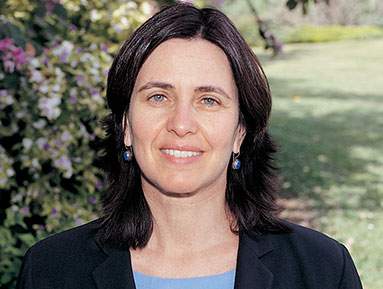
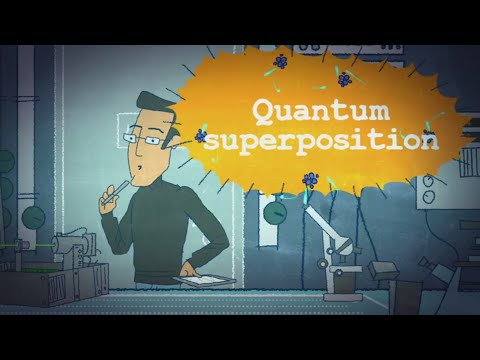
Dr. Barak Dayan demonstrates the first “photonic router,” in which one photon controls the direction of another. This switching mechanism could, in the future, form the basis of quantum computing technology.
A facility for personalized medicine to advance research in biomedicine, from basic research to drug design – the Nancy and Stephen Grand Israel National Center for Personalized Medicine – opens on the Weizmann Institute campus.
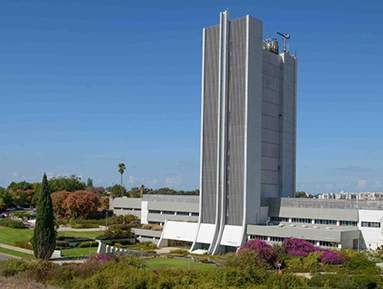























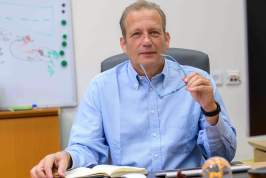
In 1934, Dr. Chaim Weizmann established the Daniel Sieff Research Institute in Rehovot and served as its President following a contribution by Israel and Rebecca Sieff to commemorate their son. As Weizmann pursued his research in the lab, the Institute attracted first-rate scientists from around the world.