

Are you a journalist? Please sign up here for our press releases
Subscribe to our monthly newsletter:
Why do parts of Earth become rainforests, whereas others turn into deserts? A new study exposes the far-reaching impact of human activity on a...
The Ultra Stable Oscillator, designed for an experiment led by Weizmann Institute scientists, is at the forefront of ESA’s JUICE mission to...

A Weizmann Institute study shows that some bacteria that hitch a long-distance ride on desert dust particles may touch down alive and kicking

Why do Earth’s hemispheres look equally bright when viewed from space? Weizmann Institute scientists offer a solution to this 50-year-old mystery...
New data reveals climate change might be more rapid than predicted
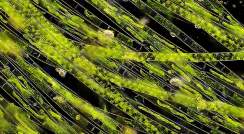
A new study reveals how microscopic algae became exceptionally nutritious over time, driving evolution forward
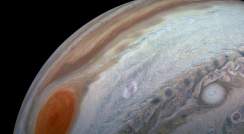
Weizmann Institute of Science researchers, together with their NASA collaborators, shed new light on Jupiter, revealing a surprising...

Weizmann Institute scientists reveal how gigantic cyclones remain stable at both of Jupiter’s poles
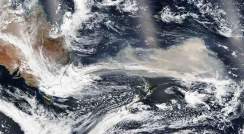
A study uncovers how some Australian fires produced a spreading stratospheric haze rivaling that of a volcanic eruption

The discovery of microplastics in the air above the ocean reveals the spread of this hazardous pollution