[[Skip Header and Navigation] [Jump to Main Content]
« עברית
  • Home
  • News
    • Press Releases
    • In the News
    • Subscribe to Press Releases
    • Honors and Awards
    • Visits
    • Events

    Press Releases

    16 May 2013
    Weather on the Outer Planets Only Goes So Deep
    18 Apr 2013
    Neural Activity in Bats Measured In Flight
    18 Mar 2013
    Programmed Destruction

    More »

    Research Highlights

    GeneCards
    Noncoding Sequences Get Equal Listing

    A greatly expanded database will give scientists around the world a powerful new tool for life sciences research

    gut cells
    The Spies Inside

    How does the immune system in the gut distinguish between helpful microbes and those that wish us harm?

    Ron Diskin
    Mutations Trump Invasion

    The process of HIV infection is just one of the subjects protein researcher Dr. Ron Diskin is investigating in his new lab

    More »

    Honors & Awards

    Dr. Zohar Komargodski has been awarded the Gribov Medal by the EPS High Energy Particle Physics Division Prizes
    More »

    Full list »

    |
    | | | | | |
    |
  • Research
    • By Subject
    • What We Are Doing About:
    • From Basic Research to Benefiting Humanity
    • Shaping the Future

    By Subject

    Alternative Energy Materials Science
    Astrophysics Mathematics
    Biochemistry  Molecular Cell Biology
    Bioinformatics Nanoscience
    Biomedical Biology Neuroscience
    Cancer Particle Physics
    Chemistry Physics
    Computer Science Plant Sciences
    Environment Quantum Physics
    Evolution Scientific Archaeology
    Genetics Structural Biology

    What We Are Doing About:

    • Cancer
    • Diabetes
    • The Environment
    • Nanoscience
    • Energy

    Benefiting Humanity

    Prof. Amos Breskin
    Prof. Amos Breskin develops advanced radiation detectors, which have an important impact on many fields of research, such as particle, nuclear and atomic physics, medical diagnostics, biology and materials science.
     
    Application

    More »

    Full list »

    |
    | | | | | |
    |
  • Magazines and Multimedia
    • Annual Report
    • Interface - Online Magazine
    • The Weizmann International Magazine of Science and People
    • Books
    • Nano Comics
    • Galleries
    • Horizons - Online Magazine
    Annual Report 2012
    The 2012 Report
    Annual Report 2012
    2012 and Beyond
    Research Highlights
    New Developments
    Technology Transfer
    Summary of Operating Results
    More »

    Magazines

    Current Issue: Spring 2013
    Interface magazine Spring 2013
    Magazine Sections
    Science Feature Articles
    Made at the Institute
    Time Tunnel

    Archive »

    Latest Videos

    CRASH
    The Race for the Higgs Boson
    • Monitoring Carbon Exchange
    • Thanks for the Memories
    • Quantum Computing
    • Back to Basics - Forward to the Future
    More »
    |
    | | | | | |
    |
  • About the Institute
    • Overview
    • History
    • Virtual Tour
    • Visiting the Institute

    Overview

    • Multidisciplinary Research
    • Facts and Figures
    • Pioneering Progress
    • Training Future Scientists
    • Science is for Sharing
    • Advancing Israel
    • New Horizons
    • Beauty in Science

    History

    Dr. Chaim Weizmann

    Chaim Weizmann was born in 1874 to a traditional Jewish family in the small town of Motol in White Russia (Belarus). After graduating with honors from the Real-Gymnasium in Pinsk, he decided to establish himself professionally

    More »
    Weizmann House
    • History and Architecture
    • The Collection
    • The Tour
    • The Garden
    • The Grave
    • Erich Mendelsohn
    • The Presidential Car Vintage Wheels

    Visiting the Institute


    • Visitors Center
    • Weizmann House
    • Clore Garden of Science
    |
    | | | | | |
    |
  • Weizmann Institute Homepage
Home » Press Room » Press Releases
News
  • Press Releases
    • English
    • Hebrew
    • Spanish
    • French
    • German
  • In the News
  • Subscribe to Press Releases
  • Honors and Awards
  • Visits
  • Events

twitter block


Follow @WeizmannScience

Weizmann Institute Scientists Discover: Antioxidants Cause Fertility Problems in Females

18 Jan
2011
Biomedical Biology
Antioxidants are sold over the counter everywhere. They’re added to food, drink and face cream. But according to Prof. Nava Dekel of the Biological Regulation Department, we still don’t have a complete understanding of how they act in our bodies. New research by Dekel and her team, recently published in the Proceedings of the National Academy of Sciences USA (PNAS), has revealed a possible unexpected side effect of antioxidants: They might cause fertility problems in females.
 
Common antioxidants include vitamins C and E. These work by eliminating molecules called reactive oxygen species that are produced naturally in the body. Stress can cause these chemically active molecules to be overproduced; in large amounts they damage cells indiscriminately. By neutralizing these potentially harmful substances, antioxidants may, theoretically, improve health and slow down the aging process.
 
But when Dekel and her research team including her former and present Ph.D. students Dr. Ketty Shkolnik and Ari Tadmor applied antioxidants to the ovaries of female mice, the results were surprising: ovulation levels dropped precipitously. That is, very few eggs were released from the ovarian follicles to reach the site of fertilization, compared to those in untreated ovaries.
 
To understand what lies behind these initial findings, the team asked whether it is possible that the process of ovulation might rely on the very ‘harmful’ substances destroyed by antioxidants – reactive oxygen species.
 
Further testing in mice showed that this is, indeed, the case. In one experiment, for instance, Dekel and her team treated some ovarian follicles with luteinizing hormone, the physiological trigger for ovulation, and others with hydrogen peroxide, a reactive oxygen species. The results showed hydrogen peroxide fully mimicked the effect of the ovulation-inducing hormone. This implies that reactive oxygen species that are produced in response to luteinizing hormone serve, in turn, as mediators for this physiological stimulus leading to ovulation.

 
Among other things, these results help fill in a picture that has begun to emerge in recent years of fertility and conception, in which it appears that these processes share a number of common mechanisms with inflammation. It makes sense, says Dekel, that substances which prevent inflammation in other parts of the body might also get in the way of normal ovulation, and so more caution should be taken when administering such substances.
 
Much of Dekel’s research has focused on fertility -- her previous results are already helping some women become pregnant. Ironically, the new study has implications for those seeking the opposite effect. Dekel: ‘On the one hand, these findings could prove useful to women who are having trouble getting pregnant. On the other, further studies might show that certain antioxidants might be effective means of birth control that could be safer than today’s hormone-based prevention.’
 
Dekel and her team are now planning further studies to investigate the exact mechanics of this step in ovulation and to examine its effect on mice when administered in either food or drink. In addition, they plan to collect data on the possible link between females being administered antioxidant supplements and the difficulty to conceive.

 

Prof. Nava Dekel’s research is supported by the M.D. Moross Institute for Cancer Research; the Jeanne and Joseph Nissim Foundation for Life Sciences Research; the Yeda-Sela Center for Basic Research; the Willner Family Center for Vascular Biology – Head; the Dwek Family Biomedical Research Fund; the Phyllis and Joseph Gurwin Fund for Scientific Advancement; and the J & R Foundation. Prof. Dekel is the incumbent of the Philip M. Klutznick Professorial Chair of Developmental Biology.

 

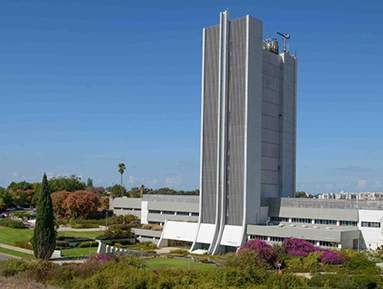
The Weizmann Institute of Science in Rehovot, Israel, is one of the world's top-ranking multidisciplinary research institutions. Noted for its wide-ranging exploration of the natural and exact sciences, the Institute is home to 2,700 scientists, students, technicians and supporting staff. Institute research efforts include the search for new ways of fighting disease and hunger, examining leading questions in mathematics and computer science, probing the physics of matter and the universe, creating novel materials and developing new strategies for protecting the environment.

Weizmann Institute news releases are posted on the World Wide Web at http://wis-wander.weizmann.ac.il/, and are also available at http://www.eurekalert.org/
 
Tags:
  • Antioxidants,
  • Biological Regulation,
  • Fertility,
  • Nava Dekel,
  • Ovulation,
  • Pregnancy,
  • ""
  • Print this page »

Search Press Releases

Related Articles

Non-invasive Method for Diagnosing Cancer Developed at the Weizmann Institute
Researchers find new method for mapping gene expression in MRI
Predicting Success
Cancer Diagnosis Technique gets FDA clearance
More Related links »
Ovarian Cells
Ovarian Cells
Edit block | Delete block

Edit block | Delete block

Download our FREE Interface Magazine App for iPad and Android

Secondary Links

  • Contact Us
  • Visit Us
  • How to Get Here
  • Campus Map
  • Site Map
  • Privacy
  • Terms of Use
  • Supporting Committees
  • Credits

Get RSS
© Weizmann Institute of Science 2012. All rights reserved
Follow us on:
[Jump to Top] [Jump to Main Content]