[[Skip Header and Navigation] [Jump to Main Content]
« עברית
  • Home
  • News
    • Press Releases
    • In the News
    • Subscribe to Press Releases
    • Honors and Awards
    • Visits
    • Events

    Press Releases

    16 May 2013
    Weather on the Outer Planets Only Goes So Deep
    18 Apr 2013
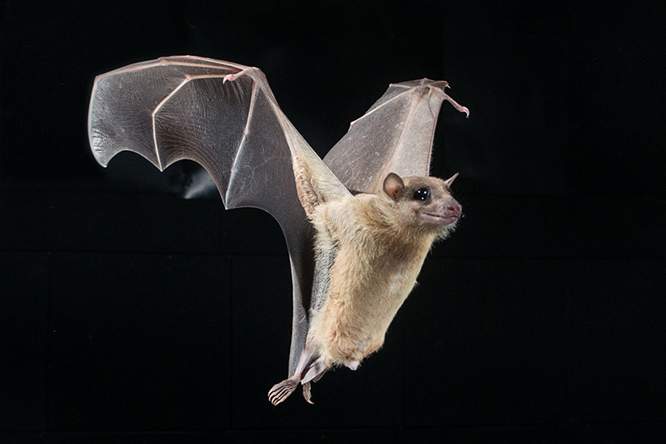
    Neural Activity in Bats Measured In Flight
    18 Mar 2013
    Causing Collapse

    More »

    Research Highlights

    GeneCards
    Noncoding Sequences Get Equal Listing

    A greatly expanded database will give scientists around the world a powerful new tool for life sciences research

    gut cells
    The Spies Inside

    How does the immune system in the gut distinguish between helpful microbes and those that wish us harm?

    Ron Diskin
    Mutations Trump Invasion

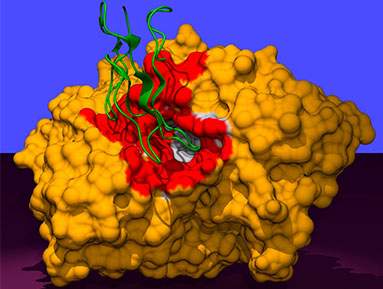
    The process of HIV infection is just one of the subjects protein researcher Dr. Ron Diskin is investigating in his new lab

    More »

    Honors & Awards

    Dr. Zohar Komargodski has been awarded the Gribov Medal by the EPS High Energy Particle Physics Division Prizes
    More »

    Full list »

    |
    | | | | | |
    |
  • Research
    • By Subject
    • What We Are Doing About:
    • From Basic Research to Benefiting Humanity
    • Shaping the Future

    By Subject

    Alternative Energy Materials Science
    Astrophysics Mathematics
    Biochemistry  Molecular Cell Biology
    Bioinformatics Nanoscience
    Biomedical Biology Neuroscience
    Cancer Particle Physics
    Chemistry Physics
    Computer Science Plant Sciences
    Environment Quantum Physics
    Evolution Scientific Archaeology
    Genetics Structural Biology

    What We Are Doing About:

    • Cancer
    • Diabetes
    • The Environment
    • Nanoscience
    • Energy

    Benefiting Humanity

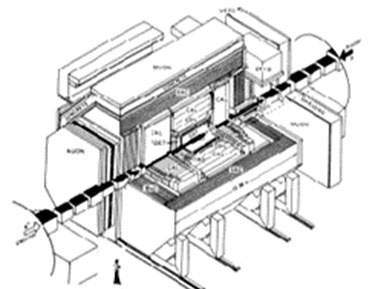
    Prof. Amos Breskin
    Prof. Amos Breskin develops advanced radiation detectors, which have an important impact on many fields of research, such as particle, nuclear and atomic physics, medical diagnostics, biology and materials science.

     
    Application

    More »

    Full list »

    |
    | | | | | |
    |
  • Magazines and Multimedia
    • Annual Report
    • Interface - Online Magazine
    • The Weizmann International Magazine of Science and People
    • Books
    • Nano Comics
    • Galleries
    • Horizons - Online Magazine
    Annual Report 2011
    Art and Science on the Move
    Administering the Institute
    Research
    Financial Highlights
    Roll of Honor
    Supporting Network
    More »

    Magazines

    Current Issue: Spring 2013
    Interface magazine Spring 2013
    Magazine Sections
    Science Feature Articles
    Made at the Institute
    Time Tunnel

    Archive »

    Latest Videos

    CRASH
    The Race for the Higgs Boson
    • Monitoring Carbon Exchange
    • Thanks for the Memories
    • Quantum Computing
    • Back to Basics - Forward to the Future
    More »
    |
    | | | | | |
    |
  • About the Institute
    • Overview
    • History
    • Virtual Tour
    • Visiting the Institute

    Overview

    • Multidisciplinary Research
    • Facts and Figures
    • Pioneering Progress
    • Training Future Scientists
    • Science is for Sharing
    • Advancing Israel
    • New Horizons
    • Beauty in Science

    History

    Dr. Chaim Weizmann

    Chaim Weizmann was born in 1874 to a traditional Jewish family in the small town of Motol in White Russia (Belarus). After graduating with honors from the Real-Gymnasium in Pinsk, he decided to establish himself professionally

    More »
    Weizmann House
    • History and Architecture
    • The Collection
    • The Tour
    • The Garden
    • The Grave
    • Erich Mendelsohn
    • The Presidential Car Vintage Wheels

    Visiting the Institute


    • Visitors Center
    • Weizmann House
    • Clore Garden of Science
    |
    | | | | | |
    |
  • Weizmann Institute Homepage
Home » Press Room » Press Releases
News
  • Press Releases
    • English
    • Hebrew
    • Spanish
    • French
    • German
  • In the News
  • Subscribe to Press Releases
  • Honors and Awards
  • Visits
  • Events

twitter block


Follow @WeizmannScience

Dr. Zohar Komargodski of the Weizmann Institute Awarded a New Horizons in Physics Prize

11 Dec
2012
Physics
 
The New Horizons in Physics Prize, awarded by the Fundamental Physics Prize Foundation, is given to three promising young researchers. Each of the laureates will receive $100,000. The Foundation also announced that leaders of the ATLAS experiment, one of the two experimental groups at the Large Hadron Collider (LHC) at CERN to have discovered a particle that appears to be the Higgs boson, will split a Special Fundamental Physics Prize (which totals $3,000,000) with those of the second experimental group, CMS, together with the head of the LHC accelerator project. Several Weizmann Institute researchers have played prominent roles in the ATLAS experiment, along with physicists from the Technion and Tel Aviv University. Last year, one of the inaugural Fundamental Physics Prizes went to Prof. Nathan (Nati) Seiberg, a Weizmann alumnus who is at the Institute for Advanced Studies, Princeton.
 
Komargodski completed his doctoral studies in physics at the Weizmann Institute of Science four years ago. Following a postdoctoral fellowship at the Institute for Advanced Studies, Princeton, he returned to a senior scientist position in the Weizmann Institute's Particle Physics and Astrophysics Department. His research involves quantum theory, and it sheds new light on a number of related fields. One of his outstanding achievements was an article he published with the Institute’s Prof. Adam Schwimmer in 2011. This paper provided proof for a basic conjecture concerning theories of quantum fields (theories that describe the behavior of elementary particles) in four-dimensional space-time.
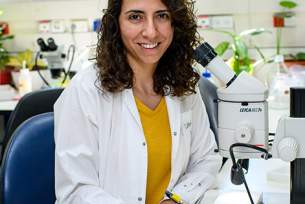
 
 
Komargodski
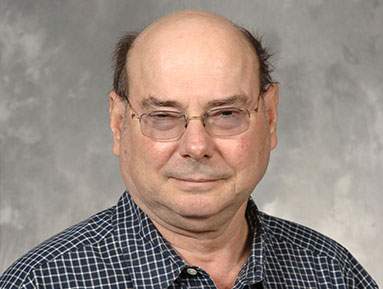
Dr. Zohar Komargodski
This conjecture was first proposed by the British physicist John Cardy in 1988. According to his theorem, inequalities arise in systems with known “rules” that involve large numbers of factors. The states of these systems cannot be explained just through knowing the rules and the various players. Examples of such systems include stock markets, traffic patterns and weather. The inequalities transpire between degrees of freedom: the degrees of freedom existing at short-distance scales (for example the scales of the new particles that LHC researchers hope to discover) versus those at longer-distance scales (for instance in the forms of matter we know today).

If Cardy’s theory proves correct, it might provide an explanation of how we arrive at the Standard Model – the main theory of particle physics in use today – when a system of infinitesimally small particles at small-distance scales and very high energies cools down. We might even begin to understand how the world as we know it arises out of a complex universe of subatomic particles and powerful forces.

Meeting on the beach

In 1986, about two years before Cardy presented his theory, another physicist, Alexander Zamolodchikov, had shown that this inequality between degrees of freedom on short-distance scales exists in two-dimensional systems (one dimension of space and one of time). Cardy took the idea one step further, theorizing a similar inequality in a four-dimensional system (three of space and one of time). But the theory remained open for the next 23 years, until one evening when Komargodski and Schwimmer, who were attending a conference together, were relaxing on a beach on an Aegean island. For the last few years, Schwimmer and Komargodski had been looking for a way to prove Cardy’s theorem and turn it into an accepted axiom. They had traded ideas and explored a number of different avenues, but none had really panned out. But that evening, sitting on the Aegean sands and relaxing between lectures, the two began to discuss their old problem. As the sun set over the blue water, the solution seem to float up to them: Although none of the methods they had applied to the problem had yielded the long-awaited proof, they realized that four or five of their beginnings might be combined into a framework on which they could erect that proof.

Dr. Zohar Komargodski’s research is supported by the Peter and Patricia Gruber Awards.

For more on the prizes: http://www.fundamentalphysicsprize.org/
 
 
Tags:
  • Particle Physics and Astrophysics,
  • Prizes and Honors,
  • Theoretical physics,
  • Zohar Komargodski,
  • ""
  • Print this page »

Search Press Releases

Related Articles

Prizes and Honors
Prizes Awarded by the Scientific Council of the Weizmann Institute of Science in 2010
Other Prizes Given under the Auspices of the Weizmann Institute of Science
Prizes and Honors
More Related links »
Pattern formations in chaotic spatio-temporal systems
Edit block | Delete block

Edit block | Delete block

Download our FREE Interface Magazine App for iPad and Android

Secondary Links

  • Contact Us
  • Visit Us
  • How to Get Here
  • Campus Map
  • Site Map
  • Privacy
  • Terms of Use
  • Supporting Committees
  • Credits

Get RSS
© Weizmann Institute of Science 2012. All rights reserved
Follow us on:
[Jump to Top] [Jump to Main Content]