[[Skip Header and Navigation] [Jump to Main Content]
« עברית
  • Home
  • News
    • Press Releases
    • In the News
    • Subscribe to Press Releases
    • Honors and Awards
    • Visits
    • Events

    Press Releases

    19 Apr 2012
    Defending Against Chemical Acts of Terrorism
    12 Mar 2012
    Why do We See the Man in the Moon?
    23 Feb 2012
    A Unique ON-OFF Switch for the Stress Response

    More »

    Research Highlights

    David Milstein
    Israel Prize to Prof. David Milstein

    Milstein is recognized for his environmentally-friendly catalysts

    ISPC
    At the Core

    Israel’s leadership in structural biology leads to the establishment of an Instruct Core Centre

    Neuron cover
    Two for the Price of One

    A unique ON-OFF switch in the brain controls a main stress hormone

    More »

    Honors & Awards

    Prof. Ronen Alon has been elected as a Member of EMBO (2012)
    More »

    Full list »

    |
    | | | | | |
    |
  • Research
    • By Subject
    • What We Are Doing About:
    • From Basic Research to Benefiting Humanity
    • Shaping the Future

    By Subject

    Alternative Energy Materials Science
    Astrophysics Mathematics
    Biochemistry  Neuroscience
    Bioinformatics Molecular Cell Biology
    Biomedical Biology Nanoscience
    Cancer Particle Physics
    Chemistry Physics
    Computer Science Plant Sciences
    Environment Quantum Physics
    Evolution Scientific Archaeology
    Genetics Structural Biology

    What We Are Doing About:

    • Cancer
    • Diabetes
    • The Environment
    • Nanoscience
    • Energy

    Benefiting Humanity

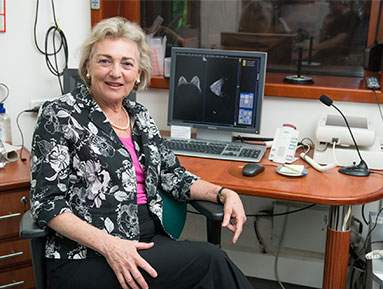
    Prof. Emeritus Nechama Haran-Ghera
    Prof. Emeritus Nechama Haran-Ghera, in collaboration with Israeli physicians, showed that the hormone erythropoietin may be helpful in treating multiple myeloma and other cancers. In mice injected with myeloma cells, the hormone prolonged survival, caused tumor regression and reduced mortality.
     
    Application
    More »

    Full list »

    |
    | | | | | |
    |
  • Magazines and Multimedia
    • Annual Report
    • Interface - Online Magazine
    • Books
    • Nano Comics
    • Galleries
    • Horizons - Online Magazine
    Annual Report 2011
    Art and Science on the Move
    Administering the Institute
    Research
    Financial Highlights
    Roll of Honor
    Supporting Network
    More »

    Magazines

    Current Issue: Apr. 2012 (No. 40)
    Magazine Sections
    Science Feature Articles
    Feature Articles
    Science Briefs

    Archive »

    Latest Videos

    CRASH
    The Race for the Higgs Boson
    CRASH: The Race for the Higgs Boson
    • Monitoring Carbon Exchange
    • Thanks for the Memories
    • Quantum Computing
    • Back to Basics - Forward to the Future
    More »
    |
    | | | | | |
    |
  • About the Institute
    • Overview
    • History
    • Virtual Tour
    • Visiting the Institute

    Overview

    • Multidisciplinary Research
    • Facts and Figures
    • Pioneering Progress
    • Training Future Scientists
    • Science is for Sharing
    • Advancing Israel
    • New Horizons
    • Beauty in Science

    History

    Dr. Chaim Weizmann

    Chaim Weizmann was born in 1874 to a traditional Jewish family in the small town of Motol in White Russia (Belarus). After graduating with honors from the Real-Gymnasium in Pinsk, he decided to establish himself professionally 

    More »
    Weizmann House
    • History and Architecture
    • The Collection
    • The Tour
    • The Garden
    • The Grave
    • Erich Mendelsohn
    • The Presidential Car Vintage Wheels

    Visiting the Institute


    • Visitors Center
    • Weizmann House
    • Clore Garden of Science
    |
    | | | | | |
    |
  • Weizmann Institute Homepage
Home » Press Room » Press Releases
News
  • Press Releases
    • English
    • Hebrew
    • Spanish
    • French
    • German
  • In the News
  • Subscribe to Press Releases
  • Honors and Awards
  • Visits
  • Events

twitter block


Follow @WeizmannScience

Paper Archives Reveal Pollution’s History

08 Feb
2011
Energy and Environment
 
Some of the history preserved in old tomes and newspapers may be hiding in between the lines of print. A Weizmann Institute scientist has found that the paper in such collections contains a record of atmospheric conditions at the time the trees that went into making it were growing. By analyzing the carbon isotopes in bits of paper clipped from old magazines, Prof. Dan Yakir of the Environmental Sciences and Energy Research Department in the Faculty of Chemistry has traced the rising effects of atmospheric pollution from burning fossil fuel going back to beginnings of the industrial revolution.
 
Scientists generally reconstruct the record of past climate change from such sources as ice cores or tree rings. But a reliable tree ring history, says Yakir, requires an analysis of quite a few trees. “Rather than going to forests all over the world to sample trees,” says Yakir, “we went to the local library.” In the Weizmann library’s archives, Yakir found issues of the scientific journals Science, Nature and the Journal of the Royal Chemical Society going back over 100 years to the late 19th century. Removing small samples from the margins of successive volumes, he took them back to the lab for analysis.
 
The analysis was based on a finding that the proportion of a carbon isotope – carbon 13 (13C) – to its lighter counterpart – carbon 12 (12C) – could provide information on the CO2 added to the atmosphere from burning fossil fuel. This is based on a cycle that begins with plants taking up CO2 in photosynthesis. All plants prefer to use CO2 made with the more common version of carbon, 12C, than the slightly heavier 13C. Plant biomass from millions of years ago was transformed into reservoirs of oil, gas and coal, and so these are naturally low in 13C, as well. When we started to burn those reservoirs following the industrial revolution, we began returning the 13C-poor CO2 to the atmosphere. Now the atmospheric 13C content has become increasingly diluted, and this is reflected in the carbon ratios in the trees milled for pulp and paper. Yakir’s work shows that this continuing dilution is, indeed, clearly recorded in the archival paper and, plotted over time, it demonstrates the increasing intensity of our fossil fuel burning in the past 150 years.


 
This project has been ongoing for about 14 years, with figures from new issues added over time. In the process, says Yakir, he has had to learn something about the paper industry. Some early issues, for instance, had been printed on rag paper (made of cotton, flax, etc.) rather than wood pulp, while blips in the data around the time of WWII led Yakir to suspect that the paper was either recycled, or again supplemented with rag content to make up for wartime shortages.

 
Anomalies aside, 13C levels in the paper, especially for two of the journals, were a good match for existing atmospheric records, and even revealed some local phenomena, including differences between American and European records. In addition to alerting climate scientists to a very well organized, untapped, source of global change records, says Yakir, the technique could be used to authenticate antique paper samples.
 
 
Prof. Dan Yakir’s research is supported by the Cathy Wills and Robert Lewis Program in Environmental Science and the estate of Sanford Kaplan.
 
 
The Weizmann Institute of Science in Rehovot, Israel, is one of the world's top-ranking multidisciplinary research institutions. Noted for its wide-ranging exploration of the natural and exact sciences, the Institute is home to 2,700 scientists, students, technicians and supporting staff. Institute research efforts include the search for new ways of fighting disease and hunger, examining leading questions in mathematics and computer science, probing the physics of matter and the universe, creating novel materials and developing new strategies for protecting the environment.


Weizmann Institute news releases are also available at http://www.eurekalert.org
 
 
Tags:
  • Atmosphere,
  • Carbon dioxide,
  • Dan Yakir,
  • Environmental Sciences and Energy Research,
  • Pollution,
  • ""
  • Print this page »

Search Press Releases

Related Articles

Greenhouse Gas Might Green Up the Desert
Balancing the Budget
Greenhouse Gas Might Green Up the Desert
Plants Tell It Like It Is
More Related links »

Press RoomRSS

19 Apr 2012
Defending Against Chemical Acts of Terrorism
12 Mar 2012
Why do We See the Man in the Moon?
23 Feb 2012
Lineage Trees Reveal Cells’ Histories

Full press release list »

In The NewsRSS

01 Jan 2012
The Jerusalem Post
Up in a cloud for processing computer data

All in the news »

Secondary Links

  • Contact Us
  • Visit Us
  • How to Get Here
  • Campus Map
  • Site Map
  • Privacy
  • Terms of Use
  • Supporting Committees
  • Credits

Get RSS
© Weizmann Institute of Science 2012. All rights reserved
Follow us on:
[Jump to Top] [Jump to Main Content]