[[Skip Header and Navigation] [Jump to Main Content]
« עברית
  • Home
  • News
    • Press Releases
    • In the News
    • Subscribe to Press Releases
    • Honors and Awards
    • Visits
    • Events

    Press Releases

    16 May 2013
    Weather on the Outer Planets Only Goes So Deep
    18 Apr 2013
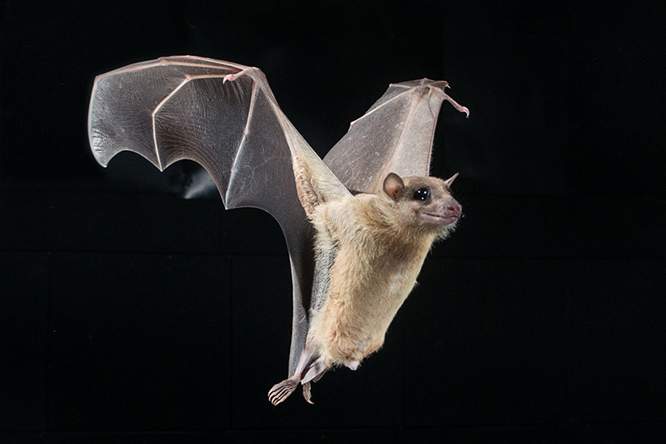
    Neural Activity in Bats Measured In Flight
    18 Mar 2013
    Programmed Destruction

    More »

    Research Highlights

    GeneCards
    Noncoding Sequences Get Equal Listing

    A greatly expanded database will give scientists around the world a powerful new tool for life sciences research

    gut cells
    The Spies Inside

    How does the immune system in the gut distinguish between helpful microbes and those that wish us harm?

    Ron Diskin
    Mutations Trump Invasion

    The process of HIV infection is just one of the subjects protein researcher Dr. Ron Diskin is investigating in his new lab

    More »

    Honors & Awards

    Dr. Zohar Komargodski has been awarded the Gribov Medal by the EPS High Energy Particle Physics Division Prizes
    More »

    Full list »

    |
    | | | | | |
    |
  • Research
    • By Subject
    • What We Are Doing About:
    • From Basic Research to Benefiting Humanity
    • Shaping the Future

    By Subject

    Alternative Energy Materials Science
    Astrophysics Mathematics
    Biochemistry  Molecular Cell Biology
    Bioinformatics Nanoscience
    Biomedical Biology Neuroscience
    Cancer Particle Physics
    Chemistry Physics
    Computer Science Plant Sciences
    Environment Quantum Physics
    Evolution Scientific Archaeology
    Genetics Structural Biology

    What We Are Doing About:

    • Cancer
    • Diabetes
    • The Environment
    • Nanoscience
    • Energy

    Benefiting Humanity

    Prof. Amos Breskin
    Prof. Amos Breskin develops advanced radiation detectors, which have an important impact on many fields of research, such as particle, nuclear and atomic physics, medical diagnostics, biology and materials science.
     
    Application

    More »

    Full list »

    |
    | | | | | |
    |
  • Magazines and Multimedia
    • Annual Report
    • Interface - Online Magazine
    • The Weizmann International Magazine of Science and People
    • Books
    • Nano Comics
    • Galleries
    • Horizons - Online Magazine
    Annual Report 2012
    The 2012 Report
    Annual Report 2012
    2012 and Beyond
    Research Highlights
    New Developments
    Technology Transfer
    Summary of Operating Results
    More »

    Magazines

    Current Issue: Spring 2013
    Interface magazine Spring 2013
    Magazine Sections
    Science Feature Articles
    Made at the Institute
    Time Tunnel

    Archive »

    Latest Videos

    CRASH
    The Race for the Higgs Boson
    • Monitoring Carbon Exchange
    • Thanks for the Memories
    • Quantum Computing
    • Back to Basics - Forward to the Future
    More »
    |
    | | | | | |
    |
  • About the Institute
    • Overview
    • History
    • Virtual Tour
    • Visiting the Institute

    Overview

    • Multidisciplinary Research
    • Facts and Figures
    • Pioneering Progress
    • Training Future Scientists
    • Science is for Sharing
    • Advancing Israel
    • New Horizons
    • Beauty in Science

    History

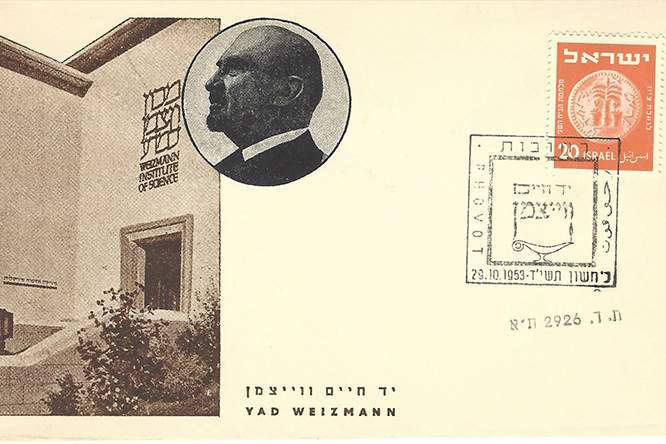
    Dr. Chaim Weizmann

    Chaim Weizmann was born in 1874 to a traditional Jewish family in the small town of Motol in White Russia (Belarus). After graduating with honors from the Real-Gymnasium in Pinsk, he decided to establish himself professionally

    More »
    Weizmann House
    • History and Architecture
    • The Collection
    • The Tour
    • The Garden
    • The Grave
    • Erich Mendelsohn
    • The Presidential Car Vintage Wheels

    Visiting the Institute


    • Visitors Center
    • Weizmann House
    • Clore Garden of Science
    |
    | | | | | |
    |
  • Weizmann Institute Homepage
Home » Press Room » Press Releases
News
  • Press Releases
    • English
    • Hebrew
    • Spanish
    • French
    • German
  • In the News
  • Subscribe to Press Releases
  • Honors and Awards
  • Visits
  • Events

twitter block


Follow @WeizmannScience

Learning a New Sense

05 Nov
2012
Neuroscience

Weizmann Institute scientists observe as humans learn to sense like a rat, with ”whiskers”


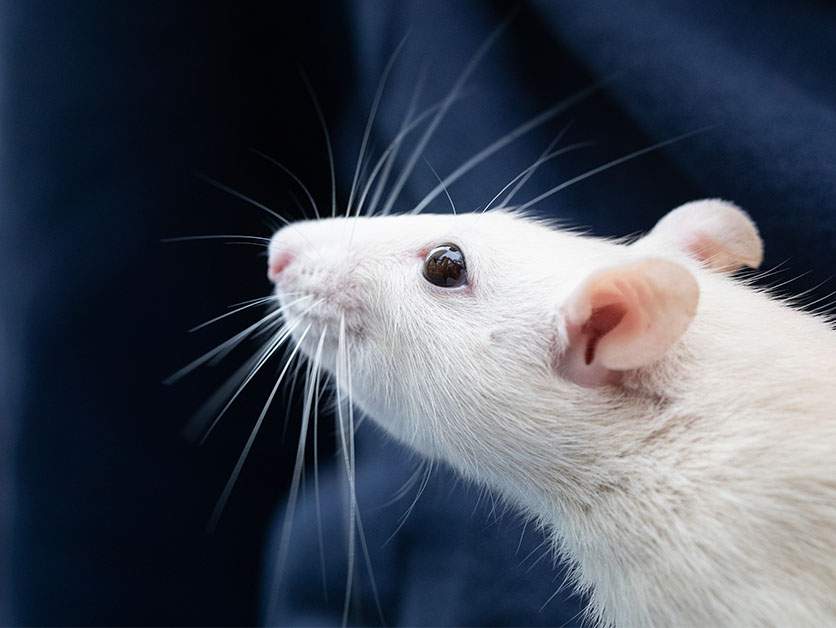
Rats use a sense that humans don’t: whisking. They move their facial whiskers back and forth about eight times a second to locate objects in their environment. Could humans acquire this sense? And if they can, what could understanding the process of adapting to new sensory input tell us about how humans normally sense? At the Weizmann Institute, researchers explored these questions by attaching plastic “whiskers” to the fingers of blindfolded volunteers and asking them to carry out a location task. The findings, which recently appeared in the Journal of Neuroscience, have yielded new insight into the process of sensing, and they may point to new avenues in developing aids for the blind.

The scientific team, including Drs. Avraham Saig and Goren Gordon, and Eldad Assa in the group of Prof. Ehud Ahissar and Dr. Amos Arieli, all of the Neurobiology Department attached a “whisker” – a 30 cm-long elastic “hair” with position and force sensors on its base – to the index finger of each hand of a blindfolded subject. Then two poles were placed at arm’s distance on either side and slightly to the front of the seated subject, with one a bit farther back than the other. Using just their whiskers, the subjects were challenged to figure out which pole – left or right – was the back one. As the experiment continued, the displacement between front and back poles was reduced, up to the point when the subject could no longer distinguish front from back.
On the first day of the experiment, subjects picked up the new sense so well that they could correctly identify a pole that was set back by only eight cm. An analysis of the data revealed that the subjects did this by figuring the spatial information from the sensory timing. That is, moving their bewhiskered hands together, they could determine which pole was the back one because the whisker on that hand made contact earlier.

When they repeated the testing the next day, the researchers discovered that the subjects had improved their whisking skills significantly: The average sensory threshold went down to just three cm, with some being able to sense a displacement of just one cm. Interestingly, the ability of the subjects to sense time differences had not changed over the two days. Rather, they had improved in the motor aspects of their whisking strategies: Slowing down their hand motions – in effect lengthening the delay time – enabled them to sense a smaller spatial difference.

Saig: “We know that our senses are linked to muscles, for example ocular and hand muscles. In order to sense the texture of cloth, for example, we move our fingers across it, and to seeing stationary object, our eyes must be in constant motion. In this research, we see that changing our physical movements alone – without any corresponding change in the sensitivity of our senses – can be sufficient to sharpen our perception.”

Based on the experiments, the scientists created a statistical model to describe how the subjects updated their “world view” as they acquired new sensory information – up to the point at which they were confident enough to rely on that sense. The model, based on principles of information processing, could explain the number of whisking movements needed to arrive at the correct answer, as well as the pattern of scanning the subjects employed – a gradual change from long to short movements. With this strategy, the flow of information remains constant. “The experiment was conducted in a controlled manner, which allowed us direct access to all the relevant variables: hand motion, hand-pole contact and the reports of the subjects themselves,” says Gordon. “Not only was there a good fit between the theory and the experimental data, we obtained some useful quantitative information on the process of active sensing.”
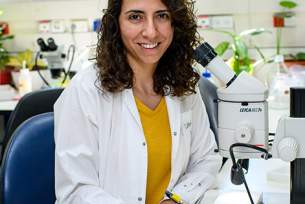
“Both sight and touch are based on arrays of receptors that scan the outside world in an active manner,” says Ahissar, “Our findings reveal some new principles of active sensing, and show us that activating a new artificial sense in a ‘natural’ way can be very efficient.”  Arieli adds: “Our vision for the future is to help blind people ‘see’ with their fingers. Small devices that translate video to mechanical stimulation, based on principles of active sensing that are common to vision and touch, could provide an intuitive, easily used sensory aid.”


Prof. Ehud Ahissar’s research is supported by the Murray H. and Meyer Grodetsky Center for Research of Higher Brain Functions; the Jeanne and Joseph Nissim Foundation for Life Sciences Research; the Kahn Family Research Center for Systems Biology of the Human Cell; Lord David Alliance, CBE; the Berlin Family Foundation; Jack and Lenore Lowenthal, Brooklyn, NY; Research in Memory of Irving Bieber, M.D. and Toby Bieber, M.D.; the Harris Foundation for Brain Research; and the Joseph D. Shane Fund for Neurosciences. Prof. Ahissar is the incumbent of the Helen Diller Family Professorial Chair in Neurobiology.
 
Tags:
  • Active sensing,
  • Ehud Ahissar,
  • Neurobiology,
  • Perception,
  • Whiskers,
  • ""
  • Print this page »

Search Press Releases

Related Articles

Tumor Tip-Off
Personnel Management in the Brain
Windows on your Mind: Weizmann Institute Scientists Reveal That Imagination Can Enhance Visual Perception
Pacman in the Brain: Protein Chews up Vital Memory Chemical
More Related links »
A conversation between nerve cells in the brain
Edit block | Delete block

Edit block | Delete block

Download our FREE Interface Magazine App for iPad and Android

Secondary Links

  • Contact Us
  • Visit Us
  • How to Get Here
  • Campus Map
  • Site Map
  • Privacy
  • Terms of Use
  • Supporting Committees
  • Credits

Get RSS
© Weizmann Institute of Science 2012. All rights reserved
Follow us on:
[Jump to Top] [Jump to Main Content]