[[Skip Header and Navigation] [Jump to Main Content]
« עברית
  • Home
  • News
    • Press Releases
    • In the News
    • Subscribe to Press Releases
    • Honors and Awards
    • Visits
    • Events

    Press Releases

    16 May 2013
    Weather on the Outer Planets Only Goes So Deep
    18 Apr 2013
    Neural Activity in Bats Measured In Flight
    18 Mar 2013
    Programmed Destruction

    More »

    Research Highlights

    GeneCards
    Noncoding Sequences Get Equal Listing

    A greatly expanded database will give scientists around the world a powerful new tool for life sciences research

    gut cells
    The Spies Inside

    How does the immune system in the gut distinguish between helpful microbes and those that wish us harm?

    Ron Diskin
    Mutations Trump Invasion

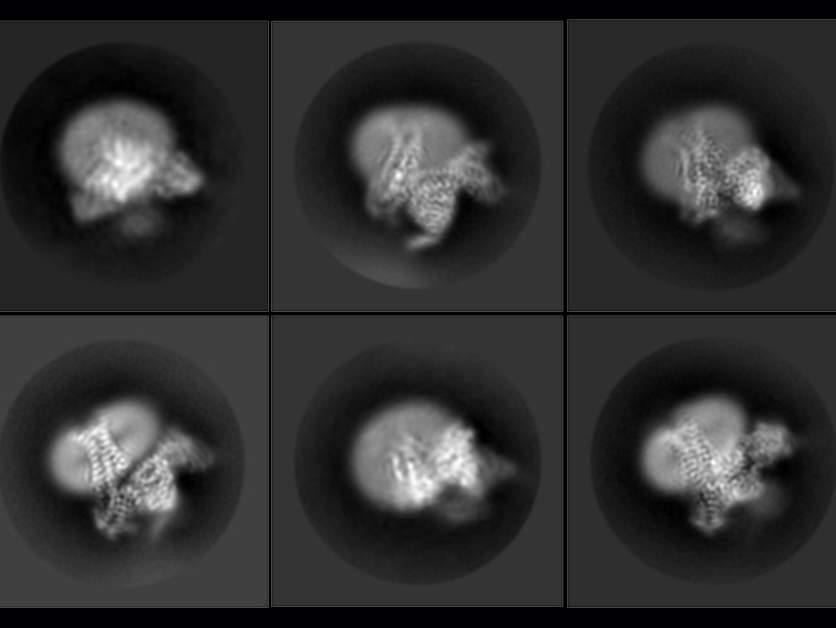
    The process of HIV infection is just one the subjects protein researcher Dr. Ron Diskin is investigating in his new lab

    More »

    Honors & Awards

    Dr. Zohar Komargodski has been awarded the Gribov Medal by the EPS High Energy Particle Physics Division Prizes
    More »

    Full list »

    |
    | | | | | |
    |
  • Research
    • By Subject
    • What We Are Doing About:
    • From Basic Research to Benefiting Humanity
    • Shaping the Future

    By Subject

    Alternative Energy Materials Science
    Astrophysics Mathematics
    Biochemistry  Molecular Cell Biology
    Bioinformatics Nanoscience
    Biomedical Biology Neuroscience
    Cancer Particle Physics
    Chemistry Physics
    Computer Science Plant Sciences
    Environment Quantum Physics
    Evolution Scientific Archaeology
    Genetics Structural Biology

    What We Are Doing About:

    • Cancer
    • Diabetes
    • The Environment
    • Nanoscience
    • Energy

    Benefiting Humanity

    Prof. Amos Breskin
    Prof. Amos Breskin develops advanced radiation detectors, which have an important impact on many fields of research, such as particle, nuclear and atomic physics, medical diagnostics, biology and materials science.
     
    Application

    More »

    Full list »

    |
    | | | | | |
    |
  • Magazines and Multimedia
    • Annual Report
    • Interface - Online Magazine
    • The Weizmann International Magazine of Science and People
    • Books
    • Nano Comics
    • Galleries
    • Horizons - Online Magazine
    Annual Report 2011
    Art and Science on the Move
    Administering the Institute
    Research
    Financial Highlights
    Roll of Honor
    Supporting Network
    More »

    Magazines

    Current Issue: Spring 2013
    Interface magazine Spring 2013
    Magazine Sections
    Science Feature Articles
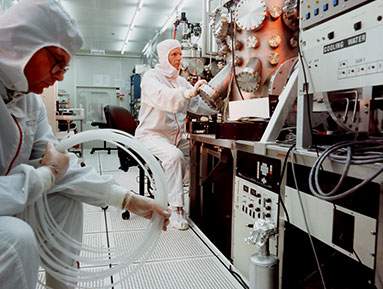
    Made at the Institute
    Time Tunnel

    Archive »

    Latest Videos

    CRASH
    The Race for the Higgs Boson
    • Monitoring Carbon Exchange
    • Thanks for the Memories
    • Quantum Computing
    • Back to Basics - Forward to the Future
    More »
    |
    | | | | | |
    |
  • About the Institute
    • Overview
    • History
    • Virtual Tour
    • Visiting the Institute

    Overview

    • Multidisciplinary Research
    • Facts and Figures
    • Pioneering Progress
    • Training Future Scientists
    • Science is for Sharing
    • Advancing Israel
    • New Horizons
    • Beauty in Science

    History

    Dr. Chaim Weizmann

    Chaim Weizmann was born in 1874 to a traditional Jewish family in the small town of Motol in White Russia (Belarus). After graduating with honors from the Real-Gymnasium in Pinsk, he decided to establish himself professionally

    More »
    Weizmann House
    • History and Architecture
    • The Collection
    • The Tour
    • The Garden
    • The Grave
    • Erich Mendelsohn
    • The Presidential Car Vintage Wheels

    Visiting the Institute


    • Visitors Center
    • Weizmann House
    • Clore Garden of Science
    |
    | | | | | |
    |
  • Weizmann Institute Homepage
Home » Press Room » Press Releases
News
  • Press Releases
    • English
    • Hebrew
    • Spanish
    • French
    • German
  • In the News
  • Subscribe to Press Releases
  • Honors and Awards
  • Visits
  • Events

twitter block


Follow @WeizmannScience

New Antibodies Treat Autoimmune Disease in Mice

26 Dec
2011
Biomedical Biology
A team of Weizmann Institute scientists has turned the tables on an autoimmune disease. In such diseases, including Crohn’s and rheumatoid arthritis, the immune system mistakenly attacks the body’s tissues. But the scientists managed to trick the immune systems of mice into targeting one of the body’s players in autoimmune processes, an enzyme known as MMP9. The results of their research appear today in Nature Medicine.
Prof. Irit Sagi of the Biological Regulation Department and her research group have spent years looking for ways to home in on and block members of the matrix metalloproteinase (MMP) enzyme family. These proteins cut through such support materials in our bodies as collagen, which makes them crucial for cellular mobilization, proliferation and wound healing, among other things. But when some members of the family, especially MMP9, get out of control, they can aid and abet autoimmune disease and cancer metastasis. Blocking these proteins might lead to effective treatments for a number of diseases. 
 
Originally, Sagi and others had designed synthetic drug molecules to directly target MMPs. But these drugs proved to be fairly crude tools that had extremely severe side effects. The body normally produces its own MMP inhibitors, known as TIMPs, as part of the tight regulation program that keeps these enzymes in line. As opposed to the synthetic drugs, these work in a highly selective manner. An arm on each TIMP is precisely constructed to reach into a cleft in the enzyme that shelters the active bit – a metal zinc ion surrounded by three histidine peptides – closing it off like a snug cork. “Unfortunately,” says Sagi, “it is quite difficult to reproduce this precision synthetically.”

Dr. Netta Sela-Passwell began working on an alternative approach as an M.Sc. student in Sagi’s lab, and continued on through her Ph.D. research. She and Sagi decided that, rather than attempting to design a synthetic molecule to directly attack MMPs, they would try coaxing the immune system into targeting MMP-9 through immunization. Just as immunization with a killed virus induces the immune system to create antibodies that then attack live viruses, an MMP immunization would trick the body into creating antibodies that block the enzyme at its active site.

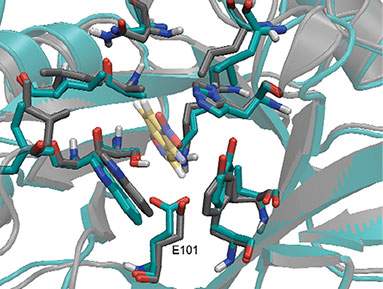
Together with Prof. Abraham Shanzer of the Organic Chemistry Department, they created an artificial version of the metal zinc-histidine complex at the heart of the MMP9 active site. They then injected these small, synthetic molecules into mice and afterward checked the mice’s blood for signs of immune activity against the MMPs. The antibodies they found, which they dubbed “metallobodies,” were similar but not identical to TIMPS, and a detailed analysis of their atomic structure suggested they work in a similar way – reaching into the enzyme’s cleft and blocking the active site. The metallobodies were selective for just two members of the MMP family – MMP2 and 9 – and they bound tightly to both the mouse versions of these enzymes and the human ones.


As they hoped, when they had induced an inflammatory condition that mimics Crohn's disease in mice, the symptoms were prevented when mice were treated with metallobodies. “We are excited not only by the potential of this method to treat Crohn’s,” says Sagi, but by the potential of using this approach to explore novel treatments for many other diseases.” Yeda, the technology transfer arm of the Weizmann Institute has applied for a patent for the synthetic immunization molecules as well as the generated metallobodies.

Also participating  in this research were Drs. Orly Dym, Haim Rozenberg, Rina Arad-Yellin and  Tsipi Shoham, and Raanan Margalit of the Structural Biology, Immunology and Biological Regulation Departments, Raghavendra Kikkeri of the Organic Chemistry Department, Miriam Eisenstein of the Chemical Research Support Department, Ori Brenner of the Veterinary Resources Department and Tamar Danon of the Molecular Cell Biology Department.
 
Prof. Irit Sagi’s research is supported by the Spencer Charitable Fund; the Leona M. and Harry B. Helmsley Charitable Trust; Cynthia Adelson, Canada; Mireille Steinberg, Canada; the Leonard and Carol Berall Post Doctoral Fellowship; and the Ilse Katz Institute for Material Sciences and Magnetic Resonance Research. Prof. Sagi is the incumbent of the Maurizio Pontecorvo Professorial Chair. 

This work was financially supported by Merck Serono S.A., a division of Merck KGaA, Darmstadt, Germany.
 

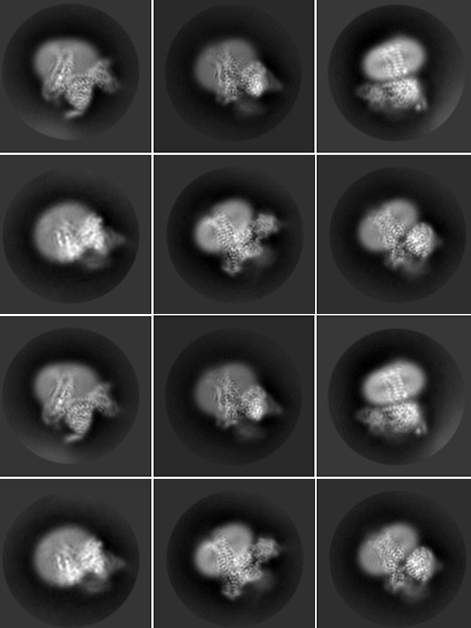
Irit Sagi two antibodies

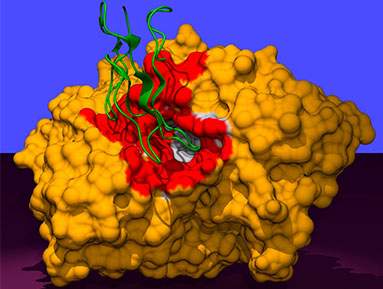
Left: Natural control mechanism blocks the enzyme's zinc active site. Right: Novel antibody works as effectively as the natural control mechanism
 
Tags:
  • Abraham Shanzer,
  • Autoimmune disease,
  • Biological Regulation,
  • Enzyme,
  • Irit Sagi,
  • Organic Chemistry,
  • Synthetic antibodies,
  • Yeda,
  • ""
  • Print this page »

Search Press Releases

Related Articles

Stopping Short
Therapeutic Effects of Garlic Clarified by Weizmann Institute Research
Weizmann Researchers Find Evidence That Links a Molecular Mechanism to Huntington's Disease
Bacteria Beat the Heat
More Related links »
Ovarian Cells
Ovarian Cells
Edit block | Delete block

Edit block | Delete block

Download our FREE Interface Magazine App for iPad and Android

Secondary Links

  • Contact Us
  • Visit Us
  • How to Get Here
  • Campus Map
  • Site Map
  • Privacy
  • Terms of Use
  • Supporting Committees
  • Credits

Get RSS
© Weizmann Institute of Science 2012. All rights reserved
Follow us on:
[Jump to Top] [Jump to Main Content]