[[Skip Header and Navigation] [Jump to Main Content]
« עברית
  • Home
  • News
    • Press Releases
    • In the News
    • Subscribe to Press Releases
    • Honors and Awards
    • Visits
    • Events

    Press Releases

    16 May 2013
    Weather on the Outer Planets Only Goes So Deep
    18 Apr 2013
    Neural Activity in Bats Measured In Flight
    18 Mar 2013
    Causing Collapse

    More »

    Research Highlights

    GeneCards
    Noncoding Sequences Get Equal Listing

    A greatly expanded database will give scientists around the world a powerful new tool for life sciences research

    gut cells
    The Spies Inside

    How does the immune system in the gut distinguish between helpful microbes and those that wish us harm?

    Ron Diskin
    Mutations Trump Invasion

    The process of HIV infection is just one the subjects protein researcher Dr. Ron Diskin is investigating in his new lab

    More »

    Honors & Awards

    Dr. Zohar Komargodski has been awarded the Gribov Medal by the EPS High Energy Particle Physics Division Prizes
    More »

    Full list »

    |
    | | | | | |
    |
  • Research
    • By Subject
    • What We Are Doing About:
    • From Basic Research to Benefiting Humanity
    • Shaping the Future

    By Subject

    Alternative Energy Materials Science
    Astrophysics Mathematics
    Biochemistry  Molecular Cell Biology
    Bioinformatics Nanoscience
    Biomedical Biology Neuroscience
    Cancer Particle Physics
    Chemistry Physics
    Computer Science Plant Sciences
    Environment Quantum Physics
    Evolution Scientific Archaeology
    Genetics Structural Biology

    What We Are Doing About:

    • Cancer
    • Diabetes
    • The Environment
    • Nanoscience
    • Energy

    Benefiting Humanity

    Prof. Amos Breskin
    Prof. Amos Breskin develops advanced radiation detectors, which have an important impact on many fields of research, such as particle, nuclear and atomic physics, medical diagnostics, biology and materials science.
     
    Application

    More »

    Full list »

    |
    | | | | | |
    |
  • Magazines and Multimedia
    • Annual Report
    • Interface - Online Magazine
    • The Weizmann International Magazine of Science and People
    • Books
    • Nano Comics
    • Galleries
    • Horizons - Online Magazine
    Annual Report 2011
    Art and Science on the Move
    Administering the Institute
    Research
    Financial Highlights
    Roll of Honor
    Supporting Network
    More »

    Magazines

    Current Issue: Spring 2013
    Interface magazine Spring 2013
    Magazine Sections
    Science Feature Articles
    Made at the Institute
    Time Tunnel

    Archive »

    Latest Videos

    CRASH
    The Race for the Higgs Boson
    • Monitoring Carbon Exchange
    • Thanks for the Memories
    • Quantum Computing
    • Back to Basics - Forward to the Future
    More »
    |
    | | | | | |
    |
  • About the Institute
    • Overview
    • History
    • Virtual Tour
    • Visiting the Institute

    Overview

    • Multidisciplinary Research
    • Facts and Figures
    • Pioneering Progress
    • Training Future Scientists
    • Science is for Sharing
    • Advancing Israel
    • New Horizons
    • Beauty in Science

    History

    Dr. Chaim Weizmann

    Chaim Weizmann was born in 1874 to a traditional Jewish family in the small town of Motol in White Russia (Belarus). After graduating with honors from the Real-Gymnasium in Pinsk, he decided to establish himself professionally

    More »
    Weizmann House
    • History and Architecture
    • The Collection
    • The Tour
    • The Garden
    • The Grave
    • Erich Mendelsohn
    • The Presidential Car Vintage Wheels

    Visiting the Institute


    • Visitors Center
    • Weizmann House
    • Clore Garden of Science
    |
    | | | | | |
    |
  • Weizmann Institute Homepage
Home » Press Room » Press Releases
News
  • Press Releases
    • English
    • Hebrew
    • Spanish
    • French
    • German
  • In the News
  • Subscribe to Press Releases
  • Honors and Awards
  • Visits
  • Events

twitter block


Follow @WeizmannScience

New Organizing Principle for Our Sense of Smell

26 Sep
2011
Neuroscience


The fact that certain smells cause us pleasure or disgust would seem to be a matter of personal taste. But new research at the Weizmann Institute shows that odors can be rated on a scale of pleasantness, and this turns out to be an organizing principle for the way we experience smell. The findings, which appeared today in Nature Neuroscience, reveal a correlation between the response of certain nerves to particular scents and the pleasantness of those scents. Based on this correlation, the researchers could tell by measuring the nerve responses whether a subject found a smell pleasant or unpleasant.

Our various sensory organs have evolved patterns of organization that reflect the type of input they receive. Thus the receptors in the retina, in the back of the eye, are arranged spatially for efficiently mapping out visual coordinates. The structure of the inner ear, on the other hand, is set up according to a tonal scale. But the organizational principle for our sense of smell has remained a mystery: Scientists have not even been sure if there is a scale that determines the organization of our smell organ, much less how the arrangement of smell receptors on the membranes in our nasal passages might reflect such a scale.

A team headed by Prof. Noam Sobel of the Weizmann Institute’s Neurobiology Department set out to search for the principle of organization for smell. Hints that the answer could be tied to pleasantness had been seen in research labs around the world, including that of Sobel, who had previously found a connection between the chemical structure of an odor molecule and its place on a pleasantness scale. Sobel and his team thought that smell receptors in the nose – of which there are some 400 subtypes – could be arranged on the nasal membrane according to this scale. This hypothesis goes against the conventional view, which claims that the various smell receptors are mixed -- distributed evenly, but randomly, around the membrane.

In the experiment, the researchers inserted electrodes into the nasal passages of volunteers and measured the nerves’ responses to different smells in various sites. Each measurement actually captured the response of thousands of smell receptors, as these are densely packed on the membrane. The scientists found that the strength of the nerve signal varies from place to place on the membrane. It appeared that the receptors are not evenly distributed, but rather, that they are grouped into distinct sites, each engaging most strongly with a particular type of scent. Further investigation showed that the intensity of a reaction was linked to the odor’s place on the pleasantness scale. A site where the nerves reacted strongly to a certain agreeable scent also showed strong reactions to other pleasing smells and vice versa: The nerves in an area with a high response to an unpleasant odor reacted similarly to other disagreeable smells. The implication is that a pleasantness scale is, indeed, the organizing principle for our smell organ.


But does our sense of smell really work according to this simple principle? Natural odors are composed of a large number of molecules – roses, for instance, release 172 different odor molecules. Nonetheless, says Sobel, the most dominant of those determine which sites on the membrane will react the most strongly, while the other substances make secondary contributions to the scent.

“We uncovered a clear correlation between the pattern of nerve reaction to various smells and the pleasantness of those smells. As in sight and hearing, the receptors for our sense of smell are spatially organized in a way that reflects the nature of the sensory experience,” says Sobel. In addition, the findings confirm the idea that our experience of smells as nice or nasty is hardwired into our physiology, and not purely the result of individual preference. Sobel doesn’t discount the idea that individuals may experience smells differently. He theorizes that cultural context and personal experience may cause a certain amount of reorganization in the smell membrane over a person’s lifetime.
 
 
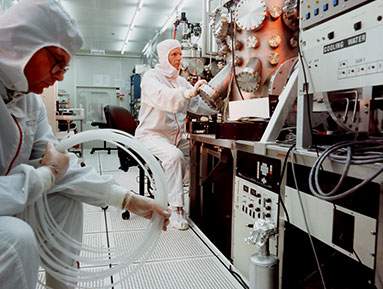
Smell experiment – lab of Prof. Noam Sobel
Experimental apparatus for recording neural activity directly from the olfactory receptor neurons lining the olfactory epithelium in the nasal passages. Photo by Martin Kollar

This research was carried out by Hadas Lapid, Drs. Sagit Shushan and Anton Plotkin in the group of Prof. Noam Sobel, together with Dr. Elad Schneidman of the Weizmann Institute’s Neurobiology Department and Dr. Yehudah Roth of Wolfson Hospital in Holon, Prof. Hillary Voet of the Hebrew University of Jerusalem and Prof. Thomas Hummel of Dresden University, Germany.
 
Prof. Noam Sobel’s research is supported by Regina Wachter, NY; the estate of Lore Lennon, the James S. McDonnell Foundation 21st Century Science Scholar in Understanding Human Cognition Program; the Minerva Foundation; and the European Research Council.


Tags:
  • Neurobiology,
  • Noam Sobel,
  • Perception,
  • Smell,
  • Smell receptor,
  • ""
  • Print this page »

Search Press Releases

Related Articles

Tumor Tip-Off
Personnel Management in the Brain
Windows on your Mind: Weizmann Institute Scientists Reveal That Imagination Can Enhance Visual Perception
Pacman in the Brain: Protein Chews up Vital Memory Chemical
More Related links »
A conversation between nerve cells in the brain
Edit block | Delete block

Edit block | Delete block

Download our FREE Interface Magazine App for iPad and Android

Secondary Links

  • Contact Us
  • Visit Us
  • How to Get Here
  • Campus Map
  • Site Map
  • Privacy
  • Terms of Use
  • Supporting Committees
  • Credits

Get RSS
© Weizmann Institute of Science 2012. All rights reserved
Follow us on:
[Jump to Top] [Jump to Main Content]