[[Skip Header and Navigation] [Jump to Main Content]
« עברית
  • Home
  • News
    • Press Releases
    • In the News
    • Subscribe to Press Releases
    • Honors and Awards
    • Visits
    • Events

    Press Releases

    16 May 2013
    Weather on the Outer Planets Only Goes So Deep
    18 Apr 2013
    Neural Activity in Bats Measured In Flight
    18 Mar 2013
    Programmed Destruction

    More »

    Research Highlights

    GeneCards
    Noncoding Sequences Get Equal Listing

    A greatly expanded database will give scientists around the world a powerful new tool for life sciences research

    gut cells
    The Spies Inside

    How does the immune system in the gut distinguish between helpful microbes and those that wish us harm?

    Ron Diskin
    Mutations Trump Invasion

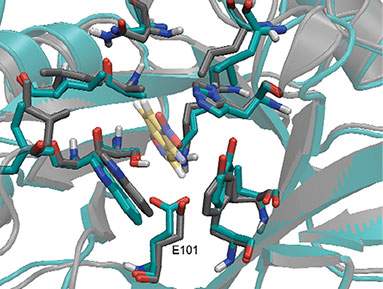
    The process of HIV infection is just one of the subjects protein researcher Dr. Ron Diskin is investigating in his new lab

    More »

    Honors & Awards

    Dr. Zohar Komargodski has been awarded the Gribov Medal by the EPS High Energy Particle Physics Division Prizes
    More »

    Full list »

    |
    | | | | | |
    |
  • Research
    • By Subject
    • What We Are Doing About:
    • From Basic Research to Benefiting Humanity
    • Shaping the Future

    By Subject

    Alternative Energy Materials Science
    Astrophysics Mathematics
    Biochemistry  Molecular Cell Biology
    Bioinformatics Nanoscience
    Biomedical Biology Neuroscience
    Cancer Particle Physics
    Chemistry Physics
    Computer Science Plant Sciences
    Environment Quantum Physics
    Evolution Scientific Archaeology
    Genetics Structural Biology

    What We Are Doing About:

    • Cancer
    • Diabetes
    • The Environment
    • Nanoscience
    • Energy

    Benefiting Humanity

    Prof. Amos Breskin
    Prof. Amos Breskin develops advanced radiation detectors, which have an important impact on many fields of research, such as particle, nuclear and atomic physics, medical diagnostics, biology and materials science.

     
    Application

    More »

    Full list »

    |
    | | | | | |
    |
  • Magazines and Multimedia
    • Annual Report
    • Interface - Online Magazine
    • The Weizmann International Magazine of Science and People
    • Books
    • Nano Comics
    • Galleries
    • Horizons - Online Magazine
    Annual Report 2012
    The 2012 Report
    Annual Report 2012
    2012 and Beyond
    Research Highlights
    New Developments
    Technology Transfer
    Summary of Operating Results
    More »

    Magazines

    Current Issue: Spring 2013
    Interface magazine Spring 2013
    Magazine Sections
    Science Feature Articles
    Made at the Institute
    Time Tunnel

    Archive »

    Latest Videos

    CRASH
    The Race for the Higgs Boson
    • Monitoring Carbon Exchange
    • Thanks for the Memories
    • Quantum Computing
    • Back to Basics - Forward to the Future
    More »
    |
    | | | | | |
    |
  • About the Institute
    • Overview
    • History
    • Virtual Tour
    • Visiting the Institute

    Overview

    • Multidisciplinary Research
    • Facts and Figures
    • Pioneering Progress
    • Training Future Scientists
    • Science is for Sharing
    • Advancing Israel
    • New Horizons
    • Beauty in Science

    History

    Dr. Chaim Weizmann

    Chaim Weizmann was born in 1874 to a traditional Jewish family in the small town of Motol in White Russia (Belarus). After graduating with honors from the Real-Gymnasium in Pinsk, he decided to establish himself professionally

    More »
    Weizmann House
    • History and Architecture
    • The Collection
    • The Tour
    • The Garden
    • The Grave
    • Erich Mendelsohn
    • The Presidential Car Vintage Wheels

    Visiting the Institute


    • Visitors Center
    • Weizmann House
    • Clore Garden of Science
    |
    | | | | | |
    |
  • Weizmann Institute Homepage
Home » Press Room » Press Releases
News
  • Press Releases
    • English
    • Hebrew
    • Spanish
    • French
    • German
  • In the News
  • Subscribe to Press Releases
  • Honors and Awards
  • Visits
  • Events

twitter block


Follow @WeizmannScience

Protein Contributes to Obesity

04 May
2011
Biochemistry
 
Weizmann Institute scientists have added another piece to the obesity puzzle, showing how and why a certain protein that is active in a small part of the brain contributes to weight gain. This research appeared today in Cell Metabolism.
 
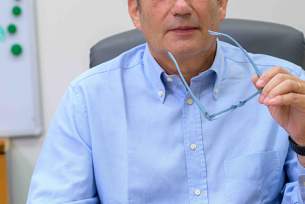
Prof. Ari Elson and his team in the Institute’s Molecular Genetics Department made the discovery when working with female mice that were genetically engineered to lack this protein, called protein tyrosine phosphatase epsilon (PTPe, for short). The scientists had originally intended to investigate osteoporosis, and thus, they also removed the ovaries of these mice. Taking out ovaries typically causes mice to gain weight to the point of obesity – so the scientists were surprised to find that the weight of the genetically-engineered mice remained stable. Working with Dr. Alon Chen and his group in the Neurobiology Department and Prof. Hilla Knobler, Head of the Unit of Metabolic Disease and Diabetes of Kaplan Medical Center, the researchers fed these mice a high-fat diet, yet the PTPe-deficient mice maintained their svelte figures; they burned more energy and had more stable glucose levels as well.

 
To find out how the lack of this protein could keep mice slim and healthy, the scientists looked at the hypothalamus, a region of the brain that takes in assorted stimuli, including a wide variety of hormones, and sends out messages of its own in the form of new hormones and nerve signals. The hypothalamus plays a vital role in regulating body mass – a complex balancing act that involves, among other things, controlling appetite and physical activity.
 
Elson and his team found that PTPe blocks the messages from a hormone called leptin – a key player in body mass regulation. They revealed exactly how it does this: PTPe responds to the leptin signal in the hypothalamus, inhibiting certain molecules, which in turn dampens that signal.
 
Among its actions, leptin reduces appetite and increases physical activity. Paradoxically, obese people often have a surfeit of leptin circulating in their blood. This is because, while their bodies produce the hormone normally, their cells become resistant to its effects, and more leptin is then generated to compensate.
 
The new research shows that PTPe plays a role in this resistance. The scientists found that the mice lacking the protein were highly sensitive to leptin; and they remained so despite aging, ovary removal or high-fat diets. This suggests that in obese humans with leptin insensitivity, inhibiting PTPe might, conceivably, help to reestablish the leptin response and help induce weight loss. This, however, requires further research to ensure that it acts in the same way in humans with no dangerous side-effects.
 
Elson: “Interestingly enough, the effect seems to be gender-specific. Male mice hardly benefitted at all from the lack of PTPe compared with the female mice. This finding could open up whole new lines of inquiry in obesity studies.”
 
 
microscope images of fat cells in mice
Microscope images of normal fat cells in mice (left) and healthy fat cells in PTPe deficient mice (right)
 
 
Leptin receptor positive neuron in the mouse hypothalamus
 
 
Prof. Ari Elson’s research is supported by the M.D. Moross Institute for Cancer Research; the Kekst Family Institute for Medical Genetics; the Yeda-Sela Center for Basic Research; the Fritz Thyssen Stiftung; the Maurice and Vivienne Wohl Charitable Foundation; and the estate of Fannie Sherr. Prof. Elson heads the Ekard Research School of Biological Science; and the Lorry I. Lokey Research School of Biochemical Science. He is the incumbent of the Marshall and Renette Ezralow Professorial Chair.
 
Dr. Alon Chen’s research is supported by the Nella and Leon Benoziyo Center for Neurosciences; the Nella and Leon Benoziyo Center for Neurological Diseases; the Carl and Micaela Einhorn-Dominic Brain Research Institute; the Irwin Green Alzheimer's Research Fund; the Mark Besen and the Pratt Foundation, Australia; Roberto and Renata Ruhman, Brazil; and Martine Turcotte, Canada. Dr. Chen is the incumbent of the Philip Harris and Gerald Ronson Career Development Chair.

Tags:
  • Alon Chen,
  • Ari Elson,
  • Brain,
  • Molecular Genetics,
  • Neurobiology,
  • Obesity,
  • Protein,
  • ""
  • Print this page »

Search Press Releases

Related Articles

Personnel Management in the Brain
Imaging Method Reveals Remarkable 'Architecture' of the Working Brain
Weizmann Researchers Find Evidence That Links a Molecular Mechanism to Huntington's Disease
Functional MRI Will Enable Non-Invasive Visualization of brain Cortical Columns
More Related links »
Crystals
Crystals
Edit block | Delete block

Edit block | Delete block

Download our FREE Interface Magazine App for iPad and Android

Secondary Links

  • Contact Us
  • Visit Us
  • How to Get Here
  • Campus Map
  • Site Map
  • Privacy
  • Terms of Use
  • Supporting Committees
  • Credits

Get RSS
© Weizmann Institute of Science 2012. All rights reserved
Follow us on:
[Jump to Top] [Jump to Main Content]