[[Skip Header and Navigation] [Jump to Main Content]
« עברית
  • Home
  • News
    • Press Releases
    • In the News
    • Subscribe to Press Releases
    • Honors and Awards
    • Visits
    • Events

    Press Releases

    16 May 2013
    Weather on the Outer Planets Only Goes So Deep
    18 Apr 2013
    Neural Activity in Bats Measured In Flight
    18 Mar 2013
    Programmed Destruction

    More »

    Research Highlights

    GeneCards
    Noncoding Sequences Get Equal Listing

    A greatly expanded database will give scientists around the world a powerful new tool for life sciences research

    gut cells
    The Spies Inside

    How does the immune system in the gut distinguish between helpful microbes and those that wish us harm?

    Ron Diskin
    Mutations Trump Invasion

    The process of HIV infection is just one of the subjects protein researcher Dr. Ron Diskin is investigating in his new lab

    More »

    Honors & Awards

    Dr. Zohar Komargodski has been awarded the Gribov Medal by the EPS High Energy Particle Physics Division Prizes
    More »

    Full list »

    |
    | | | | | |
    |
  • Research
    • By Subject
    • What We Are Doing About:
    • From Basic Research to Benefiting Humanity
    • Shaping the Future

    By Subject

    Alternative Energy Materials Science
    Astrophysics Mathematics
    Biochemistry  Molecular Cell Biology
    Bioinformatics Nanoscience
    Biomedical Biology Neuroscience
    Cancer Particle Physics
    Chemistry Physics
    Computer Science Plant Sciences
    Environment Quantum Physics
    Evolution Scientific Archaeology
    Genetics Structural Biology

    What We Are Doing About:

    • Cancer
    • Diabetes
    • The Environment
    • Nanoscience
    • Energy

    Benefiting Humanity

    Prof. Amos Breskin
    Prof. Amos Breskin develops advanced radiation detectors, which have an important impact on many fields of research, such as particle, nuclear and atomic physics, medical diagnostics, biology and materials science.

     
    Application

    More »

    Full list »

    |
    | | | | | |
    |
  • Magazines and Multimedia
    • Annual Report
    • Interface - Online Magazine
    • The Weizmann International Magazine of Science and People
    • Books
    • Nano Comics
    • Galleries
    • Horizons - Online Magazine
    Annual Report 2012
    The 2012 Report
    Annual Report 2012
    2012 and Beyond
    Research Highlights
    New Developments
    Technology Transfer
    Summary of Operating Results
    More »

    Magazines

    Current Issue: Spring 2013
    Interface magazine Spring 2013
    Magazine Sections
    Science Feature Articles
    Made at the Institute
    Time Tunnel

    Archive »

    Latest Videos

    CRASH
    The Race for the Higgs Boson
    • Monitoring Carbon Exchange
    • Thanks for the Memories
    • Quantum Computing
    • Back to Basics - Forward to the Future
    More »
    |
    | | | | | |
    |
  • About the Institute
    • Overview
    • History
    • Virtual Tour
    • Visiting the Institute

    Overview

    • Multidisciplinary Research
    • Facts and Figures
    • Pioneering Progress
    • Training Future Scientists
    • Science is for Sharing
    • Advancing Israel
    • New Horizons
    • Beauty in Science

    History

    Dr. Chaim Weizmann

    Chaim Weizmann was born in 1874 to a traditional Jewish family in the small town of Motol in White Russia (Belarus). After graduating with honors from the Real-Gymnasium in Pinsk, he decided to establish himself professionally

    More »
    Weizmann House
    • History and Architecture
    • The Collection
    • The Tour
    • The Garden
    • The Grave
    • Erich Mendelsohn
    • The Presidential Car Vintage Wheels

    Visiting the Institute


    • Visitors Center
    • Weizmann House
    • Clore Garden of Science
    |
    | | | | | |
    |
  • Weizmann Institute Homepage
Home » Press Room » Press Releases
News
  • Press Releases
    • English
    • Hebrew
    • Spanish
    • French
    • German
  • In the News
  • Subscribe to Press Releases
  • Honors and Awards
  • Visits
  • Events

twitter block


Follow @WeizmannScience

The Big Blow-Up

03 Dec
2009
Astrophysics

The first observations of the explosion of a star around 200 times the size of our sun reveals a new type of supernova

 
What happens when a really gargantuan star – one hundreds of times bigger than our sun – blows up?  Although a theory developed years ago describes what the explosion of such an enormous star should look like, no one had actually observed one – until now. An international team, led by scientists in Israel, and including researchers from Germany, the US, UK and China, tracked a supernova – an exploding star – for over a year and a half, and found that it neatly fits the predictions for the explosion of a star of over 150 times the sun’s mass. Their findings, which could influence our understanding of everything from natural limits on star size to the evolution of the universe, appeared recently in Nature.
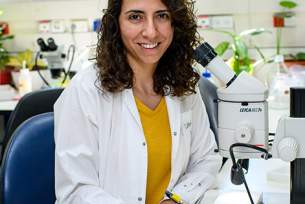
 
‘It’s all about balance,’ says team leader Dr. Avishay Gal-Yam of the Particle Physics and Astrophysics Department. ‘During a star’s lifetime, there’s a balance between the gravity that pulls its material inward and the heat produced in the nuclear reaction at its core, pushing it out. In a supernova we’re familiar with, of a star 10 -100 times the size of the sun, the nuclear reaction begins with the fusion of hydrogen into helium, as in our sun. But the fusion keeps going, producing heavier and heavier elements, until the core turns to iron. Since iron doesn’t fuse easily, the reaction burns out, and the balance is lost. Gravity takes over and the star collapses inward, throwing off its outer layers in the ensuing shockwaves.’

 
The balance in a super-giant star is different. Here, the photons (light particles) are so hot and energetic, they interact to produce pairs of particles: electrons and their opposites, positrons. In the process, particles with mass are created from the mass-less photons, and this consumes the star’s energy. Again, things are thrown out of balance, but this time, when the star collapses, it falls in on a core of volatile oxygen, rather than iron. The hot, compressed oxygen explodes in a runaway thermonuclear reaction that obliterates the star’s core, leaving behind little but glowing stardust. ‘Models of ‘pair supernovae’ had been calculated decades ago,’ says Gal-Yam, ‘but no one was sure these huge explosions really occur in nature. The new supernova we discovered fits these models very well.’
 
An analysis of the new supernova data led the scientists to estimate the star’s size at around 200 times the mass of the sun. This in itself is unusual, as observers had noted that the stars in our part of the universe seem to have a size limit of about 150 suns; some had even wondered if there was some sort of physical constraint on a star’s girth. The new findings suggest that hyper-giant stars, while rare, do exist, and that even larger stars, up to 1000 times the size of the sun, may have existed in the early universe. ‘This is the first time we’ve been able to analyze observations of such a massive exploding star,’ says Dr. Paolo Mazzali of the Max Planck Institute for Astrophysics, Germany, who led the theoretical study of this object. ‘We were able to measure the amounts of new elements created in this explosion, including approximately five times the mass of our sun in highly radioactive, freshly synthesized nickel. Such explosions may be important factories for heavy metals in the Universe.’
 
This massive supernova was found in a tiny galaxy – only a hundredth the size of our own, and the scientists think that such dwarf galaxies could be natural harbors for the giant stars, somehow enabling them to surpass the 150 sun limit.
 
‘Our discovery and analysis of this unique explosion has given us new insights into just how massive stars can get and how these stellar giants contribute to the makeup of our Universe’, says Dr. Gal-Yam.  ‘We hope to understand even more when we find additional examples from new surveys that we have recently begun to carry out, covering large, previously unexplored areas of the Universe.’
 
Dr. Avishai Gal-Yam’s research is supported by the Nella and Leon Benoziyo Center for Astrophysics; the Peter and Patricia Gruber Awards;  William Z. & Eda Bess Novick New Scientists Fund; the Legacy Heritage Fund Program of the Israel Science Foundation; and Miel de Botton Aynsley, UK.
 
The Weizmann Institute of Science in Rehovot, Israel, is one of the world's top-ranking multidisciplinary research institutions. Noted for its wide-ranging exploration of the natural and exact sciences, the Institute is home to 2,600 scientists, students, technicians and supporting staff. Institute research efforts include the search for new ways of fighting disease and hunger, examining leading questions in mathematics and computer science, probing the physics of matter and the universe, creating novel materials and developing new strategies for protecting the environment.

Weizmann Institute news releases are posted on the World Wide Web at http://wis-wander.weizmann.ac.il, and are also available at http://www.eurekalert.org.

Tags:
  • Astrophysics,
  • Avishay Gal-Yam,
  • Super-massive star,
  • Supernova,
  • ""
  • Print this page »

Search Press Releases

Related Articles

Weizmann Institute Astrophysicist Hot on the Tracks of a New "Strange" Star
Bureau Of Missing Masses
Zooming Star Points to Supermassive Black Hole at the Center of the Milky Way
Prof. Daniel Zajfman nominated as next President of the Weizmann Institute
More Related links »

Edit block | Delete block

Download our FREE Interface Magazine App for iPad and Android

Secondary Links

  • Contact Us
  • Visit Us
  • How to Get Here
  • Campus Map
  • Site Map
  • Privacy
  • Terms of Use
  • Supporting Committees
  • Credits

Get RSS
© Weizmann Institute of Science 2012. All rights reserved
Follow us on:
[Jump to Top] [Jump to Main Content]