The Jacob Ziskind Building
Architects: Arieh Elhanani, Israel Dicker and Uriel Schiller
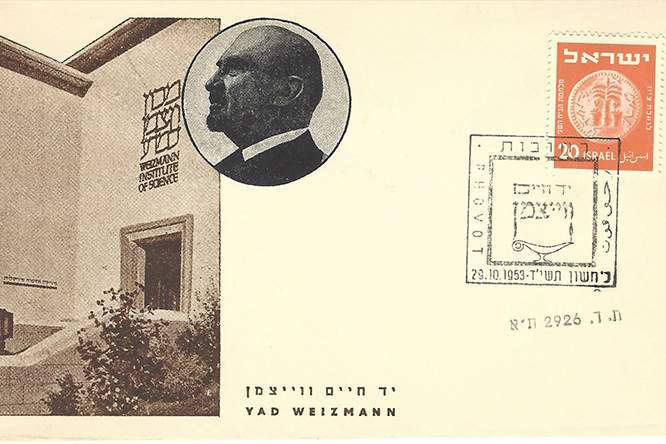
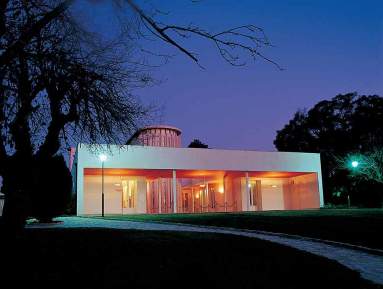
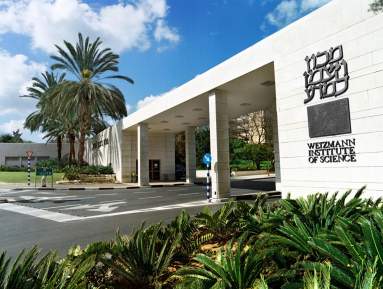
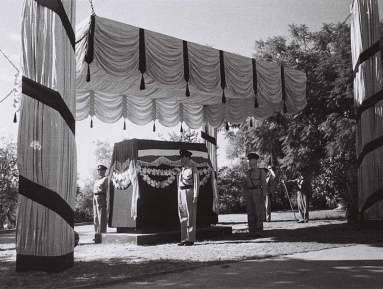
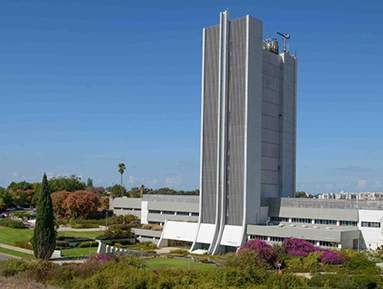
The Jacob Ziskind Building was designed by the architects Arieh Elhanani, Israel Dicker and Uriel Schiller in 1947; a new wing was added to the back of the building in 1960. Planned according to a sketch by Erich Mendelsohn, the building’s general structure is monumental and official looking, while its repeating office windows project a no-nonsense functionality. The accentuated entrance, the wide staircase and the barrel-vaulted ceiling covering the entire lobby create a feeling of majestic splendor. This entrance served as the stage from which Dr. Chaim Weizmann, David Ben-Gurion, Golda Meir and others delivered speeches at the dedication of the Weizmann Institute of Science.

In contrast to the flat, functional façade modestly faced with light-colored plaster, the entrance is accentuated by a stone handrail, with glass-and-iron Modernist lamps on either side and an impressive stone frame around the entrance door. The door itself has been artistically crafted as a network of double iron grills with iron protrusions at their intersections. The inner doors, leading from the entrance lobby to corridors with rooms on both sides, are similarly fashioned and are framed in the same brown marble as that used for the floor tiles.

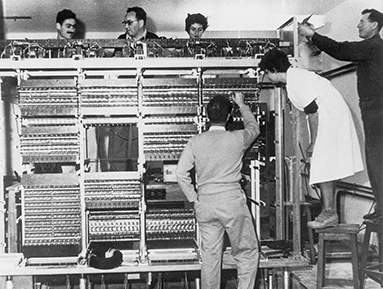
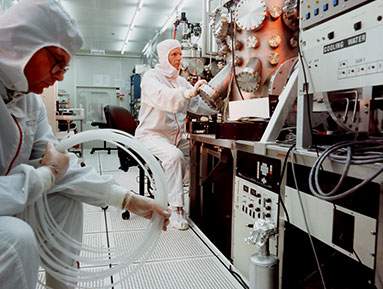
The main entrance door opens to reveal a simple lobby that nonetheless has an air of magnificence – and not only because it houses WEIZAC, the first computer built in Israel in 1954. The large space, with its high barrel-vaulted ceiling, superior materials and unique construction details, reflects quality and excellence. Incorporated in the ceiling are glass bricks to admit natural light, and embedded on the underside of the upperfloor balconies are large round lamps. The double-rod balustrade and handrail lining the wide staircase to the upper floor are of copper rather than plain iron. Even the baseboard is of 20-cm-high brown marble tiles, almost three times the standard height. The air-conditioning system, designed when the building was constructed, won it renown as the first air-conditioned building in the Middle East.