[[Skip Header and Navigation] [Jump to Main Content]
« עברית
  • Home
  • News
    • Press Releases
    • In the News
    • Subscribe to Press Releases
    • Honors and Awards
    • Visits
    • Events

    Press Releases

    19 Apr 2012
    Defending Against Chemical Acts of Terrorism
    12 Mar 2012
    Why do We See the Man in the Moon?
    23 Feb 2012
    Lineage Trees Reveal Cells’ Histories

    More »

    Research Highlights

    David Milstein
    Israel Prize to Prof. David Milstein

    Milstein is recognized for his environmentally-friendly catalysts

    ISPC
    At the Core

    Israel’s leadership in structural biology leads to the establishment of an Instruct Core Centre

    Neuron cover
    Two for the Price of One

    A unique ON-OFF switch in the brain controls a main stress hormone

    More »

    Honors & Awards

    Prof. Ronen Alon has been elected as a Member of EMBO (2012)
    More »

    Full list »

    |
    | | | | | |
    |
  • Research
    • By Subject
    • What We Are Doing About:
    • From Basic Research to Benefiting Humanity
    • Shaping the Future

    By Subject

    Alternative Energy Materials Science
    Astrophysics Mathematics
    Biochemistry  Neuroscience
    Bioinformatics Molecular Cell Biology
    Biomedical Biology Nanoscience
    Cancer Particle Physics
    Chemistry Physics
    Computer Science Plant Sciences
    Environment Quantum Physics
    Evolution Scientific Archaeology
    Genetics Structural Biology

    What We Are Doing About:

    • Cancer
    • Diabetes
    • The Environment
    • Nanoscience
    • Energy

    Benefiting Humanity

    Prof. Emeritus Nechama Haran-Ghera
    Prof. Emeritus Nechama Haran-Ghera, in collaboration with Israeli physicians, showed that the hormone erythropoietin may be helpful in treating multiple myeloma and other cancers. In mice injected with myeloma cells, the hormone prolonged survival, caused tumor regression and reduced mortality.
     
    Application
    More »

    Full list »

    |
    | | | | | |
    |
  • Magazines and Multimedia
    • Annual Report
    • Interface - Online Magazine
    • Books
    • Nano Comics
    • Galleries
    • Horizons - Online Magazine
    Annual Report 2011
    Art and Science on the Move
    Administering the Institute
    Research
    Financial Highlights
    Roll of Honor
    Supporting Network
    More »

    Magazines

    Current Issue: Apr. 2012 (No. 40)
    Magazine Sections
    Science Feature Articles
    Feature Articles
    Science Briefs

    Archive »

    Latest Videos

    CRASH
    The Race for the Higgs Boson
    CRASH: The Race for the Higgs Boson
    • Monitoring Carbon Exchange
    • Thanks for the Memories
    • Quantum Computing
    • Back to Basics - Forward to the Future
    More »
    |
    | | | | | |
    |
  • About the Institute
    • Overview
    • History
    • Virtual Tour
    • Visiting the Institute

    Overview

    • Multidisciplinary Research
    • Facts and Figures
    • Pioneering Progress
    • Training Future Scientists
    • Science is for Sharing
    • Advancing Israel
    • New Horizons
    • Beauty in Science

    History

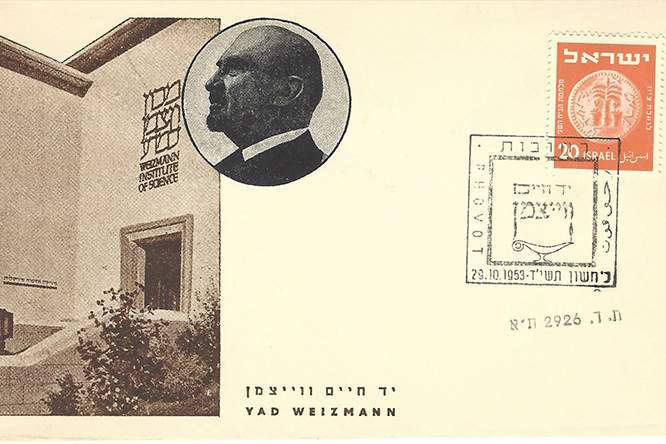
    Dr. Chaim Weizmann

    Chaim Weizmann was born in 1874 to a traditional Jewish family in the small town of Motol in White Russia (Belarus). After graduating with honors from the Real-Gymnasium in Pinsk, he decided to establish himself professionally 

    More »
    Weizmann House
    • History and Architecture
    • The Collection
    • The Tour
    • The Garden
    • The Grave
    • Erich Mendelsohn
    • The Presidential Car Vintage Wheels

    Visiting the Institute


    • Visitors Center
    • Weizmann House
    • Clore Garden of Science
    |
    | | | | | |
    |
  • Weizmann Institute Homepage
Home » Press Room » Press Releases
News
  • Press Releases
    • English
    • Hebrew
    • Spanish
    • French
    • German
  • In the News
  • Subscribe to Press Releases
  • Honors and Awards
  • Visits
  • Events

twitter block


Follow @WeizmannScience

The Memory of a Smell

09 Nov
2009
Neuroscience

Weizmann Institute scientists reveal how some aromas are bound up in our memories

 
From Proust’s Madeleines to the overbearing food critic in the movie Ratatouille who’s transported back to his childhood at the aroma of stew, artists have long been aware that some odors can spontaneously evoke strong memories. Scientists at the Weizmann Institute of Science have now revealed the scientific basis of this connection. Their research appeared in the latest issue of Current Biology.
 
Graduate student Yaara Yeshurun, together with Profs. Noam Sobel and Yadin Dudai of the Institute’s Neurobiology Department, thought that the key might not necessarily lie in childhood, but rather in the first time a smell is encountered in the context of a particular object or event.  In other words, the initial association of a smell with an experience will somehow leave a unique and lasting impression in the brain.
 
To test this idea, the scientists devised an experiment: First, in a special smell laboratory, subjects viewed images of 60 visual objects, each presented simultaneously with either a pleasant or an unpleasant odor generated in a machine called an olfactometer.  Next, the subjects were put in an fMRI scanner to measure their brain activity as they reviewed the images they’d seen and attempted to remember which odor was associated with each.  Then, the whole test was repeated – images, odors and fMRI – with the same images, but different odors accompanying each.  Finally, the subjects came back one week later, to be scanned in the fMRI again. They viewed the objects one more time and were asked to recall the odors they associated with them.
 
The scientists found that after one week, even if the subject recalled both odors equally, the first association revealed a distinctive pattern of brain activity. The effect was seen whether the smell was pleasant or unpleasant. This unique representation showed up in the hippocampus, a brain structure involved in memory, and in the amygdala, a brain structure involved in emotion. The pattern was so profound, it enabled the scientists to predict which associations would be remembered just by looking at the brain activity within these regions following the initial exposure. The scientists could look at the fMRI data on the first day of the experiment and predict which associations would come up a week later.


 
To see if other sensory experiences might share this tendency, the scientists repeated the entire experiment using sounds rather than smells; they found that sounds did not arouse a similar distinctive first-time pattern of activity. In other words, these results were specific to the sense of smell. ‘For some reason, the first association with smell gets etched into memory,’ says Sobel, ‘and this phenomenon allowed us to predict what would be remembered one week later based on brain activity alone’.
 
Yeshurun: ‘As far as we know, this phenomenon is unique to smell. Childhood olfactory memories may be special not because childhood is special, but simply because those years may be the first time we associate something with an odor.
 
Prof. Noam Sobel’s research is supported by the Nella and Leon Benoziyo Center for Neurosciences; the J&R Foundation;  the Eisenberg-Keefer Fund for New Scientists;  and Regina Wachter, New York, NY
 
 
The Weizmann Institute of Science in Rehovot, Israel, is one of the world's top-ranking multidisciplinary research institutions. Noted for its wide-ranging exploration of the natural and exact sciences, the Institute is home to 2,600 scientists, students, technicians and supporting staff. Institute research efforts include the search for new ways of fighting disease and hunger, examining leading questions in mathematics and computer science, probing the physics of matter and the universe, creating novel materials and developing new strategies for protecting the environment.
 
Weizmann Institute news releases are posted on the World Wide Web at

http://wis-wander.weizmann.ac.il, and are also available at http://www.eurekalert.org.

Tags:
  • fMRI,
  • Mental association,
  • Noam Sobel,
  • Smell in memory,
  • ""
  • Print this page »

Search Press Releases

Related Articles

Sweet Smell
The First Smell Map
Scientists Have Developed Electronic 'Nose' That is Able to Predict the Pleasantness of Novel Odors
New Invention at the Weizmann Institute Enables Severely Disabled People to Communicate and Steer a Wheelchair by Sniffing
More Related links »
A conversation between nerve cells in the brain
Edit block | Delete block

Edit block | Delete block

Secondary Links

  • Contact Us
  • Visit Us
  • How to Get Here
  • Campus Map
  • Site Map
  • Privacy
  • Terms of Use
  • Supporting Committees
  • Credits

Get RSS
© Weizmann Institute of Science 2012. All rights reserved
Follow us on:
[Jump to Top] [Jump to Main Content]