[[Skip Header and Navigation] [Jump to Main Content]
« עברית
  • Home
  • News
    • Press Releases
    • In the News
    • Subscribe to Press Releases
    • Honors and Awards
    • Visits
    • Events

    Press Releases

    16 May 2013
    Weather on the Outer Planets Only Goes So Deep
    18 Apr 2013
    Neural Activity in Bats Measured In Flight
    18 Mar 2013
    Programmed Destruction

    More »

    Research Highlights

    GeneCards
    Noncoding Sequences Get Equal Listing

    A greatly expanded database will give scientists around the world a powerful new tool for life sciences research

    gut cells
    The Spies Inside

    How does the immune system in the gut distinguish between helpful microbes and those that wish us harm?

    Ron Diskin
    Mutations Trump Invasion

    The process of HIV infection is just one of the subjects protein researcher Dr. Ron Diskin is investigating in his new lab

    More »

    Honors & Awards

    Dr. Zohar Komargodski has been awarded the Gribov Medal by the EPS High Energy Particle Physics Division Prizes
    More »

    Full list »

    |
    | | | | | |
    |
  • Research
    • By Subject
    • What We Are Doing About:
    • From Basic Research to Benefiting Humanity
    • Shaping the Future

    By Subject

    Alternative Energy Materials Science
    Astrophysics Mathematics
    Biochemistry  Molecular Cell Biology
    Bioinformatics Nanoscience
    Biomedical Biology Neuroscience
    Cancer Particle Physics
    Chemistry Physics
    Computer Science Plant Sciences
    Environment Quantum Physics
    Evolution Scientific Archaeology
    Genetics Structural Biology

    What We Are Doing About:

    • Cancer
    • Diabetes
    • The Environment
    • Nanoscience
    • Energy

    Benefiting Humanity

    Prof. Amos Breskin
    Prof. Amos Breskin develops advanced radiation detectors, which have an important impact on many fields of research, such as particle, nuclear and atomic physics, medical diagnostics, biology and materials science.

     
    Application

    More »

    Full list »

    |
    | | | | | |
    |
  • Magazines and Multimedia
    • Annual Report
    • Interface - Online Magazine
    • The Weizmann International Magazine of Science and People
    • Books
    • Nano Comics
    • Galleries
    • Horizons - Online Magazine
    Annual Report 2012
    The 2012 Report
    Annual Report 2012
    2012 and Beyond
    Research Highlights
    New Developments
    Technology Transfer
    Summary of Operating Results
    More »

    Magazines

    Current Issue: Spring 2013
    Interface magazine Spring 2013
    Magazine Sections
    Science Feature Articles
    Made at the Institute
    Time Tunnel

    Archive »

    Latest Videos

    CRASH
    The Race for the Higgs Boson
    • Monitoring Carbon Exchange
    • Thanks for the Memories
    • Quantum Computing
    • Back to Basics - Forward to the Future
    More »
    |
    | | | | | |
    |
  • About the Institute
    • Overview
    • History
    • Virtual Tour
    • Visiting the Institute

    Overview

    • Multidisciplinary Research
    • Facts and Figures
    • Pioneering Progress
    • Training Future Scientists
    • Science is for Sharing
    • Advancing Israel
    • New Horizons
    • Beauty in Science

    History

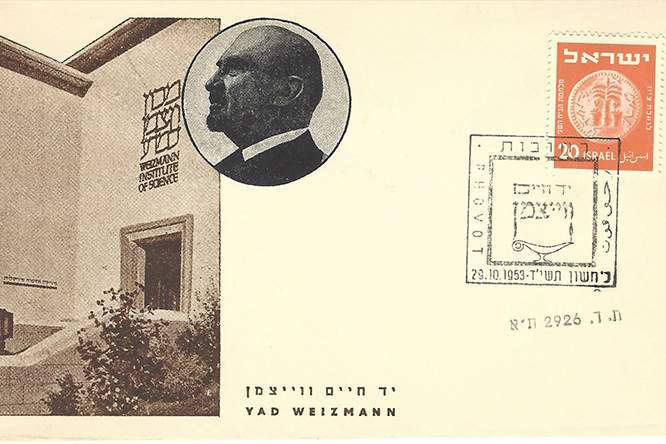
    Dr. Chaim Weizmann

    Chaim Weizmann was born in 1874 to a traditional Jewish family in the small town of Motol in White Russia (Belarus). After graduating with honors from the Real-Gymnasium in Pinsk, he decided to establish himself professionally

    More »
    Weizmann House
    • History and Architecture
    • The Collection
    • The Tour
    • The Garden
    • The Grave
    • Erich Mendelsohn
    • The Presidential Car Vintage Wheels

    Visiting the Institute


    • Visitors Center
    • Weizmann House
    • Clore Garden of Science
    |
    | | | | | |
    |
  • Weizmann Institute Homepage
Home » Press Room » Press Releases
News
  • Press Releases
    • English
    • Hebrew
    • Spanish
    • French
    • German
  • In the News
  • Subscribe to Press Releases
  • Honors and Awards
  • Visits
  • Events

twitter block


Follow @WeizmannScience

Universal Donor Immune Cells

24 Jul
2011
Cancer
 
One of the latest attempts to boost the body’s defenses against cancer is called adoptive cell transfer, in which patients receive a therapeutic injection of their own immune cells. This therapy, currently tested in early clinical trials for melanoma and neuroblastoma, has its limitations: Removing immune cells from a patient and growing them outside the body for future re-injection is extremely expensive and not always technically feasible.
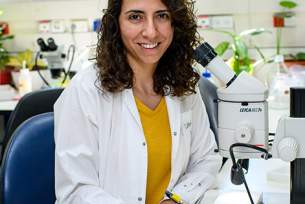
Weizmann Institute scientists have now tested in mice a new form of adoptive cell transfer, which overcomes these limitations while enhancing the tumor-fighting ability of the transferred cells. The research, reported recently in Blood, was performed in the lab of Prof. Zelig Eshhar of the Institute’s Immunology Department, by graduate student Assaf Marcus and lab technician Tova Waks.
The new approach should be more readily applicable than existing adoptive cell transfer treatments because it relies on a donor pool of immune T cells that can be prepared in advance, rather than on the patient’s own cells. Moreover, using a method pioneered by Prof. Eshhar more than two decades ago, these T cells are outfitted with receptors that specifically seek out and identify the tumor, thereby promoting its destruction.

In the study, the scientists first suppressed the immune system of mice with a relatively mild dose of radiation. They then administered a controlled dose of the modified donor T cells. The mild suppression temporarily prevented the donor T cells from being rejected by the recipient, but it didn’t prevent the cells themselves from attacking the recipient’s body, particularly the tumor. This approach was precisely what rendered the therapy so effective: The delay in the rejection of the donor T cells gave these cells sufficient opportunity to destroy the tumor.

If this method works in humans as well as it did in mice, it could lead to an affordable cell transfer therapy for a wide variety of cancers. Such therapy would rely on an off-the-shelf pool of donor T cells equipped with receptors for zeroing in on different types of cancerous cells.  
 
Update, posted on September 12, 2011

In August 2011, University of Pennsylvania researchers reported in The New England Journal of Medicine that they had successfully used Prof. Zelig Eshhar’s approach in a pilot trial of patients with chronic lymphocytic leukemia. The patients were treated with T bodies – genetically engineered versions of their own T cells. “This study has provided a proof of concept for the potency of our T-body therapy: previously shown to work in mice, it has now proved beneficial in cancer patients,” Prof. Eshhar said. “Within three weeks, the tumors had been blown away, in a way that was much more violent than we ever expected, ” said senior author Carl June, MD, professor of Pathology and Laboratory Medicine in the University of Pennsylvania’s Abramson Cancer Center, who led the work. “It worked much better than we thought it would. ”
 
Encouraged by this initial success, Dr. June and colleagues plan to apply the method to the treatment of other malignancies, including non-Hodgkin lymphoma, acute lymphocytic leukemia and childhood leukemia that is not alleviated by standard family. They also consider using the T bodies in patients with solid tumors, such as ovarian and pancreatic cancer.
 
 
Prof. Zelig Eshhar’s research is supported by the M.D. Moross Institute for Cancer Research; the Kirk Center for Childhood Cancer and Immunological Disorders; the Leona M. and Harry B. Helmsley Charitable Trust 50; and the estate of Raymond Lapon.

Tags:
  • Cancer,
  • Immunology,
  • T cells,
  • Zelig Eshhar,
  • ""
  • Print this page »

Search Press Releases

Related Articles

Scientist Named Research Leader in Nanotechnology
Two are Better than One
Genes that slows cell division
A control mechanism for metastasis
More Related links »
Gene expression in colon cancer tissue samples
Edit block | Delete block

Edit block | Delete block

Download our FREE Interface Magazine App for iPad and Android

Secondary Links

  • Contact Us
  • Visit Us
  • How to Get Here
  • Campus Map
  • Site Map
  • Privacy
  • Terms of Use
  • Supporting Committees
  • Credits

Get RSS
© Weizmann Institute of Science 2012. All rights reserved
Follow us on:
[Jump to Top] [Jump to Main Content]