[[Skip Header and Navigation] [Jump to Main Content]
« עברית
  • Home
  • News
    • Press Releases
    • In the News
    • Subscribe to Press Releases
    • Honors and Awards
    • Visits
    • Events

    Press Releases

    16 May 2013
    Weather on the Outer Planets Only Goes So Deep
    18 Apr 2013
    Neural Activity in Bats Measured In Flight
    18 Mar 2013
    Programmed Destruction

    More »

    Research Highlights

    GeneCards
    Noncoding Sequences Get Equal Listing

    A greatly expanded database will give scientists around the world a powerful new tool for life sciences research

    gut cells
    The Spies Inside

    How does the immune system in the gut distinguish between helpful microbes and those that wish us harm?

    Ron Diskin
    Mutations Trump Invasion

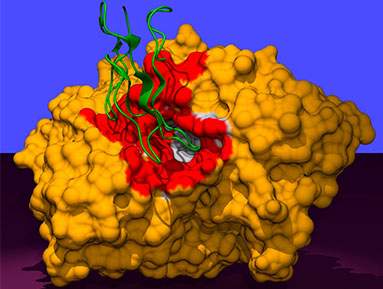
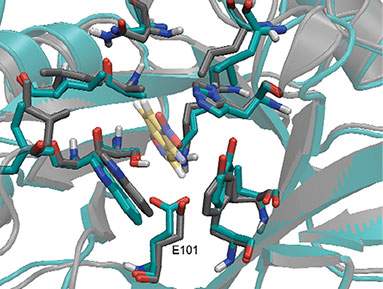
    The process of HIV infection is just one of the subjects protein researcher Dr. Ron Diskin is investigating in his new lab

    More »

    Honors & Awards

    Dr. Zohar Komargodski has been awarded the Gribov Medal by the EPS High Energy Particle Physics Division Prizes
    More »

    Full list »

    |
    | | | | | |
    |
  • Research
    • By Subject
    • What We Are Doing About:
    • From Basic Research to Benefiting Humanity
    • Shaping the Future

    By Subject

    Alternative Energy Materials Science
    Astrophysics Mathematics
    Biochemistry  Molecular Cell Biology
    Bioinformatics Nanoscience
    Biomedical Biology Neuroscience
    Cancer Particle Physics
    Chemistry Physics
    Computer Science Plant Sciences
    Environment Quantum Physics
    Evolution Scientific Archaeology
    Genetics Structural Biology

    What We Are Doing About:

    • Cancer
    • Diabetes
    • The Environment
    • Nanoscience
    • Energy

    Benefiting Humanity

    Prof. Amos Breskin
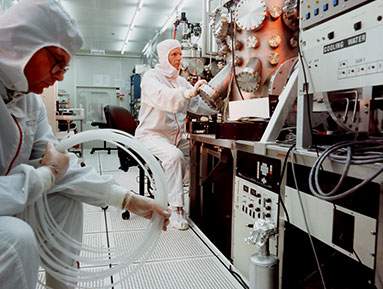
    Prof. Amos Breskin develops advanced radiation detectors, which have an important impact on many fields of research, such as particle, nuclear and atomic physics, medical diagnostics, biology and materials science.

     
    Application

    More »

    Full list »

    |
    | | | | | |
    |
  • Magazines and Multimedia
    • Annual Report
    • Interface - Online Magazine
    • The Weizmann International Magazine of Science and People
    • Books
    • Nano Comics
    • Galleries
    • Horizons - Online Magazine
    Annual Report 2012
    The 2012 Report
    Annual Report 2012
    2012 and Beyond
    Research Highlights
    New Developments
    Technology Transfer
    Summary of Operating Results
    More »

    Magazines

    Current Issue: Spring 2013
    Interface magazine Spring 2013
    Magazine Sections
    Science Feature Articles
    Made at the Institute
    Time Tunnel

    Archive »

    Latest Videos

    CRASH
    The Race for the Higgs Boson
    • Monitoring Carbon Exchange
    • Thanks for the Memories
    • Quantum Computing
    • Back to Basics - Forward to the Future
    More »
    |
    | | | | | |
    |
  • About the Institute
    • Overview
    • History
    • Virtual Tour
    • Visiting the Institute

    Overview

    • Multidisciplinary Research
    • Facts and Figures
    • Pioneering Progress
    • Training Future Scientists
    • Science is for Sharing
    • Advancing Israel
    • New Horizons
    • Beauty in Science

    History

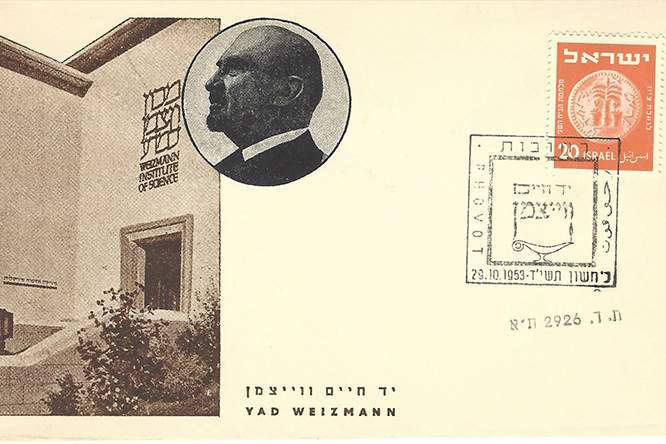
    Dr. Chaim Weizmann
    Chaim Weizmann was born in 1874 to a traditional Jewish family in the small town of Motol in White Russia (Belarus). After graduating with honors from the Real-Gymnasium in Pinsk, he decided to establish himself professionally

    More »
    Weizmann House
    • History and Architecture
    • The Collection
    • The Tour
    • The Garden
    • The Grave
    • Erich Mendelsohn
    • The Presidential Car Vintage Wheels

    Visiting the Institute


    • Visitors Center
    • Weizmann House
    • Clore Garden of Science
    |
    | | | | | |
    |
  • Weizmann Institute Homepage
Home » Press Room » Press Releases
News
  • Press Releases
    • English
    • Hebrew
    • Spanish
    • French
    • German
  • In the News
  • Subscribe to Press Releases
  • Honors and Awards
  • Visits
  • Events

twitter block


Follow @WeizmannScience

Weizmann Institute and Max Planck Society Establish a Joint Center for Archaeology and Anthropology

11 Jan
2012
Scientific Archaeology
When did modern humans arrive in Europe and Asia? At what rate have cultural changes spread from one region to another throughout history? How did Neanderthal teeth and bones differ from ours? These are examples of topics to be investigated at the new Max Planck – Weizmann Institute of Science Center in the Field of Integrative Archaeology and Anthropology.
 
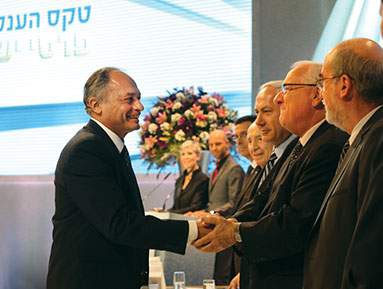
The agreement for the establishment of the Center is being signed today at the Weizmann Institute of Science in Rehovot – for the Max Planck Society for the Advancement of Science, by Prof. Peter Gruss, President; and for the Weizmann Institute, by Prof. Daniel Zajfman, President. Serving as the Center’s Directors will be Prof. Stephen Weiner of the Weizmann Institute and Prof. Jean-Jacques Hublin of the Max Planck Institute for Evolutionary Anthropology.
 
The creation of the Center marks more than five decades of collaboration between the Max Planck Society and the Weizmann Institute. This collaboration, which originated in the late 1950s, led to the historic 1964 agreement whereby the Minerva Foundation for Research, a subsidiary of the Max Planck Society, channeled funds provided by the German government to Weizmann Institute research projects, thus fostering a wide range of scientific exchanges between the Institute and the Max Planck Society and other German Universities. These ties helped lay the foundation not only for German-Israeli scientific cooperation, but also for the establishment of diplomatic relations between the two countries one year later.
 
Apart from promoting the ties between the Max Planck Society and the Weizmann Institute, the new Center might serve as the basis for expanding scientific ties between Israel and its neighbors. ‘It would be natural to collaborate with our neighboring countries because we share roughly the same archaeological record,’ said Weizmann Institute’s Prof. Weiner. ‘Just as happened in relations with Germany, now too scientific collaboration could have a broader impact, helping to promote peaceful ties in the Middle East.’
 
Activities in the Center will be performed by two new groups of scientists in Israel and Germany, each numbering approximately 10 scientists and students. In addition to performing their own research, the groups will engage in collaborative activities between the Weizmann Institute and the Max Planck Institute.
 
The group at the Weizmann Institute in Rehovot will mainly follow the research track entitled ‘The Timing of Cultural Change.’ Its goal: to shed new light on such fascinating aspects of human history as the spread of ideas, the changes in lifestyles, the different rates of development in various parts of the world and the migration of people from one geographical area to another. Traditionally, these questions have been explored by relative dating – that is, comparing changes in tools or pottery in different regions. However, absolute dating – determining the actual age of objects and strata – is needed in order to establish when a particular change occurred and how fast it spread throughout the region. To document the distribution of cultural changes in the last 50,000 years, the scientists will conduct much of the work in the field, performing a scientific analysis of findings at the archaeological site itself, to be followed up by laboratory studies. They will use high-resolution radiocarbon dating, which makes it possible to date specimens with a precision of 20 to 40 years, taking advantage of such advanced techniques as accelerator mass spectrometry (AMS—see below) analysis of radiocarbon content.
 
The group at the Max Planck Institute for Evolutionary Anthropology in Leipzig will mainly conduct research along the track entitled ‘Physical Anthropology through Bone and Tooth Structure-Function Studies.’ Scientists in this group will investigate issues in recent human evolution, particularly those relating to the co-occurrence of Neanderthal and early modern human populations in the Levantine region, at the crossroads between Africa and Eurasia. The study of fossil remains of these two populations has been traditionally based on the shapes of bones and teeth, examined more recently with the help of 3D computer reconstructions. Scientists in this track will make use of high-resolution computer tomography both at the Max Planck Institute in Leipzig and at the Weizmann Institute, a technology that makes it possible to perform such reconstructions down to the level of micron-sized details. The scientists will examine the relationship between structure and function in bones and teeth, which is essential for understanding evolutionary changes. Since this relationship is difficult to establish using fossils alone, the focus of the studies in the new Center will be on modern bones and teeth.
 

Particle Accelerator for the Study of the Past
 
The new AMS equipment is expected to have a major impact on archaeology research both locally and internationally, as the only machine of its kind in the entire Middle East. Designed especially for conducting mainly archaeological research, it will be installed at the Weizmann Institute in a designated laboratory in the Physics Faculty, in the end of 2012. Archaeological dating used to rely on counters tracking the decay of the radioactive carbon isotope called C-14, a time-consuming process that requires large quantities of material. In contrast, AMS performs direct measurements of C-14, by accelerating the carbon atoms to a high speed and separating out the C-14 even when it is present at the minute concentrations of one in a quadrillion (1 followed by 15 zeroes) carbon atoms. This approach makes it possible to perform the dating very fast and on minute quantities of material, such as a single lentil, a grain of wheat or a small trace of collagen in bones – an essential feature, since over thousands of years, organic matter on which radiocarbon dating is based tends to disappear.
 
The gift that enabled the purchase of the accelerator mass spectrometer (AMS) came from Dr. Naim Dangoor CBE of London, founder and head of the Exilarch's Foundation. The Exilarch’s Foundation supports community and educational causes. The new AMS lab will be named DREAMS, for Dangoor Research Accelerator Mass Spectrometer Laboratory, and is expected to be the first radiocarbon-dating laboratory in the world dedicated to research rather than to providing a service.
 

Prof. Stephen Weiner’s research is supported by the Exilarch's Foundation; the Maurice and Vivienne Wohl Charitable Foundation; the Estate of Hilda Jacoby-Schaerf; the Ilse Katz Institute for Material Sciences and Magnetic Resonance Research; the Helen and Martin Kimmel Center for Archaeological Science, which he heads; the European Research Council; and the J & R Center for Scientific Research. Prof. Weiner is the incumbent of the Dr. Walter and Dr. Trude Borchardt Professorial Chair in Structural Biology.
 
 
Mobile Lab at the Archaeological Site in Tel es Safi


The Weizmann Institute of Science in Rehovot, Israel, is one of the world's top-ranking multidisciplinary research institutions. Noted for its wide-ranging exploration of the natural and exact sciences, the Institute is home to 2,700 scientists, students, technicians and supporting staff. Institute research efforts include the search for new ways of fighting disease and hunger, examining leading questions in mathematics and computer science, probing the physics of matter and the universe, creating novel materials and developing new strategies for protecting the environment.

Weizmann Institute news releases are posted on the World Wide Web at http://wis-wander.weizmann.ac.il/, and are also available at http://www.eurekalert.org/

Tags:
  • Anthropology,
  • Archaeological science,
  • Max Planck Society,
  • Stephen Weiner,
  • ""
  • Print this page »

Search Press Releases

Related Articles

Ancient Ashes Throw New Light on Prehistoric Lifestyles
Environmentally Friendly Building Dedicated at the Weizmann Institute
Prehistoric Fires Spark a Scientific Leap Forward
Brittlestars Use Crystal Lenses To Spot Approaching Predator
More Related links »

Edit block | Delete block

Download our FREE Interface Magazine App for iPad and Android

Secondary Links

  • Contact Us
  • Visit Us
  • How to Get Here
  • Campus Map
  • Site Map
  • Privacy
  • Terms of Use
  • Supporting Committees
  • Credits

Get RSS
© Weizmann Institute of Science 2012. All rights reserved
Follow us on:
[Jump to Top] [Jump to Main Content]