[[Skip Header and Navigation] [Jump to Main Content]
« עברית
  • Home
  • News
    • Press Releases
    • In the News
    • Subscribe to Press Releases
    • Honors and Awards
    • Visits
    • Events

    Press Releases

    16 May 2013
    Weather on the Outer Planets Only Goes So Deep
    18 Apr 2013
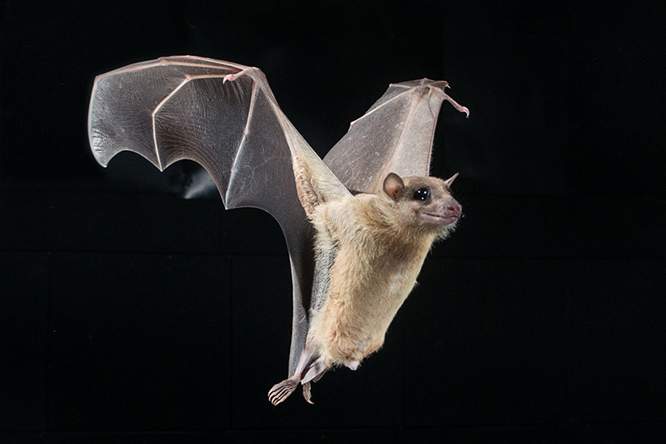
    Neural Activity in Bats Measured In Flight
    18 Mar 2013
    Causing Collapse

    More »

    Research Highlights

    GeneCards
    Noncoding Sequences Get Equal Listing

    A greatly expanded database will give scientists around the world a powerful new tool for life sciences research

    gut cells
    The Spies Inside

    How does the immune system in the gut distinguish between helpful microbes and those that wish us harm?

    Ron Diskin
    Mutations Trump Invasion

    The process of HIV infection is just one the subjects protein researcher Dr. Ron Diskin is investigating in his new lab

    More »

    Honors & Awards

    Dr. Zohar Komargodski has been awarded the Gribov Medal by the EPS High Energy Particle Physics Division Prizes
    More »

    Full list »

    |
    | | | | | |
    |
  • Research
    • By Subject
    • What We Are Doing About:
    • From Basic Research to Benefiting Humanity
    • Shaping the Future

    By Subject

    Alternative Energy Materials Science
    Astrophysics Mathematics
    Biochemistry  Molecular Cell Biology
    Bioinformatics Nanoscience
    Biomedical Biology Neuroscience
    Cancer Particle Physics
    Chemistry Physics
    Computer Science Plant Sciences
    Environment Quantum Physics
    Evolution Scientific Archaeology
    Genetics Structural Biology

    What We Are Doing About:

    • Cancer
    • Diabetes
    • The Environment
    • Nanoscience
    • Energy

    Benefiting Humanity

    Prof. Amos Breskin
    Prof. Amos Breskin develops advanced radiation detectors, which have an important impact on many fields of research, such as particle, nuclear and atomic physics, medical diagnostics, biology and materials science.

     
    Application

    More »

    Full list »

    |
    | | | | | |
    |
  • Magazines and Multimedia
    • Annual Report
    • Interface - Online Magazine
    • The Weizmann International Magazine of Science and People
    • Books
    • Nano Comics
    • Galleries
    • Horizons - Online Magazine
    Annual Report 2011
    Art and Science on the Move
    Administering the Institute
    Research
    Financial Highlights
    Roll of Honor
    Supporting Network
    More »

    Magazines

    Current Issue: Spring 2013
    Interface magazine Spring 2013
    Magazine Sections
    Science Feature Articles
    Made at the Institute
    Time Tunnel

    Archive »

    Latest Videos

    CRASH
    The Race for the Higgs Boson
    • Monitoring Carbon Exchange
    • Thanks for the Memories
    • Quantum Computing
    • Back to Basics - Forward to the Future
    More »
    |
    | | | | | |
    |
  • About the Institute
    • Overview
    • History
    • Virtual Tour
    • Visiting the Institute

    Overview

    • Multidisciplinary Research
    • Facts and Figures
    • Pioneering Progress
    • Training Future Scientists
    • Science is for Sharing
    • Advancing Israel
    • New Horizons
    • Beauty in Science

    History

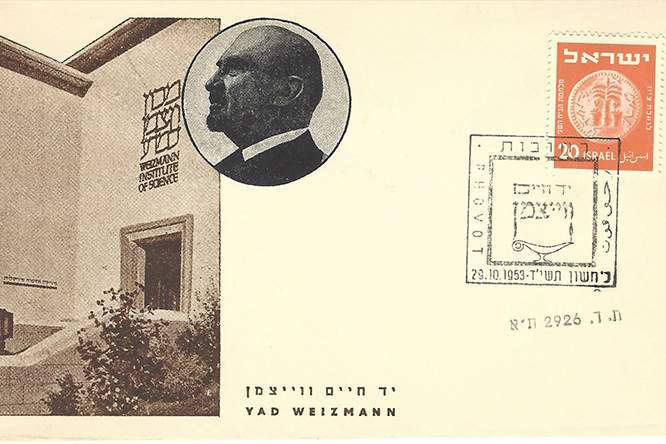
    Dr. Chaim Weizmann

    Chaim Weizmann was born in 1874 to a traditional Jewish family in the small town of Motol in White Russia (Belarus). After graduating with honors from the Real-Gymnasium in Pinsk, he decided to establish himself professionally

    More »
    Weizmann House
    • History and Architecture
    • The Collection
    • The Tour
    • The Garden
    • The Grave
    • Erich Mendelsohn
    • The Presidential Car Vintage Wheels

    Visiting the Institute


    • Visitors Center
    • Weizmann House
    • Clore Garden of Science
    |
    | | | | | |
    |
  • Weizmann Institute Homepage
Home » Press Room » Press Releases
News
  • Press Releases
    • English
    • Hebrew
    • Spanish
    • French
    • German
  • In the News
  • Subscribe to Press Releases
  • Honors and Awards
  • Visits
  • Events

twitter block


Follow @WeizmannScience

Why do We See the Man in the Moon?

12 Mar
2012
Astrophysics
 
There’s something poetic about gazing up at the night sky, seeing the familiar face of the “Man in the Moon” who faithfully accompanies us through life. The synchronous rotation of the Moon - it  takes the same amount of time to spin around its own axis as it does to revolve around Earth - is what causes the Moon to "lock eyes" with Earth. This results in one of its hemispheres constantly facing us. But is there a reason why this particular half of the Moon locked with Earth, or was it pure coincidence that it didn’t “turn its back” on us?
 
Through careful analysis and computer-generated simulations, Prof. Oded Aharonson of the Weizmann Institute’s Center for Planetary Science (he began this research while still at the California Institute of Technology), together with Prof. Peter Goldreich of the California Institute of Technology and Prof. Re’em Sari of the Hebrew University of Jerusalem have shown that it is not coincidence but the Moon’s geophysical properties that determine its orientation. Their findings have recently been published in Icarus.
 
The near side of the Moon is low-lying and covered by craters filled with dense, dark volcanic material, giving us the Man in the Moon. In contrast, the far side is predominately made up of higher mountainous regions. “Intuitively, we might actually have expected the far side to be facing us as the high mountains would have brought the Moon closer to Earth, putting the system in a lower energy state,” says Aharonson. Nature usually prefers lower energy states, so why isn’t this the case?
 
The motion of the Moon is a bit like the motion of toy train circling around a track with two hills and two valleys. The hills and valleys represent the different energy levels of the orientation of the geophysically asymmetric Moon. Friction causes the train to slow down until it doesn’t have enough energy to climb over the hill, and settles into one of the valleys. The choice of valleys is governed not by the depth of valleys, but rather by the height of the hill it crossed for the last time. Similarly for the Moon, its maxima energy (the hills in our analogy) governs the ultimate state of the Moon, not its minima energy (the valleys).
 
According to the scientists’ simulations, the energy values calculated for the current geophysical characteristics of the Moon favor locking it in the current orientation. "In fact, by designing different models of the Moon – moving its mass around, and altering various other parameters that affect its gravitational properties – we are able to have complete control over which ‘valley’ the Moon settles into," says Aharonson.
 
Some might argue that the Moon would have locked with Earth very early in its existence, when its properties were much different to those of today's moon, and so these findings might not explain the actual events. The scientists, and indeed some evidence, suggest that the other side of the Moon could have been facing Earth at some point, but was hit out of sync and then later relocked into the current orientation in the way described by the new findings.
 
Aharonson: "For me, what is most interesting is not seeing the Man in the Moon, but the elegance of how the system works."
 
Prof. Oded Aharonson would like to acknowledge support from the Lunar Reconnaissance Project.


near side of the moon     far side of the moon
The lunar nearside (left) is a contrast between dark (craters) and light (mountains) surfaces that has been fancied as the Man in the Moon. Lunar terrain types are still designated by their 17th century name maria and terra (brighter features also known as uplands or highlands; right).  Images by NASA.


Prof. Oded Aharonson’s research is supported by the estate of Joseph and Erna Lazard.


Tags:
  • Astrophysics,
  • Oded Aharonson,
  • ""
  • Print this page »

Search Press Releases

Related Articles

Weizmann Institute Astrophysicist Hot on the Tracks of a New "Strange" Star
Bureau Of Missing Masses
Zooming Star Points to Supermassive Black Hole at the Center of the Milky Way
Prof. Daniel Zajfman nominated as next President of the Weizmann Institute
More Related links »

Edit block | Delete block

Download our FREE Interface Magazine App for iPad and Android

Secondary Links

  • Contact Us
  • Visit Us
  • How to Get Here
  • Campus Map
  • Site Map
  • Privacy
  • Terms of Use
  • Supporting Committees
  • Credits

Get RSS
© Weizmann Institute of Science 2012. All rights reserved
Follow us on:
[Jump to Top] [Jump to Main Content]