[[Skip Header and Navigation] [Jump to Main Content]
« עברית
  • Home
  • News
    • Press Releases
    • In the News
    • Subscribe to Press Releases
    • Honors and Awards
    • Visits
    • Events

    Press Releases

    16 May 2013
    Weather on the Outer Planets Only Goes So Deep
    18 Apr 2013
    Neural Activity in Bats Measured In Flight
    18 Mar 2013
    Causing Collapse

    More »

    Research Highlights

    GeneCards
    Noncoding Sequences Get Equal Listing

    A greatly expanded database will give scientists around the world a powerful new tool for life sciences research

    gut cells
    The Spies Inside

    How does the immune system in the gut distinguish between helpful microbes and those that wish us harm?

    Ron Diskin
    Mutations Trump Invasion

    The process of HIV infection is just one of the subjects protein researcher Dr. Ron Diskin is investigating in his new lab

    More »

    Honors & Awards

    Dr. Zohar Komargodski has been awarded the Gribov Medal by the EPS High Energy Particle Physics Division Prizes
    More »

    Full list »

    |
    | | | | | |
    |
  • Research
    • By Subject
    • What We Are Doing About:
    • From Basic Research to Benefiting Humanity
    • Shaping the Future

    By Subject

    Alternative Energy Materials Science
    Astrophysics Mathematics
    Biochemistry  Molecular Cell Biology
    Bioinformatics Nanoscience
    Biomedical Biology Neuroscience
    Cancer Particle Physics
    Chemistry Physics
    Computer Science Plant Sciences
    Environment Quantum Physics
    Evolution Scientific Archaeology
    Genetics Structural Biology

    What We Are Doing About:

    • Cancer
    • Diabetes
    • The Environment
    • Nanoscience
    • Energy

    Benefiting Humanity

    Prof. Amos Breskin
    Prof. Amos Breskin develops advanced radiation detectors, which have an important impact on many fields of research, such as particle, nuclear and atomic physics, medical diagnostics, biology and materials science.
     
    Application

    More »

    Full list »

    |
    | | | | | |
    |
  • Magazines and Multimedia
    • Annual Report
    • Interface - Online Magazine
    • The Weizmann International Magazine of Science and People
    • Books
    • Nano Comics
    • Galleries
    • Horizons - Online Magazine
    Annual Report 2012
    The 2012 Report
    Annual Report 2012
    2012 and Beyond
    Research Highlights
    New Developments
    Technology Transfer
    Summary of Operating Results
    More »

    Magazines

    Current Issue: Spring 2013
    Interface magazine Spring 2013
    Magazine Sections
    Science Feature Articles
    Made at the Institute
    Time Tunnel

    Archive »

    Latest Videos

    CRASH
    The Race for the Higgs Boson
    • Monitoring Carbon Exchange
    • Thanks for the Memories
    • Quantum Computing
    • Back to Basics - Forward to the Future
    More »
    |
    | | | | | |
    |
  • About the Institute
    • Overview
    • History
    • Virtual Tour
    • Visiting the Institute

    Overview

    • Multidisciplinary Research
    • Facts and Figures
    • Pioneering Progress
    • Training Future Scientists
    • Science is for Sharing
    • Advancing Israel
    • New Horizons
    • Beauty in Science

    History

    Dr. Chaim Weizmann

    Chaim Weizmann was born in 1874 to a traditional Jewish family in the small town of Motol in White Russia (Belarus). After graduating with honors from the Real-Gymnasium in Pinsk, he decided to establish himself professionally

    More »
    Weizmann House
    • History and Architecture
    • The Collection
    • The Tour
    • The Garden
    • The Grave
    • Erich Mendelsohn
    • The Presidential Car Vintage Wheels

    Visiting the Institute


    • Visitors Center
    • Weizmann House
    • Clore Garden of Science
    |
    | | | | | |
    |
  • Weizmann Institute Homepage
Home » Press Room » Press Releases
News
  • Press Releases
    • English
    • Hebrew
    • Spanish
    • French
    • German
  • In the News
  • Subscribe to Press Releases
  • Honors and Awards
  • Visits
  • Events

twitter block


Follow @WeizmannScience

Weizmann Institute scientists discover: A Chemical Signal in Human Tears

06 Jan
2011
Neuroscience

EMBARGO: January 6, 2011 at 2:00 pm US Eastern time
 
Emotional crying is a universal, uniquely human behavior. When we cry, we clearly send all sorts of emotional signals. In a paper published online today in Science Express, scientists at the Weizmann Institute have demonstrated that some of these signals are chemically encoded in the tears themselves. Specifically, they found that merely sniffing a woman’s tears – even when the crying woman is not present – reduces sexual arousal in men.


Humans, like most animals, expel various compounds in body fluids that give off subtle messages to other members of the species. A number of studies in recent years, for instance, have found that substances in human sweat can carry a surprising range of emotional and other signals to those who smell them.
 
But tears are odorless. In fact, in a first experiment led by Shani Gelstein, Yaara Yeshurun and their colleagues in the lab of Prof. Noam Sobel in the Weizmann Institute’s Neurobiology Department, the researchers first obtained emotional tears from female volunteers watching sad movies in a secluded room and then tested whether men could discriminate the smell of these tears from that of saline. The men could not.
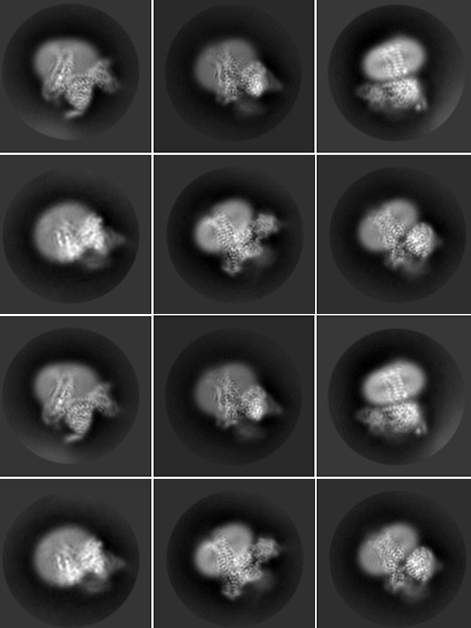
 
In a second experiment, male volunteers sniffed either tears or a control saline solution, and then had these applied under their nostrils on a pad while they made various judgments regarding images of women's faces on a computer screen. The next day, the test was repeated -- the men who were previously exposed to tears getting saline and vice versa. The tests were double blinded, meaning neither the men nor the researchers performing the trials knew what was on the pads. The researchers found that sniffing tears did not influence the men's estimates of sadness or empathy expressed in the faces. To their surprise, however, sniffing tears negatively affected the sex appeal attributed to the faces.
 
To further explore the finding, male volunteers watched emotional movies after similarly sniffing tears or saline. Throughout the movies, participants were asked to provide self-ratings of mood as they were being monitored for such physiological measures of arousal as skin temperature, heart rate, etc. Self-ratings showed that the subjects’ emotional responses to sad movies were no more negative when exposed to women’s tears, and the men “smelling” tears showed no more empathy. They did, however, rate their sexual arousal a bit lower. The physiological measures, however, told a clearer story. These revealed a pronounced tear-induced drop in physiological measures of arousal, including a significant dip in testosterone – a hormone related to sexual arousal.



Finally, in a fourth trial, Sobel and his team repeated the previous experiment within an fMRI machine that allowed them to measure brain activity. The scans revealed a significant reduction in activity levels in brain areas associated with sexual arousal after the subjects had sniffed tears.
 
Sobel: “This study raises many interesting questions. What is the chemical involved? Do different kinds of emotional situations send different tear-encoded signals? Are women’s tears different from, say, men's tears? Children’s tears? This study reinforces the idea that human chemical signals – even ones we’re not conscious of – affect the behavior of others.”
 
Human emotional crying was especially puzzling to Charles Darwin, who identified functional antecedents to most emotional displays -- for example, the tightening of the mouth in disgust, which he thought originated as a response to tasting spoiled food. But the original purpose of emotional tears eluded him. The current study has offered an answer to this riddle: Tears may serve as a chemosignal. Sobel points out that some rodent tears are known to contain such chemical signals. "The uniquely human behavior of emotional tearing may not be so uniquely human after all,” he says.
 
The work was authored by Shani Gelstein, Yaara Yeshurun, Liron Rozenkrantz, Sagit Shushan, Idan Frumin, Yehudah Roth and Noam Sobel, was conducted in collaboration with the Edith Wolfson Medical Center, Holon.
 
 
Prof. Noam Sobel’s research is supported by the James S. McDonnell Foundation 21st Century Science Scholar in Understanding Human Cognition Program; the Minerva Foundation; the European Research Council; and Regina Wachter, NY.
 
 
The Weizmann Institute of Science in Rehovot, Israel, is one of the world's top-ranking multidisciplinary research institutions. Noted for its wide-ranging exploration of the natural and exact sciences, the Institute is home to 2,600 scientists, students, technicians and supporting staff. Institute research efforts include the search for new ways of fighting disease and hunger, examining leading questions in mathematics and computer science, probing the physics of matter and the universe, creating novel materials and developing new strategies for protecting the environment.

Weizmann Institute news releases are posted on the World Wide Web at http://wis-wander.weizmann.ac.il/, and are also available at http://www.eurekalert.org/

Tags:
  • Noam Sobel,
  • Odor,
  • Signaling,
  • Smell,
  • Tear,
  • ""
  • Print this page »

Search Press Releases

Related Articles

Sweet Smell
The First Smell Map
Scientists Have Developed Electronic 'Nose' That is Able to Predict the Pleasantness of Novel Odors
New Invention at the Weizmann Institute Enables Severely Disabled People to Communicate and Steer a Wheelchair by Sniffing
More Related links »
A conversation between nerve cells in the brain
Edit block | Delete block

Edit block | Delete block

Download our FREE Interface Magazine App for iPad and Android

Secondary Links

  • Contact Us
  • Visit Us
  • How to Get Here
  • Campus Map
  • Site Map
  • Privacy
  • Terms of Use
  • Supporting Committees
  • Credits

Get RSS
© Weizmann Institute of Science 2012. All rights reserved
Follow us on:
[Jump to Top] [Jump to Main Content]