[[Skip Header and Navigation] [Jump to Main Content]
« עברית
  • Home
  • News
    • Press Releases
    • In the News
    • Subscribe to Press Releases
    • Honors and Awards
    • Visits
    • Events

    Press Releases

    16 May 2013
    Weather on the Outer Planets Only Goes So Deep
    18 Apr 2013
    Neural Activity in Bats Measured In Flight
    18 Mar 2013
    Causing Collapse

    More »

    Research Highlights

    GeneCards
    Noncoding Sequences Get Equal Listing

    A greatly expanded database will give scientists around the world a powerful new tool for life sciences research

    gut cells
    The Spies Inside

    How does the immune system in the gut distinguish between helpful microbes and those that wish us harm?

    Ron Diskin
    Mutations Trump Invasion

    The process of HIV infection is just one the subjects protein researcher Dr. Ron Diskin is investigating in his new lab

    More »

    Honors & Awards

    Dr. Zohar Komargodski has been awarded the Gribov Medal by the EPS High Energy Particle Physics Division Prizes
    More »

    Full list »

    |
    | | | | | |
    |
  • Research
    • By Subject
    • What We Are Doing About:
    • From Basic Research to Benefiting Humanity
    • Shaping the Future

    By Subject

    Alternative Energy Materials Science
    Astrophysics Mathematics
    Biochemistry  Molecular Cell Biology
    Bioinformatics Nanoscience
    Biomedical Biology Neuroscience
    Cancer Particle Physics
    Chemistry Physics
    Computer Science Plant Sciences
    Environment Quantum Physics
    Evolution Scientific Archaeology
    Genetics Structural Biology

    What We Are Doing About:

    • Cancer
    • Diabetes
    • The Environment
    • Nanoscience
    • Energy

    Benefiting Humanity

    Prof. Amos Breskin
    Prof. Amos Breskin develops advanced radiation detectors, which have an important impact on many fields of research, such as particle, nuclear and atomic physics, medical diagnostics, biology and materials science.

     
    Application

    More »

    Full list »

    |
    | | | | | |
    |
  • Magazines and Multimedia
    • Annual Report
    • Interface - Online Magazine
    • The Weizmann International Magazine of Science and People
    • Books
    • Nano Comics
    • Galleries
    • Horizons - Online Magazine
    Annual Report 2011
    Art and Science on the Move
    Administering the Institute
    Research
    Financial Highlights
    Roll of Honor
    Supporting Network
    More »

    Magazines

    Current Issue: Spring 2013
    Interface magazine Spring 2013
    Magazine Sections
    Science Feature Articles
    Made at the Institute
    Time Tunnel

    Archive »

    Latest Videos

    CRASH
    The Race for the Higgs Boson
    • Monitoring Carbon Exchange
    • Thanks for the Memories
    • Quantum Computing
    • Back to Basics - Forward to the Future
    More »
    |
    | | | | | |
    |
  • About the Institute
    • Overview
    • History
    • Virtual Tour
    • Visiting the Institute

    Overview

    • Multidisciplinary Research
    • Facts and Figures
    • Pioneering Progress
    • Training Future Scientists
    • Science is for Sharing
    • Advancing Israel
    • New Horizons
    • Beauty in Science

    History

    Dr. Chaim Weizmann

    Chaim Weizmann was born in 1874 to a traditional Jewish family in the small town of Motol in White Russia (Belarus). After graduating with honors from the Real-Gymnasium in Pinsk, he decided to establish himself professionally

    More »
    Weizmann House
    • History and Architecture
    • The Collection
    • The Tour
    • The Garden
    • The Grave
    • Erich Mendelsohn
    • The Presidential Car Vintage Wheels

    Visiting the Institute


    • Visitors Center
    • Weizmann House
    • Clore Garden of Science
    |
    | | | | | |
    |
  • Weizmann Institute Homepage
Home » Press Room » Press Releases
News
  • Press Releases
    • English
    • Hebrew
    • Spanish
    • French
    • German
  • In the News
  • Subscribe to Press Releases
  • Honors and Awards
  • Visits
  • Events

twitter block


Follow @WeizmannScience

A New Particle Has Been Discovered – Chances Are, It Is the Higgs Boson

03 Jul
2012
Particle Physics
The long and complicated journey to detect the Higgs boson, which started with one small step about 25 years ago, might finally have reached its goal. This was reported by LHC particle accelerator scientists today at the European Laboratory for Particle Physics, CERN, near Geneva.
 
The Higgs boson is the final building block that has been missing from the “Standard Model,” which describes the structure of matter in the universe. The Higgs boson combines two forces of nature and shows that they are, in fact, different aspects of a more fundamental force. The particle is also responsible for the existence of mass in the elementary particles.
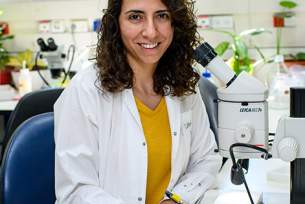
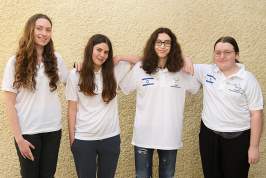
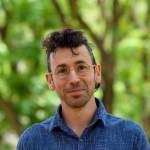
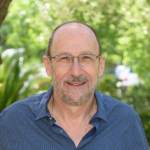
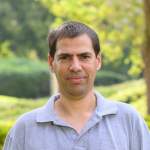
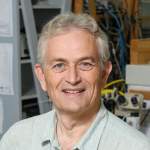
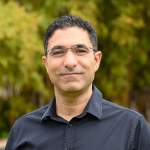
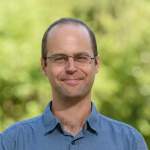
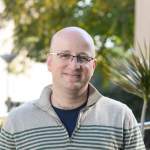
Weizmann Institute scientists have been prominent participants in this research from its onset. Prof. Giora Mikenberg was for many years head of the research group that searched for the Higgs boson in CERN’s OPAL experiment. He was then leader of the ATLAS Muon Project – one of the two experiments that eventually revealed the particle. Prof. Ehud Duchovni heads the Weizmann Institute team that examines other key questions at CERN. Prof. Eilam Gross is currently the ATLAS Higgs physics group convener. In the Weizmann team three scientific “generations” are represented: Mikenberg was Duchovni’s supervisor, who were both, in turn, Gross’s supervisor.

Gross: “This is the biggest day of my life. I have been searching for the Higgs since I was a student in the 1980’s. Even after 25 years, it still came as a surprise. No matter what you call it – we are no longer searching for the Higgs but measuring its properties. Though I believed it would be found, I never dreamed it would happen while I was holding a senior position in the global research team.”

Most of us experience the world as a diverse and complex place. But the physicists among us are not content with visible reality. They are striving to get to the bottom of that reality and to see whether it is, as they think, based on the absolute simplicity displayed by the early universe. They expect to observe a range of particles that are different “ensembles” of a handful of elementary particles. The scientists are hoping to see a unification of the four fundamental forces of nature that act on these particles (the weak force responsible for radioactivity, electromagnetic force, the strong force responsible for the existence of protons and neutrons, and gravitation).

The first step in the journey to unify the forces was completed with the almost certain discovery of the Higgs particle: The union of two elementary forces – the electromagnetic and weak force, to become the electroweak force.

One aspect of the Higgs boson, named after the Scottish physicist Peter Higgs, manifests itself in the giving of mass to the weak force carriers – the “W” and “Z” particles. (The electromagnetic force carrier, the photon, remains massless.)
 

The Largest Machine in the World

In the effort to discover the Higgs boson, unify the fundamental forces and understand the origin of mass in the universe, scientists built the world's largest machine: a particle accelerator nestled in a 27-km-long circular tunnel, 100 meters beneath the border between France and Switzerland, in the European particle physics laboratory, CERN, near Geneva.

This accelerator, called LHC (Large Hadron Collider), accelerates beams of protons up to 99.999998% the speed of light. According to the theory of relativity, this increases their mass by 7,500 times that of their normal resting mass. The accelerator aims the beams straight at each other, causing collisions that release so much energy, the protons themselves explode. For much less than the blink of an eye, conditions similar to those that existed in the universe in the first fraction of a second after the Big Bang are present in the accelerator.

As a result, particles of matter are turned into energy, in accordance with Albert Einstein’s famous equation describing the conversion of matter into energy: E=mc2. The energy then propagates through space and the system cools. (Something similar happened in the early evolution of the universe.) Consequently, energy turns back into particles of matter and the process is repeated until particles that can exist in reality as we know it are formed.

The collisions produce energetic particles, some of which exist for extremely short periods of time. The only way to discern their existence is to identify the footprints they leave behind. For this purpose, a variety of particle detectors were developed, each optimized for capturing particular types of particles.


Statistics

The likelihood of creating the Higgs boson in a single collision is similar to that of randomly extracting a specific living cell from the leaf of a plant, out of all the plants growing on Earth. To cope with this task, Weizmann Institute scientists, headed by Prof. Mikenberg, developed unique particle detectors, which were manufactured at the Institute, and in Japan and China. These detectors have been adapted to detect muon particles. In some of the very rare collisions that produce Higgs particles, the footprint of the Higgs particle – that which is recorded in the detectors – is four energetic muons. Thus, the detection of such muons provides circumstantial evidence for the existence of the Higgs particle.

The scientists analyzed data from a thousand trillion proton collisions; in these Higgs bosons are created along with many other similar particles. Evidence to suggest the existence of the Higgs arises through searches for anomalies in the collected data (in comparison with the expected data if such a particle does not exist). This search focuses on the estimated mass of the particle: 126 trillion electron volts (Gev). When the scientists do manage to find such anomalies, they must then rule out the possibility that it is due to statistical fluctuation.

The calculations carried out by scientists in recent weeks, in which Prof. Gross played a central role, have revealed, with a high degree of statistical significance, a new particle with a mass similar to the expected mass of the Higgs. The wording is purposely cautious, leaving room for the possibility that a new particle other than the Higgs can be found within this mass range. The probability that this is, indeed, a new particle, is quite low. (But if it were, in truth, a different particle, say some physicists, things will start to get "really interesting.")
 
 
CERN

CERN scientists invented and developed the computer language and basic concepts that later served as the basis for the establishment of the Internet. In fact, the first server of the “World Wide Web” was activated in CERN to facilitate communication between scientists from around the globe participating in experiments carried out locally. The organization also served as a model for the establishment of the European Union, and its influence on Europe’s technology and economy is reminiscent of the American space program.

The LHC particle accelerator is based on superconducting electromagnets working at very low temperatures: less than two degrees above absolute zero (minus 271° Celsius). It generates about one billion particle collisions per second: If they were people, it would be as if each person on the planet meets every one of the six billion inhabitants of the world every six seconds. Calculating and analyzing data from these collisions is like trying to understand what all the inhabitants of the world are saying, while each is holding 20 telephone conversations at once.

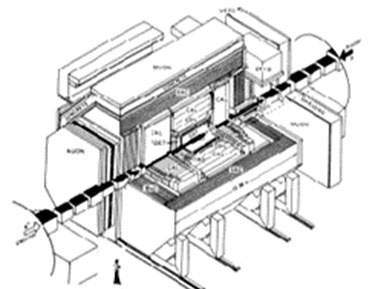
This experimental system includes the world’s largest superconducting electromagnets, built in conjunction with Israeli companies. The entire structure includes 10,000 radiation detectors spaced just one millimeter apart, has a volume of 25,000 cubic meters and features half a million electronic channels. Most of the muon radiation detectors were built from components produced in Israel. A unique laser system tracks the exact location of the detectors with an accuracy of 25 microns (half the thickness of a human hair).


Illustration depicting particle collisions


CRASH - The race for the Higgs boson 


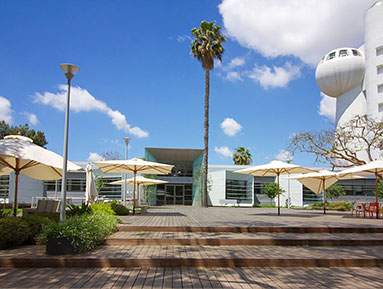
The Mexico Building, which houses the Laboratory for Development & Construction of Particle Detectors at the Weizmann Institute is funded by:

Lazaro Becker
Mauricio Gerson
Abraham and Rebeca Itzkovich
Armando and Maria Jinich
Abraham and Elena Kahn
Robert Kazdan
Benito Lasky
Ramon and Rebecca Marcos
Stella and Rafael Rayek
The late Leon Schidlow and Lily Schidlow
Luis and Miriam Stillmann


Prof. Ehud Duchovni’s research is supported by the Friends of Weizmann Institute in memory of Richard Kronstein; the Nella and Leon Benoziyo Center for High Energy Physics; and the Yeda-Sela Center for Basic Research. 
Prof. Duchovni is the incumbent of the Professor Wolfgang Gentner Professorial Chair of Nuclear Physics.

Prof. Eilam Gross’s research is supported by the Friends of Weizmann Institute in memory of Richard Kronstein.

Prof. Giora Mikenberg’s research is supported by the Nella and Leon Benoziyo Center for High Energy Physics, which he heads. Prof. Mikenberg is the incumbent of the Lady Davis Professorial Chair of Experimental Physics.
 
Tags:
  • CERN,
  • Ehud Duchovni,
  • Eilam Gross,
  • Giora Mikenberg,
  • Higgs boson,
  • Particle accelerator,
  • Particle detector,
  • Particle Physics and Astrophysics,
  • ""
  • Print this page »

Search Press Releases

Related Articles

Weizmann's Particle Detectors Used In International Collider Project
First Matter
Experiment May Help Size Up Neutrinos
More Questions than Answers
More Related links »
Particle collision in a particle accelerator
Edit block | Delete block

Edit block | Delete block

Download our FREE Interface Magazine App for iPad and Android

Secondary Links

  • Contact Us
  • Visit Us
  • How to Get Here
  • Campus Map
  • Site Map
  • Privacy
  • Terms of Use
  • Supporting Committees
  • Credits

Get RSS
© Weizmann Institute of Science 2012. All rights reserved
Follow us on:
[Jump to Top] [Jump to Main Content]