[[Skip Header and Navigation] [Jump to Main Content]
« עברית
  • Home
  • News
    • Press Releases
    • In the News
    • Subscribe to Press Releases
    • Honors and Awards
    • Visits
    • Events

    Press Releases

    19 Apr 2012
    Defending Against Chemical Acts of Terrorism
    12 Mar 2012
    Why do We See the Man in the Moon?
    23 Feb 2012
    A Unique ON-OFF Switch for the Stress Response

    More »

    Research Highlights

    David Milstein
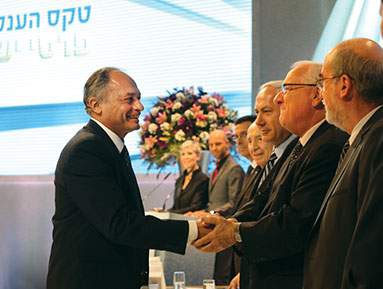
    Israel Prize to Prof. David Milstein

    Milstein is recognized for his environmentally-friendly catalysts

    ISPC
    At the Core

    Israel’s leadership in structural biology leads to the establishment of an Instruct Core Centre

    Neuron cover
    Two for the Price of One

    A unique ON-OFF switch in the brain controls a main stress hormone

    More »

    Honors & Awards

    Prof. Ronen Alon has been elected as a Member of EMBO (2012)
    More »

    Full list »

    |
    | | | | | |
    |
  • Research
    • By Subject
    • What We Are Doing About:
    • From Basic Research to Benefiting Humanity
    • Shaping the Future

    By Subject

    Alternative Energy Materials Science
    Astrophysics Mathematics
    Biochemistry  Neuroscience
    Bioinformatics Molecular Cell Biology
    Biomedical Biology Nanoscience
    Cancer Particle Physics
    Chemistry Physics
    Computer Science Plant Sciences
    Environment Quantum Physics
    Evolution Scientific Archaeology
    Genetics Structural Biology

    What We Are Doing About:

    • Cancer
    • Diabetes
    • The Environment
    • Nanoscience
    • Energy

    Benefiting Humanity

    Prof. Emeritus Nechama Haran-Ghera
    Prof. Emeritus Nechama Haran-Ghera, in collaboration with Israeli physicians, showed that the hormone erythropoietin may be helpful in treating multiple myeloma and other cancers. In mice injected with myeloma cells, the hormone prolonged survival, caused tumor regression and reduced mortality.
     
    Application
    More »

    Full list »

    |
    | | | | | |
    |
  • Magazines and Multimedia
    • Annual Report
    • Interface - Online Magazine
    • Books
    • Nano Comics
    • Galleries
    • Horizons - Online Magazine
    Annual Report 2011
    Art and Science on the Move
    Administering the Institute
    Research
    Financial Highlights
    Roll of Honor
    Supporting Network
    More »

    Magazines

    Current Issue: Apr. 2012 (No. 40)
    Magazine Sections
    Science Feature Articles
    Feature Articles
    Science Briefs

    Archive »

    Latest Videos

    CRASH
    The Race for the Higgs Boson
    CRASH: The Race for the Higgs Boson
    • Monitoring Carbon Exchange
    • Thanks for the Memories
    • Quantum Computing
    • Back to Basics - Forward to the Future
    More »
    |
    | | | | | |
    |
  • About the Institute
    • Overview
    • History
    • Virtual Tour
    • Visiting the Institute

    Overview

    • Multidisciplinary Research
    • Facts and Figures
    • Pioneering Progress
    • Training Future Scientists
    • Science is for Sharing
    • Advancing Israel
    • New Horizons
    • Beauty in Science

    History

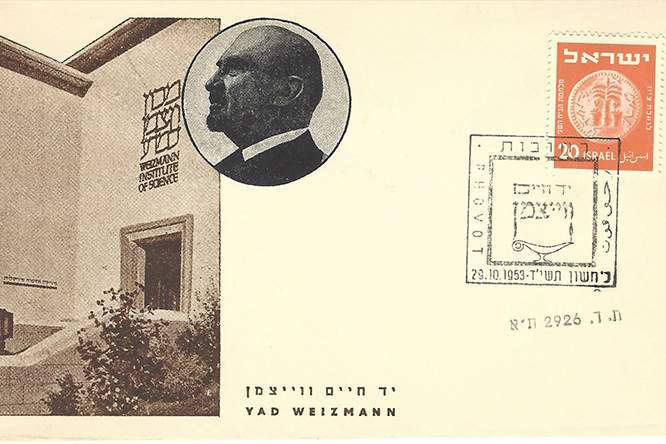
    Dr. Chaim Weizmann

    Chaim Weizmann was born in 1874 to a traditional Jewish family in the small town of Motol in White Russia (Belarus). After graduating with honors from the Real-Gymnasium in Pinsk, he decided to establish himself professionally 

    More »
    Weizmann House
    • History and Architecture
    • The Collection
    • The Tour
    • The Garden
    • The Grave
    • Erich Mendelsohn
    • The Presidential Car Vintage Wheels

    Visiting the Institute


    • Visitors Center
    • Weizmann House
    • Clore Garden of Science
    |
    | | | | | |
    |
  • Weizmann Institute Homepage
Home » Press Room » Press Releases
News
  • Press Releases
    • English
    • Hebrew
    • Spanish
    • French
    • German
  • In the News
  • Subscribe to Press Releases
  • Honors and Awards
  • Visits
  • Events

twitter block


Follow @WeizmannScience

A Supernova with a View

15 Dec
2011
Astrophysics
Type 1a supernovae are such regular features of the Universe that astrophysicists use them to measure cosmic distances. But we still don’t know exactly what makes these giant explosions occur. Now, scientists at the Weizmann Institute of Science, as part of an international effort to study supernovae, are beginning to clear up the mystery of why certain stars explode in a brilliant display at the ends of their lives.

New research began last August, when the automatic telescopes at the Palomar Transient Factory (PTF) in California that search for signs of developing supernova spotted one just a half a day into the explosion process. Not only was this a very early observation, but the supernova was in the Pinwheel Galaxy a mere 6.4 Megaparsecs away – the closest one in the last 25 years.

The scientists participating in PTF, including Drs. Eran Ofek and Avishay Gal-Yam of the Particle Physics and Astrophysics Department, have recently published three new papers based on their initial observations and analysis, two of them appearing in Nature and one in The Astrophysical Journal.

Data on the new supernova came from X-ray and radio wave telescopes, both Earth- and satellite-based. In addition, the researchers went over images of the Pinwheel Galaxy taken by the Hubble Space Telescope over the years to see if they could detect pre-explosion signs of the system that gave rise to the supernova.  

To the scientist’s surprise, the X-ray and radio observations yielded no significant data, and the archival study did not reveal what was there beforehand. But, like the dog in the Sherlock Holmes story that didn’t bark, this lack turned out to be a significant clue: It allowed them to eliminate some of the various scenarios proposed for the type of setup causing the explosion.

These scenarios fall into two broad categories, both of them involving ancient, dense stars called white dwarfs. In one, two white dwarfs merge, and their combined mass becomes unstable, ending in a thermonuclear blast. In the other, the heavy white dwarf siphons off material from a companion star until it exceeds its stable weight limit, again causing an explosion. Proposed companion stars run the gamut from huge, gaseous red giants to smaller, sun-like stars.

The team’s results, including an analysis of the material thrown off in the blast and of the “shock breakout” that takes place as the light released in the shockwave passes through the mass of erupting material (conducted by Itay Rabinak, a student of Prof. Eli Waxman of the same department), showed that the exploding star was, as predicted, a white dwarf: an extremely compact star with a diameter much smaller than that of our sun. And while the team didn’t manage to discount either category, they set an upper limit on the size of a possible companion, showing it could not have been a particularly large star, such as a red giant.

“Although we can’t rule out a white dwarf merger,” says Ofek, “our results point to another likely scenario in which a medium range star – close to our sun’s size – supplied the white dwarf with the extra material needed to turn it into a supernova.”
 
Dr. Avishay Gal-Yam’s research is supported by the Peter and Patricia Gruber Award; the Nella and Leon Benoziyo Center for Astrophysics; the Yeda-Sela Center for Basic Research; and the Lord Sieff of Brimpton Memorial Fund.

Dr. Eran Ofek’s research is supported by the Willner Family Leadership Institute.

Tags:
  • Avishay Gal-Yam,
  • Eran Ofek,
  • Particle Physics and Astrophysics,
  • Supernova,
  • ""
  • Print this page »

Search Press Releases

Related Articles

Time in Space
Shrinking Giants, Exploding Dwarves
After the Collapse
The Big Blow-Up
More Related links »

Edit block | Delete block

Secondary Links

  • Contact Us
  • Visit Us
  • How to Get Here
  • Campus Map
  • Site Map
  • Privacy
  • Terms of Use
  • Supporting Committees
  • Credits

Get RSS
© Weizmann Institute of Science 2012. All rights reserved

Follow us on:
[Jump to Top] [Jump to Main Content]