[[Skip Header and Navigation] [Jump to Main Content]
« עברית
  • Home
  • News
    • Press Releases
    • In the News
    • Subscribe to Press Releases
    • Honors and Awards
    • Visits
    • Events

    Press Releases

    19 Apr 2012
    Defending Against Chemical Acts of Terrorism
    12 Mar 2012
    Why do We See the Man in the Moon?
    23 Feb 2012
    A Unique ON-OFF Switch for the Stress Response

    More »

    Research Highlights

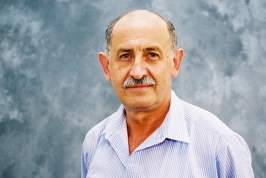
    David Milstein
    Israel Prize to Prof. David Milstein

    Milstein is recognized for his environmentally-friendly catalysts

    ISPC
    At the Core

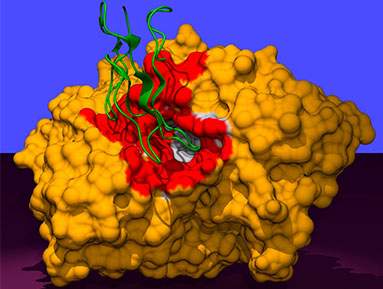
    Israel’s leadership in structural biology leads to the establishment of an Instruct Core Centre

    Neuron cover
    Two for the Price of One

    A unique ON-OFF switch in the brain controls a main stress hormone

    More »

    Honors & Awards

    Prof. Ronen Alon has been elected as a Member of EMBO (2012)
    More »

    Full list »

    |
    | | | | | |
    |
  • Research
    • By Subject
    • What We Are Doing About:
    • From Basic Research to Benefiting Humanity
    • Shaping the Future

    By Subject

    Alternative Energy Materials Science
    Astrophysics Mathematics
    Biochemistry  Neuroscience
    Bioinformatics Molecular Cell Biology
    Biomedical Biology Nanoscience
    Cancer Particle Physics
    Chemistry Physics
    Computer Science Plant Sciences
    Environment Quantum Physics
    Evolution Scientific Archaeology
    Genetics Structural Biology

    What We Are Doing About:

    • Cancer
    • Diabetes
    • The Environment
    • Nanoscience
    • Energy

    Benefiting Humanity

    Prof. Emeritus Nechama Haran-Ghera
    Prof. Emeritus Nechama Haran-Ghera, in collaboration with Israeli physicians, showed that the hormone erythropoietin may be helpful in treating multiple myeloma and other cancers. In mice injected with myeloma cells, the hormone prolonged survival, caused tumor regression and reduced mortality.
     
    Application
    More »

    Full list »

    |
    | | | | | |
    |
  • Magazines and Multimedia
    • Annual Report
    • Interface - Online Magazine
    • Books
    • Nano Comics
    • Galleries
    • Horizons - Online Magazine
    Annual Report 2011
    Art and Science on the Move
    Administering the Institute
    Research
    Financial Highlights
    Roll of Honor
    Supporting Network
    More »

    Magazines

    Current Issue: Apr. 2012 (No. 40)
    Magazine Sections
    Science Feature Articles
    Feature Articles
    Science Briefs

    Archive »

    Latest Videos

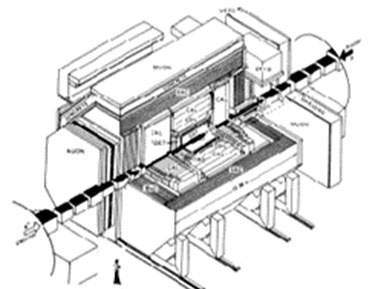
    CRASH
    The Race for the Higgs Boson
    CRASH: The Race for the Higgs Boson
    • Monitoring Carbon Exchange
    • Thanks for the Memories
    • Quantum Computing
    • Back to Basics - Forward to the Future
    More »
    |
    | | | | | |
    |
  • About the Institute
    • Overview
    • History
    • Virtual Tour
    • Visiting the Institute

    Overview

    • Multidisciplinary Research
    • Facts and Figures
    • Pioneering Progress
    • Training Future Scientists
    • Science is for Sharing
    • Advancing Israel
    • New Horizons
    • Beauty in Science

    History

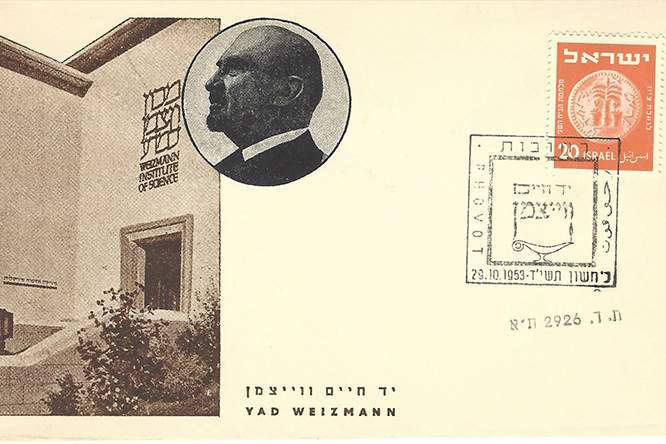
    Dr. Chaim Weizmann

    Chaim Weizmann was born in 1874 to a traditional Jewish family in the small town of Motol in White Russia (Belarus). After graduating with honors from the Real-Gymnasium in Pinsk, he decided to establish himself professionally 

    More »
    Weizmann House
    • History and Architecture
    • The Collection
    • The Tour
    • The Garden
    • The Grave
    • Erich Mendelsohn
    • The Presidential Car Vintage Wheels

    Visiting the Institute


    • Visitors Center
    • Weizmann House
    • Clore Garden of Science
    |
    | | | | | |
    |
  • Weizmann Institute Homepage
Home » Press Room » Press Releases
News
  • Press Releases
    • English
    • Hebrew
    • Spanish
    • French
    • German
  • In the News
  • Subscribe to Press Releases
  • Honors and Awards
  • Visits
  • Events

twitter block


Follow @WeizmannScience

Weak Synchronization in Toddler Brains May Be a Biological Marker for Autism

24 Jul
2011
Neuroscience
 
The biological causes of autism are still not understood. A diagnosis of autism is only possible after ages three or four; and the tests are subjective, based on behavioral symptoms. Now, in research that appeared in Neuron, scientists at the Weizmann Institute of Science, Carnegie Mellon University and the University of California, San Diego have found, for the first time, a method that can accurately identify a biological sign of autism in very young toddlers. By scanning the brain activity of sleeping children, the scientists discovered that the autistic brains exhibited significantly weaker synchronization between brain areas tied to language and communication, compared to that of non-autistic children.

“Identifying biological signs of autism has been a major goal for many scientists around the world, both because they may allow early diagnosis, and because they can provide researchers with important clues about the causes and development of the disorder,” says postdoctoral fellow Dr. Ilan Dinstein, a member of the group of Prof. Rafael Malach, who headed this study in the Weizmann Institute’s Neurobiology Department. While many scientists believe that faulty lines of communication between different parts of the brain are involved in the spectrum of autism disorders, there was no way to observe this in very young children, who are unable to lie still inside an fMRI scanner while they are awake.

But work by Malach’s group and other research groups pointed to a solution. Their studies had shown that even during sleep, the brain does not actually switch off. Rather, the electrical activity of the brain cells switches over to spontaneous fluctuation. These fluctuations are coordinated across the two hemispheres of the brain such that each point on the left is synchronized with its corresponding point in the right hemisphere.
In sleeping autistic toddlers, the fMRI scans showed lowered levels of synchronization between the left and right brain areas known to be involved in language and communication. This pattern was not seen either in children with normal development or in those with delayed language development who were not autistic. In fact, the researchers found that this synchronization was strongly tied to the autistic child’s ability to communicate: The weaker the synchronization, the more severe were the symptoms of autism. On the basis of the scans, the scientists were able to identify 70% of the autistic children between the ages of one and three.
Dinstein: “This biological measurement could help diagnose autism at a very early stage. The goal for the near future is to find additional markers that can improve the accuracy and the reliability of the diagnosis.”   
 
Control and autistic brains
As compared to the control brain (top), the autistic brain (bottom) shows
weaker inter-hemispheric synchronization in several areas, particularly
the superior temporal gyrus (light blue) and the inferior frontal gyrus (red)
 
Prof. Rafael Malach’s research is supported by the Nella and Leon Benoziyo Center for Neurosciences, which he heads; the Nella and Leon Benoziyo Center for Neurological Diseases; the Carl and Micaela Einhorn-Dominic Brain Research Institute; the Friends of Dr. Lou Siminovitch; and the S. and J. Lurje Memorial Foundation. Prof. Malach is the recipient of the Helen and Martin Kimmel Award for Innovative Investigation. Prof. Malach is the incumbent of the Barbara and Morris L. Levinson Professorial Chair in Brain Research.

Tags:
  • Autism,
  • Brain activity,
  • fMRI,
  • Neurobiology,
  • Rafael Malach,
  • ""
  • Print this page »

Search Press Releases

Related Articles

Tumor Tip-Off
Personnel Management in the Brain
Windows on your Mind: Weizmann Institute Scientists Reveal That Imagination Can Enhance Visual Perception
Pacman in the Brain: Protein Chews up Vital Memory Chemical
More Related links »
A conversation between nerve cells in the brain
Edit block | Delete block

Edit block | Delete block

Secondary Links

  • Contact Us
  • Visit Us
  • How to Get Here
  • Campus Map
  • Site Map
  • Privacy
  • Terms of Use
  • Supporting Committees
  • Credits

Get RSS
© Weizmann Institute of Science 2012. All rights reserved
Follow us on:
[Jump to Top] [Jump to Main Content]