[[Skip Header and Navigation] [Jump to Main Content]
« עברית
  • Home
  • News
    • Press Releases
    • In the News
    • Subscribe to Press Releases
    • Honors and Awards
    • Visits
    • Events

    Press Releases

    17 Jun 2013
    Mice in a “Big Brother” Setup Develop Social Structures
    16 May 2013
    Weather on the Outer Planets Only Goes So Deep
    18 Apr 2013
    Neural Activity in Bats Measured In Flight

    More »

    Research Highlights

    germ cells
    Alternate Endings
    A newly discovered cell-death pathway could help fight cancer
    side effects
    Side Effects

    “Feel-good” drugs like Prozac may have an unwanted side effect: diabetes

    overgrown leaf
    Limits to Growth

    Most of the many factors for determining leaf size turn out to put on the brakes, rather than promote growth

    More »

    Honors & Awards

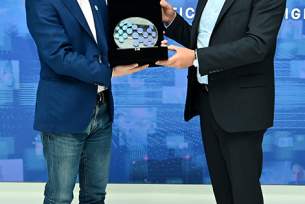
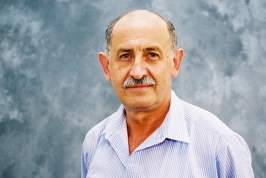
    Prof. Israel Pecht will be awarded an Honorary Doctorate Degree in Biology from National and Kapodistrian University of Athens
    More »

    Full list »

    |
    | | | | | |
    |
  • Research
    • By Subject
    • What We Are Doing About:
    • From Basic Research to Benefiting Humanity
    • Shaping the Future

    By Subject

    Alternative Energy Materials Science
    Astrophysics Mathematics
    Biochemistry  Molecular Cell Biology
    Bioinformatics Nanoscience
    Biomedical Biology Neuroscience
    Cancer Particle Physics
    Chemistry Physics
    Computer Science Plant Sciences
    Environment Quantum Physics
    Evolution Scientific Archaeology
    Genetics Structural Biology

    What We Are Doing About:

    • Cancer
    • Diabetes
    • The Environment
    • Nanoscience
    • Energy

    Benefiting Humanity

    Prof. Amos Breskin
    Prof. Amos Breskin develops advanced radiation detectors, which have an important impact on many fields of research, such as particle, nuclear and atomic physics, medical diagnostics, biology and materials science.

     
    Application

    More »

    Full list »

    |
    | | | | | |
    |
  • Magazines and Multimedia
    • Annual Report
    • Interface - Online Magazine
    • The Weizmann International Magazine of Science and People
    • Books
    • Nano Comics
    • Galleries
    • Horizons - Online Magazine
    Annual Report 2012
    The 2012 Report
    Annual Report 2012
    2012 and Beyond
    Research Highlights
    New Developments
    Technology Transfer
    Summary of Operating Results
    More »

    Magazines

    Current Issue: Spring 2013
    Interface magazine Spring 2013
    Magazine Sections
    Science Feature Articles
    Made at the Institute
    Time Tunnel

    Archive »

    Latest Videos

    CRASH
    The Race for the Higgs Boson
    • Monitoring Carbon Exchange
    • Thanks for the Memories
    • Quantum Computing
    • Back to Basics - Forward to the Future
    More »
    |
    | | | | | |
    |
  • About the Institute
    • Overview
    • History
    • Virtual Tour
    • Visiting the Institute

    Overview

    • Multidisciplinary Research
    • Facts and Figures
    • Pioneering Progress
    • Training Future Scientists
    • Science is for Sharing
    • Advancing Israel
    • New Horizons
    • Beauty in Science

    History

    Dr. Chaim Weizmann

    Chaim Weizmann was born in 1874 to a traditional Jewish family in the small town of Motol in White Russia (Belarus). After graduating with honors from the Real-Gymnasium in Pinsk, he decided to establish himself professionally

    More »
    Weizmann House
    • History and Architecture
    • The Collection
    • The Tour
    • The Garden
    • The Grave
    • Erich Mendelsohn
    • The Presidential Car Vintage Wheels

    Visiting the Institute


    • Visitors Center
    • Weizmann House
    • Clore Garden of Science
    |
    | | | | | |
    |
  • Weizmann Institute Homepage
Home » About the Institute
About the Institute
  • Overview
    • Multidisciplinary Research
    • Facts and Figures
    • Pioneering Progress
    • Training Future Scientists
    • Science is for Sharing
    • Advancing Israel
    • New Horizons
    • Beauty in Science
  • History
    • Dr. Chaim Weizmann
    • Weizmann House
      • History and Architecture
      • The Collection
      • The Tour
      • The Garden
      • The Grave
      • Erich Mendelsohn
      • The Presidential Car Vintage Wheels
  • Virtual Tour
  • Visiting the Institute

twitter block


Tweets by @WeizmannScience

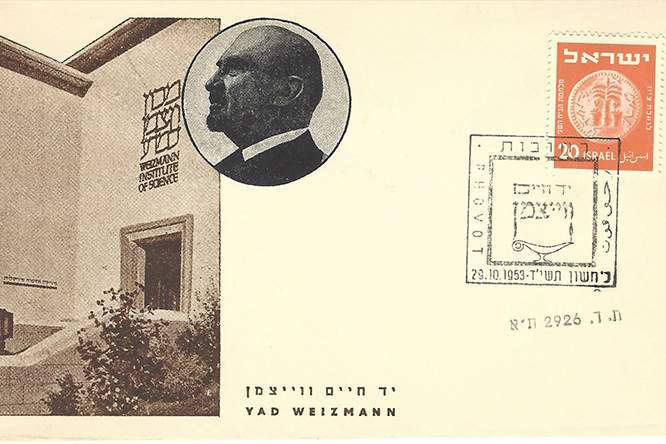
Dr. Chaim Weizmann

Dr. Chaim Weizmann


Dr. Chaim Weizmann
 

1874 - 1952

 
Chaim Weizmann was born in 1874 to a traditional Jewish family in the small town of Motol in White Russia (Belarus). After graduating with honors from the Real-Gymnasium in Pinsk, he decided to establish himself professionally in order to be able to contribute to the development of science in the Land of Israel. He chose to study chemistry in Germany and Switzerland, where he would meet his future wife, Vera, who would become his partner in Zionist activity. In 1899 he was awarded a doctoral degree in organic chemistry by the University of Fribourg in Switzerland.
 
Deeply influenced by the views of Ahad Ha’am and Herzl, Weizmann became involved in Zionist activity, alongside Leo Motzkin, Nahman Syrkin, and Shmaryahu Levin. He felt that Judaism implied not merely religion but peoplehood. Possessing their own language, culture, and common historical memory, the Jewish people were entitled to return to their historical land and live there in safety.
 
Weizmann therefore rejected the idea that Uganda could replace the Land of Israel as a homeland for the Jews. At the same time, he began working as a scientist at the University of Manchester in England, a nation which he viewed as one of legal freedoms, moderation, and political realism.
 
In 1907, he visited the Land of Israel to see if industry could be developed there. Those were hard times for Jewish immigrants, who were working to cultivate the land while draining swamps and fighting malaria. That first visit strengthened his conviction that both political lobbying and settlement of the land were critical to the establishment of the State of Israel. This combined approach would later become known as “synthetic Zionism.”
 
Weizmann is known to have said during that time: “If everything is progressing so poorly, then the fault lies neither with the Land of Israel nor with the political situation, but solely with us!” Shortly afterward, he launched a campaign to explain the hardships and rights of the Jewish people.
 
Thanks to his determination and great  personal charm, he met members of the British government and gained their good will. Afterwards, his invention of a new method of producing acetone from corn, which contributed to the British war effort in World War I, would add to his prestige and open new doors for him in the British cabinet. During those years he used to say: “Politics is the sense of smell, to predict what can – and what cannot – be achieved. One should demand only that which can be achieved.”
 
A skilled negotiator, Weizmann secured for himself the status of representative of a government in exile. That was how he obtained, with arduous effort, the coveted Balfour Declaration on November 2, 1917. In it, the British government recognized the right of the Jewish people to establish a national home in the Land of Israel. Weizmann: “We begin a new chapter. From now on, we – the Jews – will determine how the Declaration is to be translated into reality.”
 
As befits a scientist, Weizmann pursued his goals systematically, step by step. Once the declared right to the territory was obtained, he worked to strengthen and anchor it in reality.
 
He departed for the Land of Israel at the head of a delegation under British government auspices, and found the Jewish settlers engaged in the dynamic process of building and aliyah. Tel Aviv, the first Hebrew city, arose from the sands.
 
Understanding that Jews and Arabs would have to live together in the Land of Israel, Weizmann strove to create peaceful coexistence between the two peoples. Thus he met in Aqaba with Emir Faisal, leader of the Arab national movement. Faisal expressed sympathy for the Zionist cause, which he felt was similar to the Arabs’ national
aspirations.
 
In 1919, Weizmann and Faisal signed an agreement of cooperation between the two national movements, Jewish and Arab, for the development of the Land of Israel.
 
In 1921, Weizmann was elected President of the World Zionist Organization. He visited the United States and, together with Albert Einstein, undertook a fundraising campaign to advance the Zionist cause. In 1925, together with Lord Balfour, Weizmann inaugurated the Hebrew University of Jerusalem on Mount Scopus in Jerusalem. He said: “We must create a high culture, based on Jewish morality, and make it a center of human culture.”
 
Placing great emphasis on integrating science and industry, Weizmann promoted the establishment of advanced enterprises such as the phosphates plant at the Dead Sea and the hydroelectric power plant at Naharayim. However, despite renewed growth, the Jewish settlement was afflicted by an economic crisis. To overcome this crisis Weizmann established the Jewish Agency in 1929.
 
As a result of the bloody events of 1929, Lord Passfield, British Colonial Secretary at that time, who viewed the Arab riots as a natural defense against Jewish aliyah to the Land of Israel, published the White Paper in the name of the British government. England reneged on the promises made in the Balfour Declaration, and the Zionist endeavor fell upon trying times.
 
Following the Nazis’ rise to power in Germany, Weizmann dedicated himself to saving European Jewry. He was convinced that the Jewish people must stand by England in its struggle against the Germans, and promoted the formation of a Jewish Brigade. His two sons served in the British Army.
 
In 1942, as he was about to depart for a meeting with U.S. President Roosevelt, he received the bitter news that the airplane of his son Michael, a pilot in the Royal Air Force, had been shot down. His son was missing. Weizmann suppressed his mourning and proceeded with his mission.
 
Weizmann believed that only peace and neighborly relations could guarantee political and economic vigor. Thus he supported the partition of the Land of Israel into two states: Jewish and Arab. Turning to the Arab population in the land, he stated: “We do not build our national home at the expense of another nation. We wish to build Palestine with you, together.”
 
In 1947, Weizmann worked toward the acceptance of the United Nations resolution that would partition the land, insisting, however, on including the Negev within the area of the Jewish state. For this purpose, he met with U.S. President Harry S. Truman.Concurrent with his political activity, Weizmann was also devoted to his other great love: science.
 
In 1934, he established the Daniel Sieff Research Institute in Rehovot and served as its President following a contribution by Israel and Rebecca Sieff to commemorate their son. As Weizmann pursued his research in the lab, the Institute attracted first-rate scientists from around the world.
 
Vera and Chaim Weizmann built their house in Rehovot, near the Sieff Institute. Scientists, statesmen, and intellectuals from many nations visited the house. In 1949, on Weizmann’s 75th birthday, and with the blessing of the Sieff family, the Sieff Institute was renamed the Weizmann Institute of Science. The new Institute consisted of departments of mathematics, physics, chemistry, and life sciences.
 
Chaim Weizmann’s heritage, vision, and ideas are reflected today in every field of activity that characterizes modern Israel. His yearning for the expansion of knowledge found its expression in the establishment of prestigious institutions for research and higher learning. Israel’s advanced industry and technology have a great impact on the country’s standard of living and their products are highly acclaimed throughout the world.
 
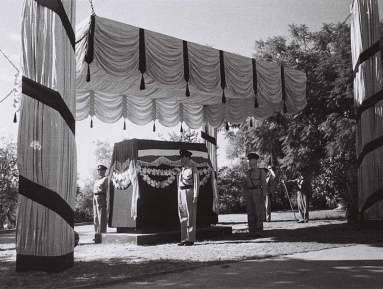
Dr. Chaim Weizmann passed away on November 2, 1952, at the age of 78. In accordance with his wishes, he was buried on the estate of his home in Rehovot.
 
Few leaders have had the privilege of seeing their visions become reality in their lifetimes. Chaim Weizmann lived to see the establishment and the early success of the State of Israel, which continues to develop while granting its citizens, and citizens of the entire world, the hope for a brighter future.
 
Chaim Weizmann as a child


Meyer Weisgal, Dr. Benjamin M. Bloch, and Chaim Weizmann


Vera and Chaim Weizmann on their wedding day


Tags:
  • Chaim Weizmann,
  • Daniel Sieff Research Institute,
  • Weizmann House
  • ""
  • Print this page »

Edit block | Delete block

Download our FREE Interface Magazine App for iPad and Android

Secondary Links

  • Contact Us
  • Visit Us
  • How to Get Here
  • Campus Map
  • Site Map
  • Privacy
  • Terms of Use
  • Supporting Committees
  • Credits

Get RSS
© Weizmann Institute of Science 2012. All rights reserved
Follow us on:
[Jump to Top] [Jump to Main Content]