[[Skip Header and Navigation] [Jump to Main Content]
« עברית
  • Home
  • News
    • Press Releases
    • In the News
    • Subscribe to Press Releases
    • Honors and Awards
    • Visits
    • Events

    Press Releases

    16 May 2013
    Weather on the Outer Planets Only Goes So Deep
    18 Apr 2013
    Neural Activity in Bats Measured In Flight
    18 Mar 2013
    Programmed Destruction

    More »

    Research Highlights

    GeneCards
    Noncoding Sequences Get Equal Listing

    A greatly expanded database will give scientists around the world a powerful new tool for life sciences research

    gut cells
    The Spies Inside

    How does the immune system in the gut distinguish between helpful microbes and those that wish us harm?

    Ron Diskin
    Mutations Trump Invasion

    The process of HIV infection is just one of the subjects protein researcher Dr. Ron Diskin is investigating in his new lab

    More »

    Honors & Awards

    Dr. Zohar Komargodski has been awarded the Gribov Medal by the EPS High Energy Particle Physics Division Prizes
    More »

    Full list »

    |
    | | | | | |
    |
  • Research
    • By Subject
    • What We Are Doing About:
    • From Basic Research to Benefiting Humanity
    • Shaping the Future

    By Subject

    Alternative Energy Materials Science
    Astrophysics Mathematics
    Biochemistry  Molecular Cell Biology
    Bioinformatics Nanoscience
    Biomedical Biology Neuroscience
    Cancer Particle Physics
    Chemistry Physics
    Computer Science Plant Sciences
    Environment Quantum Physics
    Evolution Scientific Archaeology
    Genetics Structural Biology

    What We Are Doing About:

    • Cancer
    • Diabetes
    • The Environment
    • Nanoscience
    • Energy

    Benefiting Humanity

    Prof. Amos Breskin
    Prof. Amos Breskin develops advanced radiation detectors, which have an important impact on many fields of research, such as particle, nuclear and atomic physics, medical diagnostics, biology and materials science.

     
    Application

    More »

    Full list »

    |
    | | | | | |
    |
  • Magazines and Multimedia
    • Annual Report
    • Interface - Online Magazine
    • The Weizmann International Magazine of Science and People
    • Books
    • Nano Comics
    • Galleries
    • Horizons - Online Magazine
    Annual Report 2012
    The 2012 Report
    Annual Report 2012
    2012 and Beyond
    Research Highlights
    New Developments
    Technology Transfer
    Summary of Operating Results
    More »

    Magazines

    Current Issue: Spring 2013
    Interface magazine Spring 2013
    Magazine Sections
    Science Feature Articles
    Made at the Institute
    Time Tunnel

    Archive »

    Latest Videos

    CRASH
    The Race for the Higgs Boson
    • Monitoring Carbon Exchange
    • Thanks for the Memories
    • Quantum Computing
    • Back to Basics - Forward to the Future
    More »
    |
    | | | | | |
    |
  • About the Institute
    • Overview
    • History
    • Virtual Tour
    • Visiting the Institute

    Overview

    • Multidisciplinary Research
    • Facts and Figures
    • Pioneering Progress
    • Training Future Scientists
    • Science is for Sharing
    • Advancing Israel
    • New Horizons
    • Beauty in Science

    History

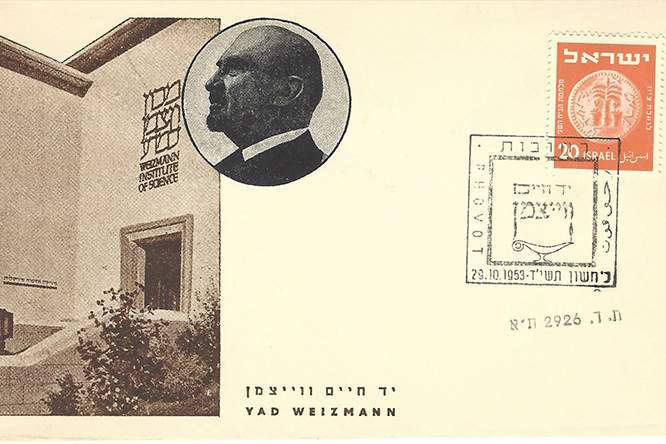
    Dr. Chaim Weizmann
    Chaim Weizmann was born in 1874 to a traditional Jewish family in the small town of Motol in White Russia (Belarus). After graduating with honors from the Real-Gymnasium in Pinsk, he decided to establish himself professionally

    More »
    Weizmann House
    • History and Architecture
    • The Collection
    • The Tour
    • The Garden
    • The Grave
    • Erich Mendelsohn
    • The Presidential Car Vintage Wheels

    Visiting the Institute


    • Visitors Center
    • Weizmann House
    • Clore Garden of Science
    |
    | | | | | |
    |
  • Weizmann Institute Homepage
Home » Press Room » Press Releases
News
  • Press Releases
    • English
    • Hebrew
    • Spanish
    • French
    • German
  • In the News
  • Subscribe to Press Releases
  • Honors and Awards
  • Visits
  • Events

twitter block


Follow @WeizmannScience

Eight Hours of Resistance

25 May
2011
Cancer

Why do cancer cells easily give in to the temptation to divide?


Temptations to exceed the speed limit are always plentiful, but only reckless drivers give in to such impulses. Likewise, numerous growth factors always abound in our bodies, but only cancerous cells are quickly “tempted” by these chemicals to divide again and again. Healthy cells, in contrast, divide only after being exposed to growth factors for eight continuous hours. What happens during these eight hours in a healthy cell that resists the call to divide? And even more important, what fails to work properly in the cancerous cell during these same hours? Why do cancerous cells give in so easily to the influence of growth factors, dividing so readily?
 
Answers to these questions have emerged from a study by a multidisciplinary team of Weizmann Institute researchers published recently in Molecular Cell. The scientists found that when a cell first receives a signal from a growth factor, ten groups of genes, about 8,000 in total, become activated. Of these, one group, consisting of about ten genes governed by the tumor suppressor p53, is the most crucial: These genes prevent the cell from dividing. Only if the growth factor continues to affect the cell for eight hours does p53 release its grip on the cell’s DNA, allowing it to divide. Like a careful driver who puts the brakes on before proceeding, the activation of p53 at the time the cell receives a growth factor signal serves as a “brake,” preventing instant division. In this manner, the healthy cell ensures that it will not divide as a result of accidental, mistaken or otherwise superfluous growth signals, but only if the signal is continuous and necessary. In cancerous cells, this mechanism malfunctions because in most of them, p53 is defective or missing altogether, so that even a fleeting growth signal can cause them to divide, leading to cancerous growth.
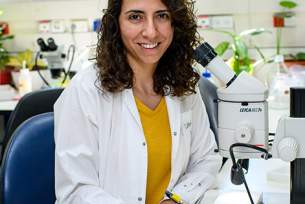
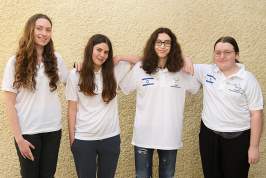
 
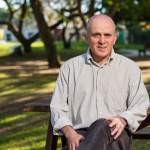
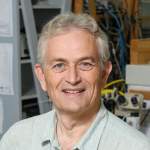
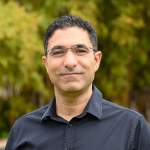
This interdisciplinary study has resulted from a collaboration between three research teams at the Weizmann Institute, headed by Prof. Yosef Yarden of the Biological Regulation Department, Prof. Eytan Domany of the Physics of Complex Systems Department and Prof. Moshe Oren of the Molecular Cell Biology Department. The study was coordinated by former graduate student Dr. Yaara Zwang; taking part were Aldema Sas-Chen, Yotam Drier, Dr. Tal Shay, Roi Avraham, Dr. Mattia Lauriola, Efrat Shema and Efrat Lidor-Nili. Also taking part were clinical researchers: Dr. Jasmine Jacob-Hirsch, Dr. Ninette Amariglio and Prof. Gideon Rechavi of the Chaim Sheba Medical Center and Drs. Yiilng Lu and Gordon B. Mills of the M.D. Anderson Cancer Center at the University of Texas.
 
This research sheds new light on the differences between healthy and cancerous cells. It might help develop new effective approaches to chemotherapy. Cancerous tumors sometimes develop resistance to the therapy, among other reasons because it stresses the body. The stress, in turn, leads to the production of growth factors that cause cells to divide, so that the treatment ultimately defeats itself. A better understanding of how growth factors work can help identify intervals for chemotherapy that will prevent the increased division of cancerous cells.
 
 
Prof. Yosef Yarden’s research is supported by the M.D. Moross Institute for Cancer Research; the Aharon Katzir-Katchalsky Center; the Kekst Family Institute for Medical Genetics; the Kirk Center for Childhood Cancer and Immunological Disorders; the Women's Health Research Center funded by the Bennett-Pritzker Endowment Fund, the Marvelle Koffler Program for Breast Cancer Research, the Harry and Jeanette Weinberg Women's Health Research Endowment, and the Oprah Winfrey Biomedical Research Fund; the Jean - Jacques Brunschwig Fund for the Molecular Genetics of Cancer; the Laub Fund for Oncogene Research; the Dr. Miriam and Sheldon G. Adelson Medical Research Foundation; the Steven and Beverly Rubenstein Charitable Foundation , Inc.; Julie Charbonneau, Canada; and the estate of Norman Davis. Prof. Yarden is the incumbent of the Harold and Zelda Goldenberg Professorial Chair in Molecular Cell Biology.

Prof. Moshe Oren’s research is supported by the Dr. Miriam and Sheldon G. Adelson Medical Research Foundation; the Robert Bosch Foundation; and the estate of Harold Z. Novak. Prof. Oren is the incumbent of the Andre Lwoff Professorial Chair in Molecular Biology.

Prof. Eytan Domany’s research is supported by the Kahn Family Research Center for Systems Biology of the Human Cell; the Mario Negri Institute for Pharmacological Research - Weizmann Institute of Science Exchange Program; the Leir Charitable Foundation; and Mordechai Segal, Israel. Prof. Domany is the incumbent of the Henry J. Leir Professorial Chair.
Tags:
  • Biological Regulation,
  • Cancer,
  • Chemotherapy,
  • Eytan Domany,
  • Moshe Oren,
  • p53,
  • Physics of Complex Systems,
  • Yosef Yarden,
  • ""
  • Print this page »

Search Press Releases

Related Articles

More Bytes for the Buck
Fire on the Move
Clusters, Computers and the Human Brain
Weizmann Institute Scientists Develop a Novel System for Analyzing Genetic Data that Mimics the Human Capacity for Unsupervised Learning
More Related links »
Gene expression in colon cancer tissue samples
Edit block | Delete block

Edit block | Delete block

Download our FREE Interface Magazine App for iPad and Android

Secondary Links

  • Contact Us
  • Visit Us
  • How to Get Here
  • Campus Map
  • Site Map
  • Privacy
  • Terms of Use
  • Supporting Committees
  • Credits

Get RSS
© Weizmann Institute of Science 2012. All rights reserved
Follow us on:
[Jump to Top] [Jump to Main Content]