[[Skip Header and Navigation] [Jump to Main Content]
« עברית
  • Home
  • News
    • Press Releases
    • In the News
    • Subscribe to Press Releases
    • Honors and Awards
    • Visits
    • Events

    Press Releases

    17 Jun 2013
    Mice in a “Big Brother” Setup Develop Social Structures
    16 May 2013
    Weather on the Outer Planets Only Goes So Deep
    18 Apr 2013
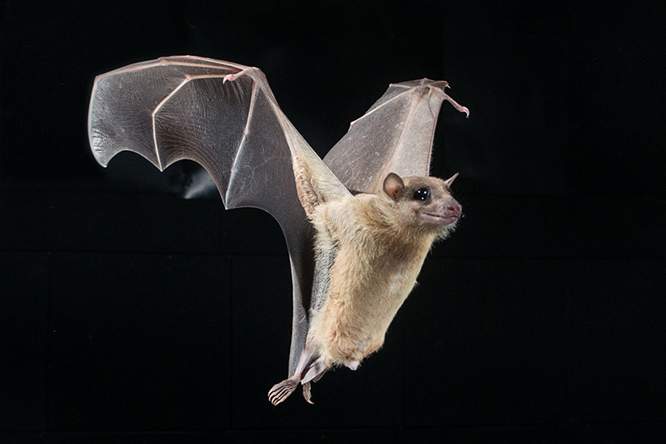
    Neural Activity in Bats Measured In Flight

    More »

    Research Highlights

    germ cells
    Alternate Endings
    A newly discovered cell-death pathway could help fight cancer
    side effects
    Side Effects

    “Feel-good” drugs like Prozac may have an unwanted side effect: diabetes

    overgrown leaf
    Limits to Growth

    Most of the many factors for determining leaf size turn out to put on the brakes, rather than promote growth

    More »

    Honors & Awards

    Prof. Irit Sagi was awarded the Juludan Research Prize from the Technion
    More »

    Full list »

    |
    | | | | | |
    |
  • Research
    • By Subject
    • What We Are Doing About:
    • From Basic Research to Benefiting Humanity
    • Shaping the Future

    By Subject

    Alternative Energy Materials Science
    Astrophysics Mathematics
    Biochemistry  Molecular Cell Biology
    Bioinformatics Nanoscience
    Biomedical Biology Neuroscience
    Cancer Particle Physics
    Chemistry Physics
    Computer Science Plant Sciences
    Environment Quantum Physics
    Evolution Scientific Archaeology
    Genetics Structural Biology

    What We Are Doing About:

    • Cancer
    • Diabetes
    • The Environment
    • Nanoscience
    • Energy

    Benefiting Humanity

    Prof. Amos Breskin
    Prof. Amos Breskin develops advanced radiation detectors, which have an important impact on many fields of research, such as particle, nuclear and atomic physics, medical diagnostics, biology and materials science.

     
    Application

    More »

    Full list »

    |
    | | | | | |
    |
  • Magazines and Multimedia
    • Annual Report
    • Interface - Online Magazine
    • The Weizmann International Magazine of Science and People
    • Books
    • Nano Comics
    • Galleries
    • Horizons - Online Magazine
    Annual Report 2012
    The 2012 Report
    Annual Report 2012
    2012 and Beyond
    Research Highlights
    New Developments
    Technology Transfer
    Summary of Operating Results
    More »

    Magazines

    Current Issue: Spring 2013
    Interface magazine Spring 2013
    Magazine Sections
    Science Feature Articles
    Made at the Institute
    Time Tunnel

    Archive »

    Latest Videos

    CRASH
    The Race for the Higgs Boson
    • Monitoring Carbon Exchange
    • Thanks for the Memories
    • Quantum Computing
    • Back to Basics - Forward to the Future
    More »
    |
    | | | | | |
    |
  • About the Institute
    • Overview
    • History
    • Virtual Tour
    • Visiting the Institute

    Overview

    • Multidisciplinary Research
    • Facts and Figures
    • Pioneering Progress
    • Training Future Scientists
    • Science is for Sharing
    • Advancing Israel
    • New Horizons
    • Beauty in Science

    History

    Dr. Chaim Weizmann

    Chaim Weizmann was born in 1874 to a traditional Jewish family in the small town of Motol in White Russia (Belarus). After graduating with honors from the Real-Gymnasium in Pinsk, he decided to establish himself professionally

    More »
    Weizmann House
    • History and Architecture
    • The Collection
    • The Tour
    • The Garden
    • The Grave
    • Erich Mendelsohn
    • The Presidential Car Vintage Wheels

    Visiting the Institute


    • Visitors Center
    • Weizmann House
    • Clore Garden of Science
    |
    | | | | | |
    |
  • Weizmann Institute Homepage
Home » Press Room » Press Releases
News
  • Press Releases
    • English
    • Hebrew
    • Spanish
    • French
    • German
  • In the News
  • Subscribe to Press Releases
  • Honors and Awards
  • Visits
  • Events

twitter block


Follow @WeizmannScience

Brave Brains: Neural Mechanisms of Courage

24 Jun
2010
Neuroscience
A fascinating new study combines snakes with brain imaging in order to uncover neural mechanisms associated with ‘courage’. (Press release by the research journal Neuron)
 
The research, published by Cell Press in the June 24th issue of the journal Neuron, provides fascinating insight into what happens in the brain when an individual voluntarily performs an action opposite to that promoted by ongoing fear and may even lead to new treatment strategies for those who exhibit a failure to overcome their fear.
 
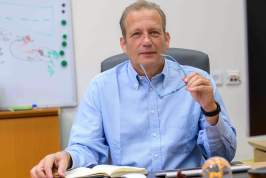
Although there is a substantial body of research examining brain mechanisms associated with fear, far less is known about the brain mechanisms associated with courage, defined here as action in the face of ongoing fear. ‘By gauging properly defined actions of either overcoming fear or succumbing to it in an acute controllable fearful situation, one can render certain neural substrates of courage amenable to investigation in a brain research laboratory setting,’ explains senior study author, Dr. Yadin Dudai from the Weizmann Institute of Science in Rehovot, Israel.
 
To study the neural mechanisms associated with moments of real-life courage, Dr. Dudai, Uri Nilli and their colleagues devised an experimental paradigm where participants had to choose whether to advance an object closer or farther away from them while their brain was scanned with functional magnetic resonance imaging (fMRI). The objects used in the study were either a toy bear or a live corn snake. Prior to the study, participants were categorized as ‘fearful’ or ‘fearless’ depending on how they responded to a validated snake-fear questionnaire.

 
As might be expected, the researchers observed that both high subjective fear and high somatic arousal were associated with succumbing to fear and moving the snake farther away. However, somewhat surprisingly, bringing the snake closer was associated with either high somatic arousal (assessed by skin conductance response) accompanied by low subjective fear (assessed by fear self-ratings) or high subjective fear accompanied by low somatic arousal.
 
Brain imaging during the task revealed that activity in a brain region called the subgenual anterior cingulate cortex (sgACC) correlated positively with the level of subjective fear when choosing to act courageously but not when choosing to succumb to fear. Further, activity in a series of temporal lobe structures was decreased when the level of fear increased and the individual chose to overcome their fear.
 
‘Our results propose an account for brain processes and mechanisms supporting an intriguing aspect of human behavior, the ability to carry out a voluntary action opposite to that promoted by ongoing fear, namely courage,’ concludes Dr. Dudai. ‘Specifically, our findings delineate the importance of maintaining high sgACC activity in successful efforts to overcome ongoing fear and point to the possibility of manipulating sgACC activity in therapeutic intervention in disorders involving a failure to overcome fear.’
 

Prof. Yadin Dudai’s research is supported by the Norman and Helen Asher Center for Human Brain Imaging; the Nella and Leon Benoziyo Center for Neurological Diseases; the Nella and Leon Benoziyo Center for Neurosciences; the Carl and Micaela Einhorn-Dominic Center for Brain Research; the Rowen Family Fund for Neurocognitive Research; the Abe and Kathryn Selsky Memorial Research Project; Miel de Botton Aynsley, UK; and Dr. Henry Kaminer, New York, NY. Prof. Dudai is the incumbent of the Sara and Michael Sela Professorial Chair of Neurobiology


The Weizmann Institute of Science in Rehovot, Israel, is one of the world's top-ranking multidisciplinary research institutions. Noted for its wide-ranging exploration of the natural and exact sciences, the Institute is home to 2,600 scientists, students, technicians and supporting staff. Institute research efforts include the search for new ways of fighting disease and hunger, examining leading questions in mathematics and computer science, probing the physics of matter and the universe, creating novel materials and developing new strategies for protecting the environment.

Weizmann Institute news releases are posted on the World Wide Web at http://wis-wander.weizmann.ac.il/, and are also available at http://www.eurekalert.org/ .

CONTACT: Yivsam Azgad, Tel: 972-8-934-3856/2
EMAIL: Yivsam.azgad@weizmann.ac.il / news@weizmann.ac.il


Tags:
  • Courage,
  • fMRI,
  • Neural mechanism,
  • Yadin Dudai,
  • ""
  • Print this page »

Search Press Releases

Related Articles

Weizmann Institute Scientists Reveal a New Principle that Guides Memory Dynamics
Memory Machine
Scents and Sensibility
Keeping the Memories Alive
More Related links »
A conversation between nerve cells in the brain
Edit block | Delete block

Edit block | Delete block

Download our FREE Interface Magazine App for iPad and Android

Secondary Links

  • Contact Us
  • Visit Us
  • How to Get Here
  • Campus Map
  • Site Map
  • Privacy
  • Terms of Use
  • Supporting Committees
  • Credits

Get RSS
© Weizmann Institute of Science 2012. All rights reserved
Follow us on:
[Jump to Top] [Jump to Main Content]