[[Skip Header and Navigation] [Jump to Main Content]
« עברית
  • Home
  • News
    • Press Releases
    • In the News
    • Subscribe to Press Releases
    • Honors and Awards
    • Visits
    • Events

    Press Releases

    16 May 2013
    Weather on the Outer Planets Only Goes So Deep
    18 Apr 2013
    Neural Activity in Bats Measured In Flight
    18 Mar 2013
    Programmed Destruction

    More »

    Research Highlights

    GeneCards
    Noncoding Sequences Get Equal Listing

    A greatly expanded database will give scientists around the world a powerful new tool for life sciences research

    gut cells
    The Spies Inside

    How does the immune system in the gut distinguish between helpful microbes and those that wish us harm?

    Ron Diskin
    Mutations Trump Invasion

    The process of HIV infection is just one of the subjects protein researcher Dr. Ron Diskin is investigating in his new lab

    More »

    Honors & Awards

    Dr. Zohar Komargodski has been awarded the Gribov Medal by the EPS High Energy Particle Physics Division Prizes
    More »

    Full list »

    |
    | | | | | |
    |
  • Research
    • By Subject
    • What We Are Doing About:
    • From Basic Research to Benefiting Humanity
    • Shaping the Future

    By Subject

    Alternative Energy Materials Science
    Astrophysics Mathematics
    Biochemistry  Molecular Cell Biology
    Bioinformatics Nanoscience
    Biomedical Biology Neuroscience
    Cancer Particle Physics
    Chemistry Physics
    Computer Science Plant Sciences
    Environment Quantum Physics
    Evolution Scientific Archaeology
    Genetics Structural Biology

    What We Are Doing About:

    • Cancer
    • Diabetes
    • The Environment
    • Nanoscience
    • Energy

    Benefiting Humanity

    Prof. Amos Breskin
    Prof. Amos Breskin develops advanced radiation detectors, which have an important impact on many fields of research, such as particle, nuclear and atomic physics, medical diagnostics, biology and materials science.

     
    Application

    More »

    Full list »

    |
    | | | | | |
    |
  • Magazines and Multimedia
    • Annual Report
    • Interface - Online Magazine
    • The Weizmann International Magazine of Science and People
    • Books
    • Nano Comics
    • Galleries
    • Horizons - Online Magazine
    Annual Report 2012
    The 2012 Report
    Annual Report 2012
    2012 and Beyond
    Research Highlights
    New Developments
    Technology Transfer
    Summary of Operating Results
    More »

    Magazines

    Current Issue: Spring 2013
    Interface magazine Spring 2013
    Magazine Sections
    Science Feature Articles
    Made at the Institute
    Time Tunnel

    Archive »

    Latest Videos

    CRASH
    The Race for the Higgs Boson
    • Monitoring Carbon Exchange
    • Thanks for the Memories
    • Quantum Computing
    • Back to Basics - Forward to the Future
    More »
    |
    | | | | | |
    |
  • About the Institute
    • Overview
    • History
    • Virtual Tour
    • Visiting the Institute

    Overview

    • Multidisciplinary Research
    • Facts and Figures
    • Pioneering Progress
    • Training Future Scientists
    • Science is for Sharing
    • Advancing Israel
    • New Horizons
    • Beauty in Science

    History

    Dr. Chaim Weizmann

    Chaim Weizmann was born in 1874 to a traditional Jewish family in the small town of Motol in White Russia (Belarus). After graduating with honors from the Real-Gymnasium in Pinsk, he decided to establish himself professionally

    More »
    Weizmann House
    • History and Architecture
    • The Collection
    • The Tour
    • The Garden
    • The Grave
    • Erich Mendelsohn
    • The Presidential Car Vintage Wheels

    Visiting the Institute


    • Visitors Center
    • Weizmann House
    • Clore Garden of Science
    |
    | | | | | |
    |
  • Weizmann Institute Homepage
Home » Press Room » Press Releases
News
  • Press Releases
    • English
    • Hebrew
    • Spanish
    • French
    • German
  • In the News
  • Subscribe to Press Releases
  • Honors and Awards
  • Visits
  • Events

twitter block


Follow @WeizmannScience

Fools’ Gold Found to Regulate Oxygen

23 Jul
2012
Environment

The sulfur-based chemistry of iron pyrite may play a major role in atmospheric oxygen concentrations

 
As sulfur cycles through Earth’s atmosphere, oceans and land, it undergoes chemical changes that are often coupled to changes in other such elements as carbon and oxygen. Although this affects the concentration of free oxygen, sulfur has traditionally been portrayed as a secondary factor in regulating atmospheric oxygen, with most of the heavy lifting done by carbon. However, new findings that appeared this week in Science suggest that sulfur’s role may have been underestimated.

Drs. Itay Halevy of the Weizmann Institute’s Environmental Science and Energy Research Department (Faculty of Chemistry), Shanan Peters of the University of Wisconsin and Woodward Fischer of the California Institute of Technology, were interested in better understanding the global sulfur cycle over the last 550 million years – roughly the period in which oxygen has been at its present atmospheric level of around 20%. They used a database developed and maintained by Peters at the University of Wisconsin, called Macrostrat, which contains detailed information on thousands of rock units in North America and beyond.

The researchers used the database to trace one of the ways in which sulfur exits ocean water into the underlying sediments – the formation of so-called sulfate evaporite minerals. These sulfur-bearing minerals, such as gypsum, settle to the bottom of shallow seas as seawater evaporates. The team found that the formation and burial of sulfate evaporites were highly variable over the last 550 million years, due to changes in shallow sea area, the latitude of ancient continents and sea level. More surprising to Halevy and colleagues was the discovery that only a relatively small fraction of the sulfur cycling through the oceans has exited seawater in this way. Their research showed that the formation and burial of a second sulfur-bearing mineral – pyrite – has apparently been much more important.

Pyrite is an iron-sulfur mineral (also known as fools’ gold), which forms when microbes in seafloor sediments use the sulfur dissolved in seawater to digest organic matter. The microbes take up sulfur in the form of sulfate (bound to four oxygen atoms) and release it as sulfide (with no oxygen). Oxygen is released during this process, thus making it a source of oxygen in the air. But because this part of the sulfur cycle was thought be minor in comparison to sulfate evaporite burial (which does not release oxygen), its effect on oxygen levels was also thought to be unimportant.

In testing various theoretical models of the sulfur cycle against the Macrostrat data, the team realized that the production and burial of pyrite has been much more significant than previously thought, accounting for more than 80% of all sulfur removed from the ocean (rather than the 30-40% in prior estimates). As opposed to the variability they saw for sulfate evaporite burial, pyrite burial has been relatively stable throughout the period. The analysis also revealed that most of the sulfur entering the ocean washed in from the weathering of pyrite exposed on land. In other words, there is a balance between pyrite formation and burial, which releases oxygen, and the weathering of pyrite on land, which consumes it. The implication of these findings is that the sulfur cycle regulates the atmospheric concentration of oxygen more strongly than previously appreciated.
 
iron pyrite
                                               Iron pyrite. Photo: Thinkstock
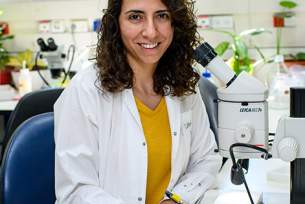


“This is the first use of Macrostrat to quantify chemical fluxes in the Earth system,” said Peters. “I met my coauthors at a lecture I gave at Caltech, and we immediately began discussing how we might apply Macrostrat to understanding biogeochemical cycling. I think this study will open the door to many more uses of Macrostrat for constraining biogeochemical cycles.”
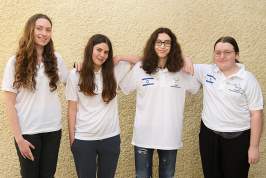

“For me, the truly surprising result is that pyrite weathering and burial appear to be such important processes in the sulfur cycle throughout all of Earth’s history. The carbon cycle is recognized as the central hub controlling redox processes on Earth, but our work suggests that nearly as many electrons are shuttled through the sulfur cycle,” said Fischer.

Halevy: “These findings, in addition to shedding new light on the role of sulfur in regulating oxygen levels in the atmosphere, represent an important step forward in developing a quantitative, mechanistic understanding of the processes governing the global sulfur cycle.”
 
Dr. Itay Halevy’s research is supported by the Sir Charles Clore Research Prize; and the estate of Olga Klein Astrachan.

Tags:
  • Atmosphere,
  • Center for Planetary Science,
  • Environmental Sciences and Energy Research,
  • Itay Halevy,
  • Ocean,
  • Planetary cycles,
  • ""
  • Print this page »

Search Press Releases

Related Articles

Cooling forests can heat too
Cross Flow
CARESSing the Environment
Hard Rain
More Related links »

Edit block | Delete block

Download our FREE Interface Magazine App for iPad and Android

Secondary Links

  • Contact Us
  • Visit Us
  • How to Get Here
  • Campus Map
  • Site Map
  • Privacy
  • Terms of Use
  • Supporting Committees
  • Credits

Get RSS
© Weizmann Institute of Science 2012. All rights reserved
Follow us on:
[Jump to Top] [Jump to Main Content]