[[Skip Header and Navigation] [Jump to Main Content]
« עברית
  • Home
  • News
    • Press Releases
    • In the News
    • Subscribe to Press Releases
    • Honors and Awards
    • Visits
    • Events

    Press Releases

    16 May 2013
    Weather on the Outer Planets Only Goes So Deep
    18 Apr 2013
    Neural Activity in Bats Measured In Flight
    18 Mar 2013
    Causing Collapse

    More »

    Research Highlights

    GeneCards
    Noncoding Sequences Get Equal Listing

    A greatly expanded database will give scientists around the world a powerful new tool for life sciences research

    gut cells
    The Spies Inside

    How does the immune system in the gut distinguish between helpful microbes and those that wish us harm?

    Ron Diskin
    Mutations Trump Invasion

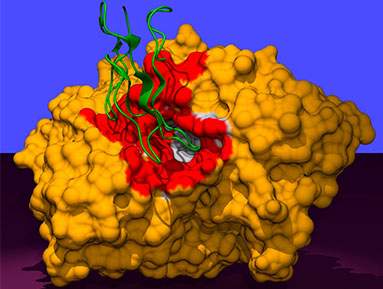
    The process of HIV infection is just one of the subjects protein researcher Dr. Ron Diskin is investigating in his new lab

    More »

    Honors & Awards

    Dr. Zohar Komargodski has been awarded the Gribov Medal by the EPS High Energy Particle Physics Division Prizes
    More »

    Full list »

    |
    | | | | | |
    |
  • Research
    • By Subject
    • What We Are Doing About:
    • From Basic Research to Benefiting Humanity
    • Shaping the Future

    By Subject

    Alternative Energy Materials Science
    Astrophysics Mathematics
    Biochemistry  Molecular Cell Biology
    Bioinformatics Nanoscience
    Biomedical Biology Neuroscience
    Cancer Particle Physics
    Chemistry Physics
    Computer Science Plant Sciences
    Environment Quantum Physics
    Evolution Scientific Archaeology
    Genetics Structural Biology

    What We Are Doing About:

    • Cancer
    • Diabetes
    • The Environment
    • Nanoscience
    • Energy

    Benefiting Humanity

    Prof. Amos Breskin
    Prof. Amos Breskin develops advanced radiation detectors, which have an important impact on many fields of research, such as particle, nuclear and atomic physics, medical diagnostics, biology and materials science.

     
    Application

    More »

    Full list »

    |
    | | | | | |
    |
  • Magazines and Multimedia
    • Annual Report
    • Interface - Online Magazine
    • The Weizmann International Magazine of Science and People
    • Books
    • Nano Comics
    • Galleries
    • Horizons - Online Magazine
    Annual Report 2011
    Art and Science on the Move
    Administering the Institute
    Research
    Financial Highlights
    Roll of Honor
    Supporting Network
    More »

    Magazines

    Current Issue: Spring 2013
    Interface magazine Spring 2013
    Magazine Sections
    Science Feature Articles
    Made at the Institute
    Time Tunnel

    Archive »

    Latest Videos

    CRASH
    The Race for the Higgs Boson
    • Monitoring Carbon Exchange
    • Thanks for the Memories
    • Quantum Computing
    • Back to Basics - Forward to the Future
    More »
    |
    | | | | | |
    |
  • About the Institute
    • Overview
    • History
    • Virtual Tour
    • Visiting the Institute

    Overview

    • Multidisciplinary Research
    • Facts and Figures
    • Pioneering Progress
    • Training Future Scientists
    • Science is for Sharing
    • Advancing Israel
    • New Horizons
    • Beauty in Science

    History

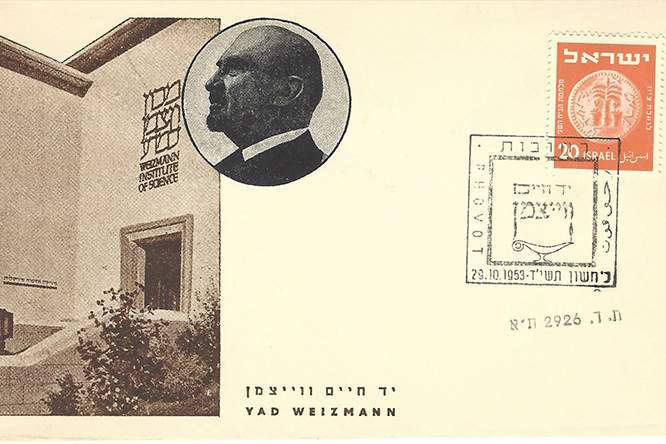
    Dr. Chaim Weizmann

    Chaim Weizmann was born in 1874 to a traditional Jewish family in the small town of Motol in White Russia (Belarus). After graduating with honors from the Real-Gymnasium in Pinsk, he decided to establish himself professionally

    More »
    Weizmann House
    • History and Architecture
    • The Collection
    • The Tour
    • The Garden
    • The Grave
    • Erich Mendelsohn
    • The Presidential Car Vintage Wheels

    Visiting the Institute


    • Visitors Center
    • Weizmann House
    • Clore Garden of Science
    |
    | | | | | |
    |
  • Weizmann Institute Homepage
Home » Press Room » Press Releases
News
  • Press Releases
    • English
    • Hebrew
    • Spanish
    • French
    • German
  • In the News
  • Subscribe to Press Releases
  • Honors and Awards
  • Visits
  • Events

twitter block


Follow @WeizmannScience

Fruit Bats Navigate with Internal Maps

16 Aug
2011
Neuroscience
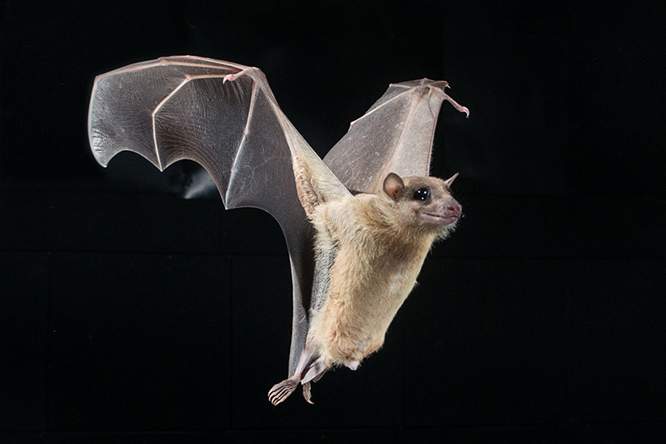
GPS technology can make our travels easier and more efficient. But for many animals, the ability to successfully navigate a landscape is not just a matter of convenience – their very survival depends on it. Egyptian fruit bats, for instance, fly dozens of kilometers each night to feed on specific fruit trees, making the return trip the same night. To understand how the bats locate individual trees night after night, scientists attached tiny GPS devices to the bats in the first-ever, comprehensive, GPS-based field study of mammal navigation. The results of this study showed that the bats carry around an internal, cognitive map of their home range, based on such visual landmarks as lights or hills. The study, which appears this week in the Proceedings of the National Academy of Sciences (PNAS) online Early Edition, reveals for the first time how mammals find their way around their natural environment.

Many researchers have investigated the navigational skills of other creatures – birds, fish, insects, lobsters, turtles, etc. – but studies of mammalian navigation have been confined to the lab. Unfortunately, lab studies cannot duplicate the large, complex landscapes an animal must navigate in the natural world. The new GPS-based method gives researchers the best of both worlds. This new approach to studying bat navigation was developed by a neurobiologist – Dr. Nachum Ulanovsky of the Weizmann Institute – and an ecologist – Prof. Ran Nathan of the Hebrew University of Jerusalem, together with his student Asaf Tsoar, in collaboration with Giacomo Dell'Omo of Ornis Italica, Italy, and Alexei Vyssotski of ETH Zurich, Switzerland. In a collaborative effort, they developed the devices – each weighing around 10 grams and containing tiny GPS receivers in addition to memory loggers and batteries. They then used the devices to track the movements of Egyptian fruit bats over several consecutive nights.
bat with GPS
An Egyption fruit bat is released with a tiny GPS device on its back
At first, the researchers collected data as the bats took flight each night from a cave near the Israeli city of Beit Shemesh. These bats flew in a straight line at speeds of 40 km an hour and more – up to 60 kmh – at elevations of hundreds of meters, to trees that were about 12 to 25 km from their cave. They went to the same trees, night after night, even bypassing apparently identical trees that were nearer to home. The data showed that bats’ navigational abilities rival those of homing pigeons.
The fact that the bats bypassed similar fruit trees to get to their favorite feeding site ruled out smell as their main navigational aid, while an analysis of the data suggested that the bats were not simply “beaconing” on any visual or other individual cue. To investigate further, the scientists took some of the bats to a new area 44 kilometers south of their normal range. Some bats were released at dusk; others were fed in the new area and released just before dawn. Those released first had no trouble navigating to their favorite fruit trees, returning straight back to their caves afterward, while those who were fed first simply made a beeline back to the cave once they were released. Based on a spatial model analysis, as well as discussions with pilots, it appeared that the bats might have been able to see familiar visual landmarks – hills or the lights of human settlements – from this release site.

To prevent them from using visual landmarks as guides, the researchers removed the bats even further south, to a natural depression that limited their field of vision: the Large Crater, located some 84 km south of their cave. Here, some of the bats were released from a hilltop at the edge of the crater and others were let go at the crater’s bottom. Despite the distance, those flying from the hilltop oriented themselves right away and flew back to the cave. The bats inside the crater, however, appeared disoriented, wandering for quite a while before finding their way out of the crater and back to the cave. This confirmed the idea that bats use visual information from a “bird’s eye view” to construct a cognitive map of a wide area. Navigational cues include these distant landmarks, and the scientists believe that the bats most likely compute their location by employing a form of triangulation based on the different azimuths to known distant landmarks.

Because most of the bats released in the crater, when they finally left, exited to the north (the direction of home), Nathan, Ulanovsky and Tsoar believe that the bats may have an additional, back-up navigational mechanism to help when landmarks are unreliable. This mechanism might involve sensing the magnetic fields or directional odors carried on the sea breeze from the Mediterranean.
 
Although lab experiments based on distances of a meter or two had hinted at the existence of an internal map for navigation, this study is the first to show that such mammals as fruit bats use these maps to find their way around areas 100 km in size.


Dr. Nachum Ulanovsky’s research is supported by the Nella and Leon Benoziyo Center for Neurological Diseases; the Clore Center for Biological Physics; the Carl and Micaela Einhorn-Dominic Brain Research Institute; the Irving B. Harris Foundation; and the estate of Fannie Sherr.
Tags:
  • Bats,
  • Cognitive map,
  • Nachum Ulanovsky,
  • Neurobiology,
  • ""
  • Print this page »

Search Press Releases

Related Articles

Tumor Tip-Off
Personnel Management in the Brain
Windows on your Mind: Weizmann Institute Scientists Reveal That Imagination Can Enhance Visual Perception
Pacman in the Brain: Protein Chews up Vital Memory Chemical
More Related links »
A conversation between nerve cells in the brain
Edit block | Delete block

Edit block | Delete block

Download our FREE Interface Magazine App for iPad and Android

Secondary Links

  • Contact Us
  • Visit Us
  • How to Get Here
  • Campus Map
  • Site Map
  • Privacy
  • Terms of Use
  • Supporting Committees
  • Credits

Get RSS
© Weizmann Institute of Science 2012. All rights reserved
Follow us on:
[Jump to Top] [Jump to Main Content]