[[Skip Header and Navigation] [Jump to Main Content]
« עברית
  • Home
  • News
    • Press Releases
    • In the News
    • Subscribe to Press Releases
    • Honors and Awards
    • Visits
    • Events

    Press Releases

    16 May 2013
    Weather on the Outer Planets Only Goes So Deep
    18 Apr 2013
    Neural Activity in Bats Measured In Flight
    18 Mar 2013
    Programmed Destruction

    More »

    Research Highlights

    GeneCards
    Noncoding Sequences Get Equal Listing

    A greatly expanded database will give scientists around the world a powerful new tool for life sciences research

    gut cells
    The Spies Inside

    How does the immune system in the gut distinguish between helpful microbes and those that wish us harm?

    Ron Diskin
    Mutations Trump Invasion

    The process of HIV infection is just one of the subjects protein researcher Dr. Ron Diskin is investigating in his new lab

    More »

    Honors & Awards

    Dr. Zohar Komargodski has been awarded the Gribov Medal by the EPS High Energy Particle Physics Division Prizes
    More »

    Full list »

    |
    | | | | | |
    |
  • Research
    • By Subject
    • What We Are Doing About:
    • From Basic Research to Benefiting Humanity
    • Shaping the Future

    By Subject

    Alternative Energy Materials Science
    Astrophysics Mathematics
    Biochemistry  Molecular Cell Biology
    Bioinformatics Nanoscience
    Biomedical Biology Neuroscience
    Cancer Particle Physics
    Chemistry Physics
    Computer Science Plant Sciences
    Environment Quantum Physics
    Evolution Scientific Archaeology
    Genetics Structural Biology

    What We Are Doing About:

    • Cancer
    • Diabetes
    • The Environment
    • Nanoscience
    • Energy

    Benefiting Humanity

    Prof. Amos Breskin
    Prof. Amos Breskin develops advanced radiation detectors, which have an important impact on many fields of research, such as particle, nuclear and atomic physics, medical diagnostics, biology and materials science.

     
    Application

    More »

    Full list »

    |
    | | | | | |
    |
  • Magazines and Multimedia
    • Annual Report
    • Interface - Online Magazine
    • The Weizmann International Magazine of Science and People
    • Books
    • Nano Comics
    • Galleries
    • Horizons - Online Magazine
    Annual Report 2012
    The 2012 Report
    Annual Report 2012
    2012 and Beyond
    Research Highlights
    New Developments
    Technology Transfer
    Summary of Operating Results
    More »

    Magazines

    Current Issue: Spring 2013
    Interface magazine Spring 2013
    Magazine Sections
    Science Feature Articles
    Made at the Institute
    Time Tunnel

    Archive »

    Latest Videos

    CRASH
    The Race for the Higgs Boson
    • Monitoring Carbon Exchange
    • Thanks for the Memories
    • Quantum Computing
    • Back to Basics - Forward to the Future
    More »
    |
    | | | | | |
    |
  • About the Institute
    • Overview
    • History
    • Virtual Tour
    • Visiting the Institute

    Overview

    • Multidisciplinary Research
    • Facts and Figures
    • Pioneering Progress
    • Training Future Scientists
    • Science is for Sharing
    • Advancing Israel
    • New Horizons
    • Beauty in Science

    History

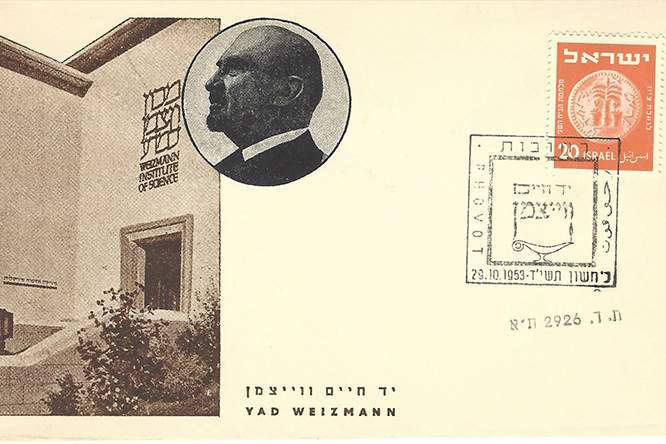
    Dr. Chaim Weizmann

    Chaim Weizmann was born in 1874 to a traditional Jewish family in the small town of Motol in White Russia (Belarus). After graduating with honors from the Real-Gymnasium in Pinsk, he decided to establish himself professionally

    More »
    Weizmann House
    • History and Architecture
    • The Collection
    • The Tour
    • The Garden
    • The Grave
    • Erich Mendelsohn
    • The Presidential Car Vintage Wheels

    Visiting the Institute


    • Visitors Center
    • Weizmann House
    • Clore Garden of Science
    |
    | | | | | |
    |
  • Weizmann Institute Homepage
Home » Press Room » Press Releases
News
  • Press Releases
    • English
    • Hebrew
    • Spanish
    • French
    • German
  • In the News
  • Subscribe to Press Releases
  • Honors and Awards
  • Visits
  • Events

twitter block


Follow @WeizmannScience

Getting a Grasp on Memory

02 Apr
2011
Neuroscience
 
Long-term memory is a slippery thing. Just how slippery it can be was demonstrated a few years ago by Weizmann Institute scientists, who erased entire memories in rats just by blocking a certain protein in the brain. In other words, memory – even the part we imagine to contain neatly packed files – is in reality a dynamic piece of equipment that must be actively maintained to work. Now, in research published in Science, these scientists have shown that manipulating the same protein can enhance memory.

The protein – PKMzeta – is produced in the brain in response to learning, and it acts on the synapses – the active contact points between neurons. It continues to operate there long after the memory has been formed, suggesting that its function is tied not to learning (that is, absorbing information), but to keeping what is learned available in the long-term memory. In 2007, Prof. Yadin Dudai and research student Reut Shema of the Neurobiology Department, together with Prof. Todd Sacktor of SUNY Downstate Medical Center, New York, trained rats to avoid a specific taste and then blocked the activity of PKMzeta in their brains. While the control rats still had a strong aversion to the taste, even months after the training, those in which the activity of the protein was briefly blocked had no such qualms, appearing to have forgotten what they had learned.

But, could extra doses of PKMzeta actually improve memory? Investigating this claim turned out to be a more difficult prospect than blocking protein activity. Simply injecting the protein into the rats’ grey matter was not an option, as the brain is built to keep such extraneous material from reaching the neurons. So Dudai, Shema and Sacktor teamed up with Dr. Alon Chen and Sharon Haramati, also of the Neurobiology Department, to create harmless viruses that carry extra copies of the PKMzeta gene into the brain cells’ nucleus, tricking the neurons themselves into producing greater quantities of the protein.

Once again, they trained the rats to avoid the taste. Weeks after the training, the rats whose brains were churning out more of the proteins were much more likely to avoid the taste. In other words, an excess of PKMzeta effectively enhanced their memories. This is the very first demonstration that memories formed long ago can be augmented by manipulating a component of the memory machinery in the brain.
While the technique they developed is only suitable for the lab, the researchers hope that by shedding light on the function of this key component of the memory machinery, their findings might eventually point to ways of preventing or treating memory loss. Shema: “Our research is evidence that our brains are very plastic – even our long-term memories can be augmented.”


Overexpression of PKMzeta in a neuron
Overexpression of PKMzeta in the insular cortex. A merged
picture of a neuron stained with GFP (green), PKMzeta (blue),
and NeuN (red)
 
 
Prof. Yadin Dudai’s research is supported by the Nella and Leon Benoziyo Center for Neurological Diseases; the Abe and Kathryn Selsky Memorial Research Project; Miel de Botton Aynsley, UK; Dr. Henry Kaminer, New York, NY; Marla L. Schaefer, New York, NY; and Lisa Mierins Smith, Canada. Prof. Dudai is the incumbent of the Sara and Michael Sela Professorial Chair of Neurobiology.

Tags:
  • Alon Chen,
  • Learning and memory,
  • Long term memory,
  • Neurobiology,
  • Yadin Dudai,
  • ""
  • Print this page »

Search Press Releases

Related Articles

Tumor Tip-Off
Personnel Management in the Brain
Windows on your Mind: Weizmann Institute Scientists Reveal That Imagination Can Enhance Visual Perception
Pacman in the Brain: Protein Chews up Vital Memory Chemical
More Related links »
A conversation between nerve cells in the brain
Edit block | Delete block

Edit block | Delete block

Download our FREE Interface Magazine App for iPad and Android

Secondary Links

  • Contact Us
  • Visit Us
  • How to Get Here
  • Campus Map
  • Site Map
  • Privacy
  • Terms of Use
  • Supporting Committees
  • Credits

Get RSS
© Weizmann Institute of Science 2012. All rights reserved
Follow us on:
[Jump to Top] [Jump to Main Content]