[[Skip Header and Navigation] [Jump to Main Content]
« עברית
  • Home
  • News
    • Press Releases
    • In the News
    • Subscribe to Press Releases
    • Honors and Awards
    • Visits
    • Events

    Press Releases

    19 Apr 2012
    Defending Against Chemical Acts of Terrorism
    12 Mar 2012
    Why do We See the Man in the Moon?
    23 Feb 2012
    A Unique ON-OFF Switch for the Stress Response

    More »

    Research Highlights

    David Milstein
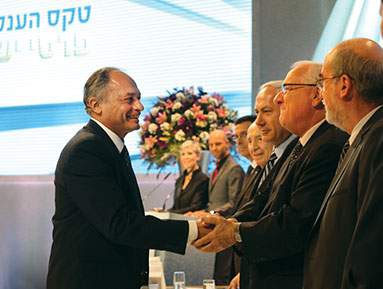
    Israel Prize to Prof. David Milstein

    Milstein is recognized for his environmentally-friendly catalysts

    ISPC
    At the Core

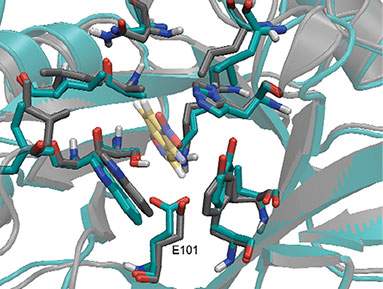
    Israel’s leadership in structural biology leads to the establishment of an Instruct Core Centre

    Neuron cover
    Two for the Price of One

    A unique ON-OFF switch in the brain controls a main stress hormone

    More »

    Honors & Awards

    Prof. Ronen Alon has been elected as a Member of EMBO (2012)
    More »

    Full list »

    |
    | | | | | |
    |
  • Research
    • By Subject
    • What We Are Doing About:
    • From Basic Research to Benefiting Humanity
    • Shaping the Future

    By Subject

    Alternative Energy Materials Science
    Astrophysics Mathematics
    Biochemistry  Neuroscience
    Bioinformatics Molecular Cell Biology
    Biomedical Biology Nanoscience
    Cancer Particle Physics
    Chemistry Physics
    Computer Science Plant Sciences
    Environment Quantum Physics
    Evolution Scientific Archaeology
    Genetics Structural Biology

    What We Are Doing About:

    • Cancer
    • Diabetes
    • The Environment
    • Nanoscience
    • Energy

    Benefiting Humanity

    Prof. Emeritus Nechama Haran-Ghera
    Prof. Emeritus Nechama Haran-Ghera, in collaboration with Israeli physicians, showed that the hormone erythropoietin may be helpful in treating multiple myeloma and other cancers. In mice injected with myeloma cells, the hormone prolonged survival, caused tumor regression and reduced mortality.
     
    Application
    More »

    Full list »

    |
    | | | | | |
    |
  • Magazines and Multimedia
    • Annual Report
    • Interface - Online Magazine
    • Books
    • Nano Comics
    • Galleries
    • Horizons - Online Magazine
    Annual Report 2011
    Art and Science on the Move
    Administering the Institute
    Research
    Financial Highlights
    Roll of Honor
    Supporting Network
    More »

    Magazines

    Current Issue: Apr. 2012 (No. 40)
    Magazine Sections
    Science Feature Articles
    Feature Articles
    Science Briefs

    Archive »

    Latest Videos

    CRASH
    The Race for the Higgs Boson
    CRASH: The Race for the Higgs Boson
    • Monitoring Carbon Exchange
    • Thanks for the Memories
    • Quantum Computing
    • Back to Basics - Forward to the Future
    More »
    |
    | | | | | |
    |
  • About the Institute
    • Overview
    • History
    • Virtual Tour
    • Visiting the Institute

    Overview

    • Multidisciplinary Research
    • Facts and Figures
    • Pioneering Progress
    • Training Future Scientists
    • Science is for Sharing
    • Advancing Israel
    • New Horizons
    • Beauty in Science

    History

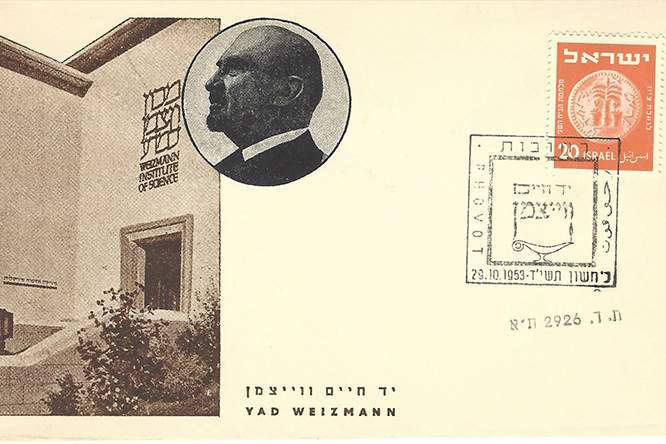
    Dr. Chaim Weizmann

    Chaim Weizmann was born in 1874 to a traditional Jewish family in the small town of Motol in White Russia (Belarus). After graduating with honors from the Real-Gymnasium in Pinsk, he decided to establish himself professionally 

    More »
    Weizmann House
    • History and Architecture
    • The Collection
    • The Tour
    • The Garden
    • The Grave
    • Erich Mendelsohn
    • The Presidential Car Vintage Wheels

    Visiting the Institute


    • Visitors Center
    • Weizmann House
    • Clore Garden of Science
    |
    | | | | | |
    |
  • Weizmann Institute Homepage
Home » Press Room » Press Releases
News
  • Press Releases
    • English
    • Hebrew
    • Spanish
    • French
    • German
  • In the News
  • Subscribe to Press Releases
  • Honors and Awards
  • Visits
  • Events

twitter block


Follow @WeizmannScience

Hide and Seek Signals

15 Dec
2011
Biomedical Biology
 
The white blood cells that fight disease and help our bodies heal are directed to sites of infection or injury by “exit signs” – chemical signals that tell them where to pass through the blood vessel walls and into the underlying tissue. New research at the Weizmann Institute, which appeared in Nature Immunology online, shows how the cells lining blood vessel walls may act as “selectors” by hiding the signals where only certain “educated” white blood cells will find them.

In previous studies, Prof. Ronen Alon and his team in the Immunology Department had found that near sites of inflammation, white blood cells rapidly crawl along the inner lining of the blood vessels with tens of tiny legs that grip the surface tightly, feeling for the exit sign. Such signs consist of migration-promoting molecules called chemokines, which the cells lining the blood vessels – endothelial cells – display on their outer surfaces like flashing lights.

In the new study, Alon and his team, including Drs. Ziv Shulman and Shmuel Cohen, found that not all chemokine signals produced by endothelial cells are on display. They observed the recruitment of subsets of immune cells called effector cells that are the “special forces” of the immune system: They receive training in the lymph nodes, where they learn to identify a particular newly-invading pathogen and then return to the bloodstream on a search and destroy mission. Like the other white blood cells, effector cells crawled on tiny appendages along the lining of inflamed blood vessels near the site of pathogen entry, but rather than sensing surface chemokines, they used their legs to reach into the endothelial cells in search of the migration-promoting chemokines.

As opposed to the external exit signs, these chemokines were held in tiny containers – vesicles – inside the inflamed endothelial cell walls. The effector cells paused in the joins where several cells met, inserting their legs through the walls of several endothelial cells at once to trap chemokines as they were released from vesicles at the endothelial cell membrane. Once they obtained the right chemokine directives, the immune cells were quickly ushered out through the blood vessel walls toward their final destination.

 
effector cell in blood vessel

Electron microscope image of an effector cell inserting several

appendages through endothelial cell membranes


The researchers think that keeping the chemokines inside the endothelial cells ensures, on the one hand, that these vital signals will be safe from getting washed away in the blood or eaten by various enzymes. On the other hand, it guarantees that only those effector cells with special training – that can make the extra effort to find the signals – will pass through.

Alon: “We are now seeing that the blood vessel endothelium is much more than just a passive, sticky barrier – it actively selects which recruited cells actually cross the barrier and which will not. The endothelial cells seem to play an active role in showing the immune cells the right way out, though we’re not sure exactly how. Moreover, we think that tumors near blood vessels might exploit these trafficking rules for their benefit by putting the endothelial cells in a quiescent state or making the endothelium produce the “wrong” chemokines. Thus, immune cells capable of destroying these tumors will not be able to exit the blood and navigate to the tumor site, while other immune cells that aid in cancer growth will.”


Effector cells, tagged green, seem to fade as they detect chemokines and move inward, past the surface of the blood vessel endothelium


Effector cells in an experimental control move on endothelium that does not produce internal chemokines


Prof. Ronen Alon’s research is supported by the Kirk Center for Childhood Cancer and Immunological Disorders. Prof. Alon is the incumbent of the Linda Jacobs Professorial Chair in Immune and Stem Cell Research.

Tags:
  • Immune cells,
  • Immunology,
  • Ronen Alon,
  • Signaling,
  • White blood cell,
  • ""
  • Print this page »

Search Press Releases

Related Articles

Cell Detective
Supernannies
Learning the Language
Unlikely Brain Boosters
More Related links »
Ovarian Cells
Ovarian Cells
Edit block | Delete block

Edit block | Delete block

Secondary Links

  • Contact Us
  • Visit Us
  • How to Get Here
  • Campus Map
  • Site Map
  • Privacy
  • Terms of Use
  • Supporting Committees
  • Credits

Get RSS
© Weizmann Institute of Science 2012. All rights reserved
Follow us on:
[Jump to Top] [Jump to Main Content]