[[Skip Header and Navigation] [Jump to Main Content]
« עברית
  • Home
  • News
    • Press Releases
    • In the News
    • Subscribe to Press Releases
    • Honors and Awards
    • Visits
    • Events

    Press Releases

    17 Jun 2013
    Mice in a “Big Brother” Setup Develop Social Structures
    16 May 2013
    Weather on the Outer Planets Only Goes So Deep
    18 Apr 2013
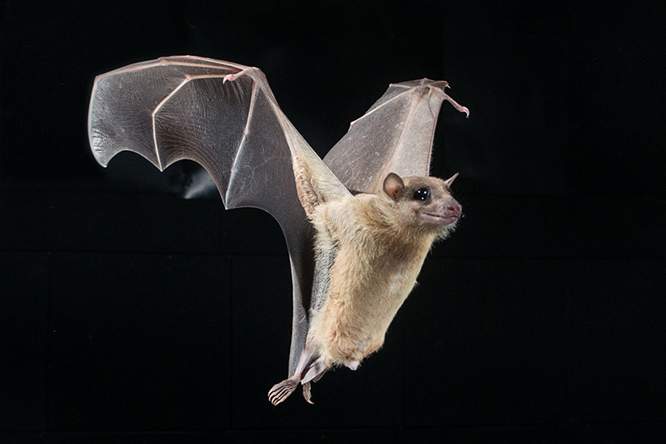
    Neural Activity in Bats Measured In Flight

    More »

    Research Highlights

    germ cells
    Alternate Endings
    A newly discovered cell-death pathway could help fight cancer
    side effects
    Side Effects

    “Feel-good” drugs like Prozac may have an unwanted side effect: diabetes

    overgrown leaf
    Limits to Growth

    Most of the many factors for determining leaf size turn out to put on the brakes, rather than promote growth

    More »

    Honors & Awards

    Prof. Israel Pecht will be awarded an Honorary Doctorate Degree in Biology from National and Kapodistrian University of Athens
    More »

    Full list »

    |
    | | | | | |
    |
  • Research
    • By Subject
    • What We Are Doing About:
    • From Basic Research to Benefiting Humanity
    • Shaping the Future

    By Subject

    Alternative Energy Materials Science
    Astrophysics Mathematics
    Biochemistry  Molecular Cell Biology
    Bioinformatics Nanoscience
    Biomedical Biology Neuroscience
    Cancer Particle Physics
    Chemistry Physics
    Computer Science Plant Sciences
    Environment Quantum Physics
    Evolution Scientific Archaeology
    Genetics Structural Biology

    What We Are Doing About:

    • Cancer
    • Diabetes
    • The Environment
    • Nanoscience
    • Energy

    Benefiting Humanity

    Prof. Amos Breskin
    Prof. Amos Breskin develops advanced radiation detectors, which have an important impact on many fields of research, such as particle, nuclear and atomic physics, medical diagnostics, biology and materials science.
     
    Application

    More »

    Full list »

    |
    | | | | | |
    |
  • Magazines and Multimedia
    • Annual Report
    • Interface - Online Magazine
    • The Weizmann International Magazine of Science and People
    • Books
    • Nano Comics
    • Galleries
    • Horizons - Online Magazine
    Annual Report 2012
    The 2012 Report
    Annual Report 2012
    2012 and Beyond
    Research Highlights
    New Developments
    Technology Transfer
    Summary of Operating Results
    More »

    Magazines

    Current Issue: Spring 2013
    Interface magazine Spring 2013
    Magazine Sections
    Science Feature Articles
    Made at the Institute
    Time Tunnel

    Archive »

    Latest Videos

    CRASH
    The Race for the Higgs Boson
    • Monitoring Carbon Exchange
    • Thanks for the Memories
    • Quantum Computing
    • Back to Basics - Forward to the Future
    More »
    |
    | | | | | |
    |
  • About the Institute
    • Overview
    • History
    • Virtual Tour
    • Visiting the Institute

    Overview

    • Multidisciplinary Research
    • Facts and Figures
    • Pioneering Progress
    • Training Future Scientists
    • Science is for Sharing
    • Advancing Israel
    • New Horizons
    • Beauty in Science

    History

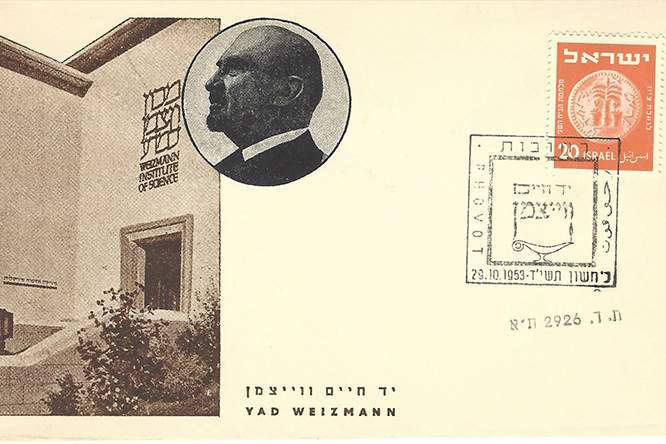
    Dr. Chaim Weizmann

    Chaim Weizmann was born in 1874 to a traditional Jewish family in the small town of Motol in White Russia (Belarus). After graduating with honors from the Real-Gymnasium in Pinsk, he decided to establish himself professionally

    More »
    Weizmann House
    • History and Architecture
    • The Collection
    • The Tour
    • The Garden
    • The Grave
    • Erich Mendelsohn
    • The Presidential Car Vintage Wheels

    Visiting the Institute


    • Visitors Center
    • Weizmann House
    • Clore Garden of Science
    |
    | | | | | |
    |
  • Weizmann Institute Homepage
Home » Press Room » Press Releases
News
  • Press Releases
    • English
    • Hebrew
    • Spanish
    • French
    • German
  • In the News
  • Subscribe to Press Releases
  • Honors and Awards
  • Visits
  • Events

twitter block


Tweets by @WeizmannScience

Immune Cells Make Flexible Choices

22 Oct
2012

Certain immune cell receptors are more common than mere chance would dictate. New research shows why

 
Our immune system must be tremendously complex to respond to the unending assault of viruses, bacteria and cancerous cells. One of the mechanisms used by the immune system to cope with the huge variety of possible threats is to randomly combine DNA segments for the production of receptors on lymphocytes – a type of white blood cell. The number of possible receptors that can be produced in this way is about 1000 times the number of stars in our galaxy – one followed by 15 zeroes. And yet, the actual array of receptors produced does not conform to this picture of random chance: Some receptors are produced at a higher rate than others. New research at the Weizmann Institute can help explain how the immune system maintains its complexity while giving preference to certain receptors.

The research team headed by Dr. Nir Friedman, including postdoctoral fellows Drs. Wilfred Ndifon and Hilah Gal, together with Prof. Ruth Arnon and Dr. Rina Aharoni, all of the Immunology Department, looked at the DNA sequences for receptors in immune cells called T lymphocytes. These receptors identify disease agents so they can be destroyed by the immune system. The genetic sequences encoding these receptors are each composed of three random DNA segments – something like the random lineups in a slot machine. Each of those segments is taken from a different area of the lymphocyte cell genome; each area has a full “menu” of segments to choose from. The assembly of the sequence takes place when the DNA strand folds, bringing a segment from the first area close to those in the second and third areas. The sequence is then cut and pasted together, and the excess bits of DNA in between discarded, thus creating a new and unique genetic sequence for the receptors in each lymphocyte cell.
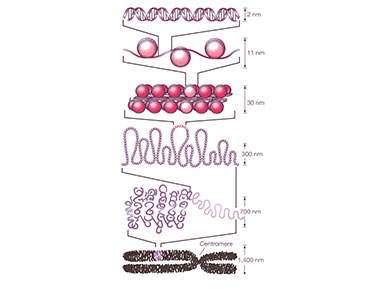
In a study that appeared recently in the Proceedings of the National Academy of Sciences (PNAS), USA, the team used a system they developed based on advanced high-throughput sequencing techniques to investigate the genetic sequences of an entire array of lymphocyte receptors in mice. With this “panoramic view,” the researchers were able to assess how widespread each receptor was and even to suggest a reason for the uneven distribution. It appears that the secret is in the pieces of DNA that eventually get discarded: Both the length of these segments and their flexibility – a function of the protein “packaging” that gives them shape – determine how likely it is that two distant segments will meet.


With this insight, the researchers created a model that can predict the production distribution of receptors based on the distance between segments and the flexibility of the DNA. They then looked at small groups of individuals – up to five – to see if they could find common lymphocyte receptor sequences among them. Surprisingly, the team discovered that a group of five was more likely to all share a common sequence than smaller sub-groups. That may seem like saying there is a higher chance of winning at the slot machine five times in a row than twice, but the scientists can explain this finding based on the preferences revealed. The common sequences may simply be situated in the genome in such a way that they are more likely to be integrated into the receptor sequences. Such sequences may have been selected by evolution for their ability to fight common disease agents or prevent autoimmune disease.
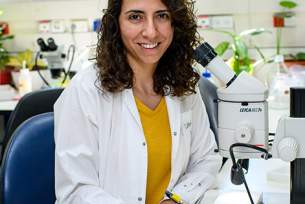
Friedman: “While our immune system often seems to rely on ‘luck’ to produce random receptors against a long list of threats, the shared receptors suggest that this mechanism is finely tuned to ensure a response to common diseases.”


Prof. Ruth Arnon’s research is supported by the Leona M. and Harry B. Helmsley Charitable Trust.

Dr. Nir Friedman’s research is supported by the Abraham and Sonia Rochlin Foundation; the Clore Center for Biological Physics; the Jeanne and Joseph Nissim Foundation for Life Sciences Research; the Nella and Leon Benoziyo Center for Neurological Diseases; the Crown Endowment Fund for Immunological Research; the Norman E. Alexander Family Foundation; the Carolito Stiftung; the Adelis Foundation; the Victor Pastor Fund for Cellular Disease Research; the estate of Susie Knoll; and the estate of John Hunter. Dr. Friedman is the incumbent of the Pauline Recanati Career Development Chair.

Tags:
  • DNA,
  • Gene code,
  • Immune cells,
  • Immunology,
  • Nir Friedman,
  • Receptors,
  • Ruth Arnon,
  • ""
  • Print this page »

Search Press Releases

Related Articles

DNA Crystals Help Bacteria Respond to Stress
Protein Teamwork Drives Damaged Cells To Self-Destruct
Transistor Genetics
DNA Computation Gets Logical at the Weizmann Institute of Science
More Related links »

Press RoomRSS

17 Jun 2013
Mice in a “Big Brother” Setup Develop Social Structures
16 May 2013
Weather on the Outer Planets Only Goes So Deep
18 Apr 2013
Neural Activity in Bats Measured In Flight

Full press release list »

In The NewsRSS

21 Nov 2012
Jerusalem Post
Science and Art

All in the news »

Download our FREE Interface Magazine App for iPad and Android

Secondary Links

  • Contact Us
  • Visit Us
  • How to Get Here
  • Campus Map
  • Site Map
  • Privacy
  • Terms of Use
  • Supporting Committees
  • Credits

Get RSS
© Weizmann Institute of Science 2012. All rights reserved
Follow us on:
[Jump to Top] [Jump to Main Content]