[[Skip Header and Navigation] [Jump to Main Content]
« עברית
  • Home
  • News
    • Press Releases
    • In the News
    • Subscribe to Press Releases
    • Honors and Awards
    • Visits
    • Events

    Press Releases

    16 May 2013
    Weather on the Outer Planets Only Goes So Deep
    18 Apr 2013
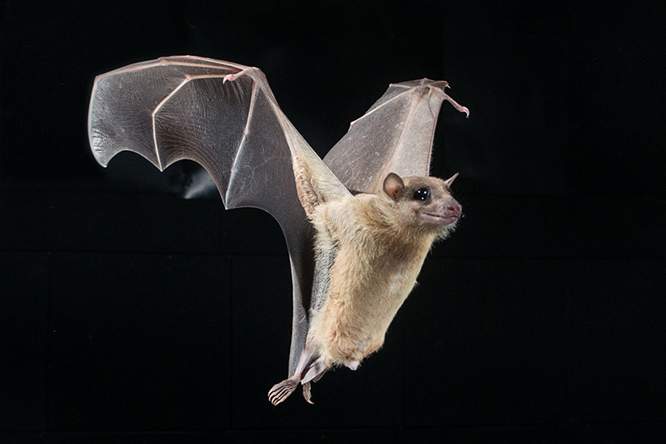
    Neural Activity in Bats Measured In Flight
    18 Mar 2013
    Cell on a Chip Reveals Protein Behavior

    More »

    Research Highlights

    GeneCards
    Noncoding Sequences Get Equal Listing

    A greatly expanded database will give scientists around the world a powerful new tool for life sciences research

    gut cells
    The Spies Inside

    How does the immune system in the gut distinguish between helpful microbes and those that wish us harm?

    Ron Diskin
    Mutations Trump Invasion

    The process of HIV infection is just one the subjects protein researcher Dr. Ron Diskin is investigating in his new lab

    More »

    Honors & Awards

    Dr. Zohar Komargodski has been awarded the Gribov Medal by the EPS High Energy Particle Physics Division Prizes
    More »

    Full list »

    |
    | | | | | |
    |
  • Research
    • By Subject
    • What We Are Doing About:
    • From Basic Research to Benefiting Humanity
    • Shaping the Future

    By Subject

    Alternative Energy Materials Science
    Astrophysics Mathematics
    Biochemistry  Molecular Cell Biology
    Bioinformatics Nanoscience
    Biomedical Biology Neuroscience
    Cancer Particle Physics
    Chemistry Physics
    Computer Science Plant Sciences
    Environment Quantum Physics
    Evolution Scientific Archaeology
    Genetics Structural Biology

    What We Are Doing About:

    • Cancer
    • Diabetes
    • The Environment
    • Nanoscience
    • Energy

    Benefiting Humanity

    Prof. Amos Breskin
    Prof. Amos Breskin develops advanced radiation detectors, which have an important impact on many fields of research, such as particle, nuclear and atomic physics, medical diagnostics, biology and materials science.
     
    Application

    More »

    Full list »

    |
    | | | | | |
    |
  • Magazines and Multimedia
    • Annual Report
    • Interface - Online Magazine
    • The Weizmann International Magazine of Science and People
    • Books
    • Nano Comics
    • Galleries
    • Horizons - Online Magazine
    Annual Report 2011
    Art and Science on the Move
    Administering the Institute
    Research
    Financial Highlights
    Roll of Honor
    Supporting Network
    More »

    Magazines

    Current Issue: Spring 2013
    Interface magazine Spring 2013
    Magazine Sections
    Science Feature Articles
    Made at the Institute
    Time Tunnel

    Archive »

    Latest Videos

    CRASH
    The Race for the Higgs Boson
    • Monitoring Carbon Exchange
    • Thanks for the Memories
    • Quantum Computing
    • Back to Basics - Forward to the Future
    More »
    |
    | | | | | |
    |
  • About the Institute
    • Overview
    • History
    • Virtual Tour
    • Visiting the Institute

    Overview

    • Multidisciplinary Research
    • Facts and Figures
    • Pioneering Progress
    • Training Future Scientists
    • Science is for Sharing
    • Advancing Israel
    • New Horizons
    • Beauty in Science

    History

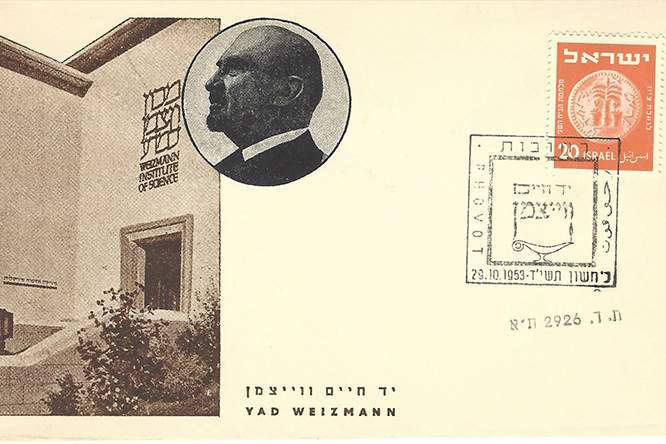
    Dr. Chaim Weizmann

    Chaim Weizmann was born in 1874 to a traditional Jewish family in the small town of Motol in White Russia (Belarus). After graduating with honors from the Real-Gymnasium in Pinsk, he decided to establish himself professionally

    More »
    Weizmann House
    • History and Architecture
    • The Collection
    • The Tour
    • The Garden
    • The Grave
    • Erich Mendelsohn
    • The Presidential Car Vintage Wheels

    Visiting the Institute


    • Visitors Center
    • Weizmann House
    • Clore Garden of Science
    |
    | | | | | |
    |
  • Weizmann Institute Homepage
Home » Press Room » Press Releases
News
  • Press Releases
    • English
    • Hebrew
    • Spanish
    • French
    • German
  • In the News
  • Subscribe to Press Releases
  • Honors and Awards
  • Visits
  • Events

twitter block


Follow @WeizmannScience

Immune System Release Valve

25 May
2011
Biochemistry
Weizmann Institute scientists reveal a new mechanism for keeping inflammation in check


The molecular machines that defend our body against infection don’t huff and puff, but some of them apparently operate on the same principle as a steam engine. Weizmann Institute scientists have discovered a mechanism that controls inflammation similarly to a steam-engine valve: Just when the inflammatory mechanism that protects cells against viruses reaches its peak of activity, the molecular “steam-release valve” interferes, restoring this mechanism to its resting state, ready for re-activation. This finding might shed new light on such inflammatory disorders as rheumatoid arthritis or inflammatory bowel disease, and point the way to developing effective therapies.
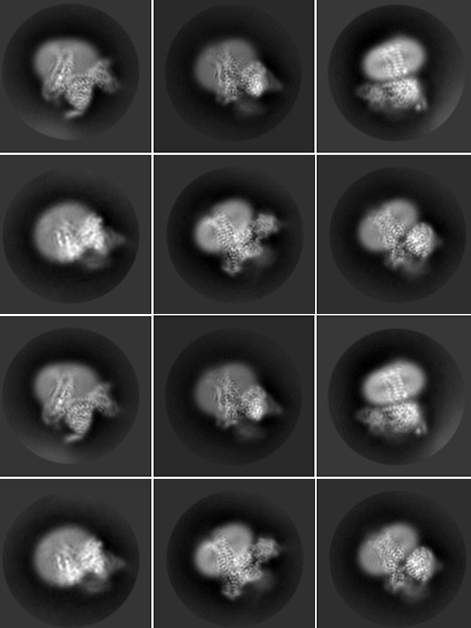

 
How does the cellular “steam-release valve” work? The scientists have discovered that its crucial component is the enzyme called caspase-8. When the cell is invaded by a virus, caspase-8 joins a large molecular complex that forms in order to send out an inflammatory signal. However, this same signal, once triggered, makes sure that the inflammatory response will eventually be shut down. The mechanism can be likened to the peak of the steam cycle when the valve opens, releasing steam and restoring the engine to its initial position. In the case of the cell, the inflammatory signal prompts caspase-8 to destroy a protein called RIP1 – a crucial signal amplifier – after RIP1 has reached a state in which it can produce maximal amplification. The inflammatory cycle is thus completed: The signaling mechanism, precisely after reaching its peak activity level, returns to its neutral state, ready to enter yet another inflammatory cycle in case the cell is still under viral attack.
 
Until recently, caspase-8, discovered by study leader Prof. David Wallach of Weizmann’s Biological Chemistry Department some 15 years ago, was known to prevent inflammation in only one way – by causing damaged cells to self-destruct in a process called apoptosis. In the course of this process, the contents of the dying cells are prevented from spreading around and triggering inflammation. The present study, reported recently in Immunity, reveals an entirely new mechanism by which caspase-8 can control inflammation more directly. The research was performed in Wallach’s lab by Dr. Akhil Rajput, Dr. Andrew Kovalenko, Dr. Konstantin Bogdanov, Seung-Hoon Yang, Dr. Tae-Bong Kang, Dr. Jin-Chul Kim and Dr. Jianfang Du.
 
The study results might be relevant for various types of inflammation – not only that caused by viruses – and can thus provide important insights into inflammatory disorders. Since such disorders may occur when the inflammatory response fails to be shut down properly, it’s possible that caspase-8 malfunction and the resulting excessive activity of the RIP1 “signal amplifier” might be involved.  And if this is indeed the case, a new treatment approach could aim at blocking RIP1, thereby fighting inflammation in a precise and selective manner.


Prof. David Wallach’s research is supported by the M.D. Moross Institute for Cancer Research; and the Leona M. and Harry B. Helmsley Charitable Trust. Prof. Wallach is the incumbent of the Joseph and Bessie Feinberg Professorial Chair.

Tags:
  • Biological Chemistry,
  • Caspase,
  • David Wallach,
  • Immune system,
  • Inflammation,
  • ""
  • Print this page »

Search Press Releases

Related Articles

New Concept Explains Why Mammals Can't Repair Central Nervous System Damage
Key Step in Activating Immune System Discovered
Immunity's Nervous Supervisor
How HIV Disables the Cells' Call for Help
More Related links »
Crystals
Crystals
Edit block | Delete block

Edit block | Delete block

Download our FREE Interface Magazine App for iPad and Android

Secondary Links

  • Contact Us
  • Visit Us
  • How to Get Here
  • Campus Map
  • Site Map
  • Privacy
  • Terms of Use
  • Supporting Committees
  • Credits

Get RSS
© Weizmann Institute of Science 2012. All rights reserved
Follow us on:
[Jump to Top] [Jump to Main Content]