[[Skip Header and Navigation] [Jump to Main Content]
« עברית
  • Home
  • News
    • Press Releases
    • In the News
    • Subscribe to Press Releases
    • Honors and Awards
    • Visits
    • Events

    Press Releases

    16 May 2013
    Weather on the Outer Planets Only Goes So Deep
    18 Apr 2013
    Neural Activity in Bats Measured In Flight
    18 Mar 2013
    Cell on a Chip Reveals Protein Behavior

    More »

    Research Highlights

    GeneCards
    Noncoding Sequences Get Equal Listing

    A greatly expanded database will give scientists around the world a powerful new tool for life sciences research

    gut cells
    The Spies Inside

    How does the immune system in the gut distinguish between helpful microbes and those that wish us harm?

    Ron Diskin
    Mutations Trump Invasion

    The process of HIV infection is just one the subjects protein researcher Dr. Ron Diskin is investigating in his new lab

    More »

    Honors & Awards

    Dr. Zohar Komargodski has been awarded the Gribov Medal by the EPS High Energy Particle Physics Division Prizes
    More »

    Full list »

    |
    | | | | | |
    |
  • Research
    • By Subject
    • What We Are Doing About:
    • From Basic Research to Benefiting Humanity
    • Shaping the Future

    By Subject

    Alternative Energy Materials Science
    Astrophysics Mathematics
    Biochemistry  Molecular Cell Biology
    Bioinformatics Nanoscience
    Biomedical Biology Neuroscience
    Cancer Particle Physics
    Chemistry Physics
    Computer Science Plant Sciences
    Environment Quantum Physics
    Evolution Scientific Archaeology
    Genetics Structural Biology

    What We Are Doing About:

    • Cancer
    • Diabetes
    • The Environment
    • Nanoscience
    • Energy

    Benefiting Humanity

    Prof. Amos Breskin
    Prof. Amos Breskin develops advanced radiation detectors, which have an important impact on many fields of research, such as particle, nuclear and atomic physics, medical diagnostics, biology and materials science.

     
    Application

    More »

    Full list »

    |
    | | | | | |
    |
  • Magazines and Multimedia
    • Annual Report
    • Interface - Online Magazine
    • The Weizmann International Magazine of Science and People
    • Books
    • Nano Comics
    • Galleries
    • Horizons - Online Magazine
    Annual Report 2011
    Art and Science on the Move
    Administering the Institute
    Research
    Financial Highlights
    Roll of Honor
    Supporting Network
    More »

    Magazines

    Current Issue: Spring 2013
    Interface magazine Spring 2013
    Magazine Sections
    Science Feature Articles
    Made at the Institute
    Time Tunnel

    Archive »

    Latest Videos

    CRASH
    The Race for the Higgs Boson
    • Monitoring Carbon Exchange
    • Thanks for the Memories
    • Quantum Computing
    • Back to Basics - Forward to the Future
    More »
    |
    | | | | | |
    |
  • About the Institute
    • Overview
    • History
    • Virtual Tour
    • Visiting the Institute

    Overview

    • Multidisciplinary Research
    • Facts and Figures
    • Pioneering Progress
    • Training Future Scientists
    • Science is for Sharing
    • Advancing Israel
    • New Horizons
    • Beauty in Science

    History

    Dr. Chaim Weizmann

    Chaim Weizmann was born in 1874 to a traditional Jewish family in the small town of Motol in White Russia (Belarus). After graduating with honors from the Real-Gymnasium in Pinsk, he decided to establish himself professionally

    More »
    Weizmann House
    • History and Architecture
    • The Collection
    • The Tour
    • The Garden
    • The Grave
    • Erich Mendelsohn
    • The Presidential Car Vintage Wheels

    Visiting the Institute


    • Visitors Center
    • Weizmann House
    • Clore Garden of Science
    |
    | | | | | |
    |
  • Weizmann Institute Homepage
Home » Press Room » Press Releases
News
  • Press Releases
    • English
    • Hebrew
    • Spanish
    • French
    • German
  • In the News
  • Subscribe to Press Releases
  • Honors and Awards
  • Visits
  • Events

twitter block


Follow @WeizmannScience

Judging DNA by Its Cover

23 Jul
2012
Genetics

A newly-discovered molecular mechanism might explain the link between stem cells and cancer

 
Stem cells hold great promise for the medicine of the future, but they can also be a cause of disease. When these self-renewing, unspecialized cells fail to differentiate into diverse cell types, they can start dividing uncontrollably, leading to cancer. Already several decades ago, Weizmann Institute scientists were among the first to demonstrate the link between cancer and the faulty differentiation of stem cells. Now a new Weizmann Institute-led study, published in Molecular Cell, reveals a potential molecular mechanism behind this link.
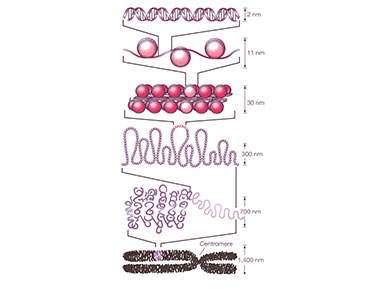
The scientists managed to uncover the details of a step in the process of DNA “repackaging” that takes place during embryonic stem cell differentiation. It turns out that for the cells to differentiate properly, certain pieces of the packaging of their DNA must be labeled by a molecular tag called ubiquitin. Such tagging is required for turning on a group of particularly long genes, which enable the stem cell to differentiate. The researchers identified two switches: An enzyme called RNF20 enhances the tagging, whereas a second enzyme, USP44, does the opposite, shutting it down. Furthermore, it appears that both these switches must operate properly for the differentiation process to proceed efficiently. When the scientists interfered with the tagging – either by disabling the “ON” switch RNF20, or by deregulating the activity of the “OFF” switch USP44 – the stem cells failed to differentiate.

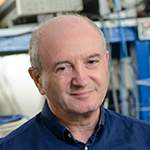
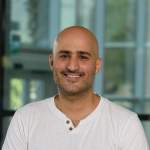
These experiments might explain the significance of molecular defects identified in a number of cancers, for example, the abnormally low levels of RNF20 in certain breast and prostate cancers and the excess of USP44 in certain leukemias. Notably, faulty differentiation of stem cells is often a hallmark of the more aggressive forms of cancer. This research was led by Prof. Moshe Oren of the Molecular Cell Biology Department, with Prof. Eytan Domany of the Physics of Complex Systems Department and Dr. Jacob Hanna of the Molecular Genetics Department. The team included Weizmann Institute’s Gilad Fuchs, Efrat Shema, Rita Vesterman, Eran Kotler, Sylvia Wilder, Lior Golomb, Ariel Pribluda and Ester Feldmesser, as well as Zohar Wolchinsky of the Technion – Israel Institute of Technology; Feng Zhang and Xiaochun Yu of the University of Michigan in the US; Mahmood Haj-Yahya and Ashraf Brik of Ben-Gurion University of the Negev; and Daniel Aberdam of the Technion and the University of Nice-Sophia Antipolis in France.

This study belongs to a relatively new direction in cancer research: Rather than focusing on the genes involved, it highlights the role of epigenetics – that is, processes that do not modify the gene code, itself, but affect the way its information is interpreted within the cell. Understanding the epigenetic roots of cancer will advance the search for effective therapies for this disease.
 
Prof. Eytan Domany’s research is supported by the Kahn Family Research Center for Systems Biology of the Human Cell, which he heads; the Mario Negri Institute for Pharmacological Research - Weizmann Institute of Science Exchange Program; the Leir Charitable Foundations; and Mordechai Segal, Israel. Prof. Domany is the incumbent of the Henry J. Leir Professorial Chair.

Dr. Jacob Hanna’s research is supported by the Leona M. and Harry B. Helmsley Charitable Trust; Pascal and Ilana Mantoux, France/Israel; the Sir Charles Clore Research Prize; Erica A. Drake and Robert Drake; and the European Research Council.

Prof. Moshe Oren’s research is supported by the Dr. Miriam and Sheldon G. Adelson Medical Research Foundation; the Robert Bosch Foundation; the estate of Harold Z. Novak; and the European Research Council. Prof. Oren is the incumbent of the Andre Lwoff Professorial Chair in Molecular Biology.


Tags:
  • Cancer,
  • Eytan Domany,
  • Jacob Hanna,
  • Molecular Cell Biology,
  • Molecular Genetics,
  • Moshe Oren,
  • Physics of Complex Systems,
  • Stem cell,
  • ""
  • Print this page »

Search Press Releases

Related Articles

More Bytes for the Buck
Fire on the Move
Clusters, Computers and the Human Brain
Weizmann Institute Scientists Develop a Novel System for Analyzing Genetic Data that Mimics the Human Capacity for Unsupervised Learning
More Related links »
Bacterium organizing its genetic material into a liquid crystal
Edit block | Delete block

Edit block | Delete block

Download our FREE Interface Magazine App for iPad and Android

Secondary Links

  • Contact Us
  • Visit Us
  • How to Get Here
  • Campus Map
  • Site Map
  • Privacy
  • Terms of Use
  • Supporting Committees
  • Credits

Get RSS
© Weizmann Institute of Science 2012. All rights reserved
Follow us on:
[Jump to Top] [Jump to Main Content]