[[Skip Header and Navigation] [Jump to Main Content]
« עברית
  • Home
  • News
    • Press Releases
    • In the News
    • Subscribe to Press Releases
    • Honors and Awards
    • Visits
    • Events

    Press Releases

    16 May 2013
    Weather on the Outer Planets Only Goes So Deep
    18 Apr 2013
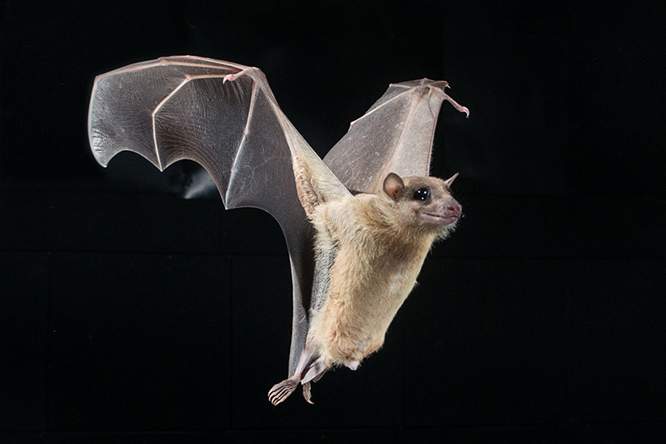
    Neural Activity in Bats Measured In Flight
    18 Mar 2013
    Causing Collapse

    More »

    Research Highlights

    GeneCards
    Noncoding Sequences Get Equal Listing

    A greatly expanded database will give scientists around the world a powerful new tool for life sciences research

    gut cells
    The Spies Inside

    How does the immune system in the gut distinguish between helpful microbes and those that wish us harm?

    Ron Diskin
    Mutations Trump Invasion

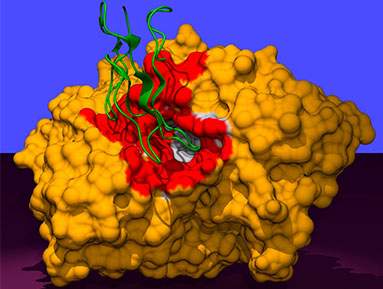
    The process of HIV infection is just one of the subjects protein researcher Dr. Ron Diskin is investigating in his new lab

    More »

    Honors & Awards

    Dr. Zohar Komargodski has been awarded the Gribov Medal by the EPS High Energy Particle Physics Division Prizes
    More »

    Full list »

    |
    | | | | | |
    |
  • Research
    • By Subject
    • What We Are Doing About:
    • From Basic Research to Benefiting Humanity
    • Shaping the Future

    By Subject

    Alternative Energy Materials Science
    Astrophysics Mathematics
    Biochemistry  Molecular Cell Biology
    Bioinformatics Nanoscience
    Biomedical Biology Neuroscience
    Cancer Particle Physics
    Chemistry Physics
    Computer Science Plant Sciences
    Environment Quantum Physics
    Evolution Scientific Archaeology
    Genetics Structural Biology

    What We Are Doing About:

    • Cancer
    • Diabetes
    • The Environment
    • Nanoscience
    • Energy

    Benefiting Humanity

    Prof. Amos Breskin
    Prof. Amos Breskin develops advanced radiation detectors, which have an important impact on many fields of research, such as particle, nuclear and atomic physics, medical diagnostics, biology and materials science.

     
    Application

    More »

    Full list »

    |
    | | | | | |
    |
  • Magazines and Multimedia
    • Annual Report
    • Interface - Online Magazine
    • The Weizmann International Magazine of Science and People
    • Books
    • Nano Comics
    • Galleries
    • Horizons - Online Magazine
    Annual Report 2011
    Art and Science on the Move
    Administering the Institute
    Research
    Financial Highlights
    Roll of Honor
    Supporting Network
    More »

    Magazines

    Current Issue: Spring 2013
    Interface magazine Spring 2013
    Magazine Sections
    Science Feature Articles
    Made at the Institute
    Time Tunnel

    Archive »

    Latest Videos

    CRASH
    The Race for the Higgs Boson
    • Monitoring Carbon Exchange
    • Thanks for the Memories
    • Quantum Computing
    • Back to Basics - Forward to the Future
    More »
    |
    | | | | | |
    |
  • About the Institute
    • Overview
    • History
    • Virtual Tour
    • Visiting the Institute

    Overview

    • Multidisciplinary Research
    • Facts and Figures
    • Pioneering Progress
    • Training Future Scientists
    • Science is for Sharing
    • Advancing Israel
    • New Horizons
    • Beauty in Science

    History

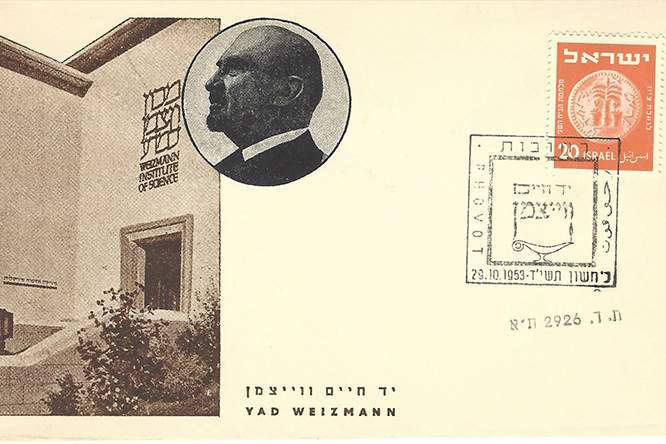
    Dr. Chaim Weizmann

    Chaim Weizmann was born in 1874 to a traditional Jewish family in the small town of Motol in White Russia (Belarus). After graduating with honors from the Real-Gymnasium in Pinsk, he decided to establish himself professionally

    More »
    Weizmann House
    • History and Architecture
    • The Collection
    • The Tour
    • The Garden
    • The Grave
    • Erich Mendelsohn
    • The Presidential Car Vintage Wheels

    Visiting the Institute


    • Visitors Center
    • Weizmann House
    • Clore Garden of Science
    |
    | | | | | |
    |
  • Weizmann Institute Homepage
Home » Press Room » Press Releases
News
  • Press Releases
    • English
    • Hebrew
    • Spanish
    • French
    • German
  • In the News
  • Subscribe to Press Releases
  • Honors and Awards
  • Visits
  • Events

twitter block


Follow @WeizmannScience

Observed: The Outburst before the Blast

07 Feb
2013
Astrophysics

Researchers discover a star’s “mini-explosion” taking place just a month before an all-out supernova explosion


Before they go all-out supernova, certain large stars undergo a sort of “mini-explosion,” throwing a good-sized chunk of their material off into space. Though several models predict this behavior and evidence from supernovae points in this direction, actually observations of such pre-explosion outbursts have been rare. In new research led by Dr. Eran Ofek of the Weizmann Institute, scientists found such an outburst taking place a short time – just one month – before a massive star underwent a supernova explosion.
 
The findings, which appeared today in Nature, help to clarify the series of events leading up to the supernova, as well as providing insight into the processes taking place in the cores of such massive stars as they progress toward the final stage of their lives.
 
Ofek, a member of the Institute’s Particle Physics and Astrophysics Department, is a participant in the Palomar Transient Factory (PTF) project (led by Prof. Shri Kulkarni of the California Institute of Technology), which searches the skies for supernova events using telescopes at the Palomar Observatory in California. He and a research team from Israel, the UK and the US decided to investigate whether outbursts could be connected to later supernovae by combing for evidence of them in observations that predated PTF supernova sightings, using tools developed by Dr. Mark Sullivan of the University of Southampton.
 
The fact that they found such an outburst occurring just a little over a month before the onset of the supernova explosion was something of a surprise, but the timing and mass of the ejected material helped them to validate a particular model that predicts this type of pre-explosion event. A statistical analysis showed that there was only a 0.1% chance that the outburst and supernova were unrelated occurrences.
 
The exploding star, known as a type IIn supernova, began as a massive star, at least 8 times the mass of our sun. As such a star ages, the internal nuclear fusion that keeps it going produces heavier and heavier elements – until its core is mostly iron. At that point, the weighty core quickly collapses inward and the star explodes.
 
The violence and mass of the pre-explosion outburst they found, says Ofek, point to its source in the star’s core. The material is speedily ejected from the core straight through the star’s surface by the excitation of gravity waves. The researchers believe that continued research in this direction will show such mini-explosions to be the rule for this type of supernova.  
 
Also participating in this research were Prof. Avishay Gal-Yam, Dr. Ofer Yaron and Iair Arcavi of the Institute’s Particle Physics and Astrophysics Department, and Prof. Nir Shaviv of the Hebrew University of Jerusalem.    
 
Chandra Crab Nebula
                                    Image: NASA

Prof. Avishay Gal-Yam’s research is supported by the Helen and Martin Kimmel Award for Innovative Investigation; the Nella and Leon Benoziyo Center for Astrophysics; and the Lord Sieff of Brimpton Memorial Fund.

Dr. Eran Ofek’s research is supported by the Willner Family Leadership Institute. Dr. Ofek is the incumbent of the Arye and Ido Dissentshik Career Development Chair.  


Tags:
  • Astrophysics,
  • Avishay Gal-Yam,
  • Eran Ofek,
  • Supernova,
  • ""
  • Print this page »

Search Press Releases

Related Articles

Weizmann Institute Astrophysicist Hot on the Tracks of a New "Strange" Star
Bureau Of Missing Masses
Zooming Star Points to Supermassive Black Hole at the Center of the Milky Way
Prof. Daniel Zajfman nominated as next President of the Weizmann Institute
More Related links »

Edit block | Delete block

Download our FREE Interface Magazine App for iPad and Android

Secondary Links

  • Contact Us
  • Visit Us
  • How to Get Here
  • Campus Map
  • Site Map
  • Privacy
  • Terms of Use
  • Supporting Committees
  • Credits

Get RSS
© Weizmann Institute of Science 2012. All rights reserved
Follow us on:
[Jump to Top] [Jump to Main Content]