[[Skip Header and Navigation] [Jump to Main Content]
« עברית
  • Home
  • News
    • Press Releases
    • In the News
    • Subscribe to Press Releases
    • Honors and Awards
    • Visits
    • Events

    Press Releases

    17 Jun 2013
    Mice in a “Big Brother” Setup Develop Social Structures
    16 May 2013
    Weather on the Outer Planets Only Goes So Deep
    18 Apr 2013
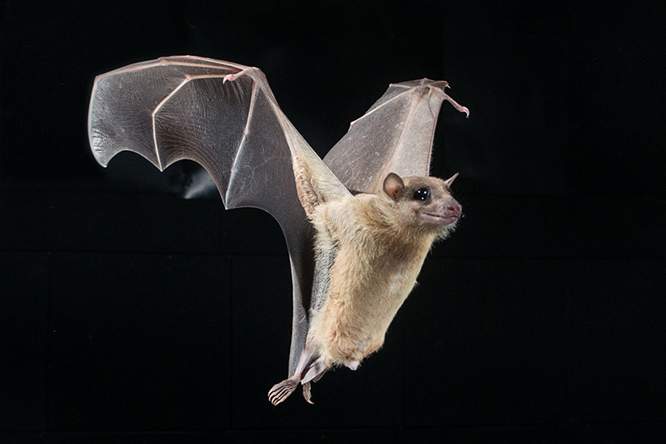
    Neural Activity in Bats Measured In Flight

    More »

    Research Highlights

    germ cells
    Alternate Endings
    A newly discovered cell-death pathway could help fight cancer
    side effects
    Side Effects

    “Feel-good” drugs like Prozac may have an unwanted side effect: diabetes

    overgrown leaf
    Limits to Growth

    Most of the many factors for determining leaf size turn out to put on the brakes, rather than promote growth

    More »

    Honors & Awards

    Prof. Irit Sagi was awarded the Juludan Research Prize from the Technion
    More »

    Full list »

    |
    | | | | | |
    |
  • Research
    • By Subject
    • What We Are Doing About:
    • From Basic Research to Benefiting Humanity
    • Shaping the Future

    By Subject

    Alternative Energy Materials Science
    Astrophysics Mathematics
    Biochemistry  Molecular Cell Biology
    Bioinformatics Nanoscience
    Biomedical Biology Neuroscience
    Cancer Particle Physics
    Chemistry Physics
    Computer Science Plant Sciences
    Environment Quantum Physics
    Evolution Scientific Archaeology
    Genetics Structural Biology

    What We Are Doing About:

    • Cancer
    • Diabetes
    • The Environment
    • Nanoscience
    • Energy

    Benefiting Humanity

    Prof. Amos Breskin
    Prof. Amos Breskin develops advanced radiation detectors, which have an important impact on many fields of research, such as particle, nuclear and atomic physics, medical diagnostics, biology and materials science.

     
    Application

    More »

    Full list »

    |
    | | | | | |
    |
  • Magazines and Multimedia
    • Annual Report
    • Interface - Online Magazine
    • The Weizmann International Magazine of Science and People
    • Books
    • Nano Comics
    • Galleries
    • Horizons - Online Magazine
    Annual Report 2012
    The 2012 Report
    Annual Report 2012
    2012 and Beyond
    Research Highlights
    New Developments
    Technology Transfer
    Summary of Operating Results
    More »

    Magazines

    Current Issue: Spring 2013
    Interface magazine Spring 2013
    Magazine Sections
    Science Feature Articles
    Made at the Institute
    Time Tunnel

    Archive »

    Latest Videos

    CRASH
    The Race for the Higgs Boson
    • Monitoring Carbon Exchange
    • Thanks for the Memories
    • Quantum Computing
    • Back to Basics - Forward to the Future
    More »
    |
    | | | | | |
    |
  • About the Institute
    • Overview
    • History
    • Virtual Tour
    • Visiting the Institute

    Overview

    • Multidisciplinary Research
    • Facts and Figures
    • Pioneering Progress
    • Training Future Scientists
    • Science is for Sharing
    • Advancing Israel
    • New Horizons
    • Beauty in Science

    History

    Dr. Chaim Weizmann

    Chaim Weizmann was born in 1874 to a traditional Jewish family in the small town of Motol in White Russia (Belarus). After graduating with honors from the Real-Gymnasium in Pinsk, he decided to establish himself professionally

    More »
    Weizmann House
    • History and Architecture
    • The Collection
    • The Tour
    • The Garden
    • The Grave
    • Erich Mendelsohn
    • The Presidential Car Vintage Wheels

    Visiting the Institute


    • Visitors Center
    • Weizmann House
    • Clore Garden of Science
    |
    | | | | | |
    |
  • Weizmann Institute Homepage
Home » Press Room » Press Releases
News
  • Press Releases
    • English
    • Hebrew
    • Spanish
    • French
    • German
  • In the News
  • Subscribe to Press Releases
  • Honors and Awards
  • Visits
  • Events

twitter block


Follow @WeizmannScience

Eat, Prey, Rain

24 Jul
2011
Environment
 
What do a herd of gazelles and a fluffy mass of clouds have in common? A mathematical formula that describes the population dynamics of such prey animals as gazelles and their predators has been used to model the relationship between cloud systems, rain and tiny floating particles called aerosols. This model may help climate scientists understand, among other things, how human-produced aerosols affect rainfall patterns. The research recently appeared in the Proceedings of the National Academy of Sciences (PNAS).

Clouds are major contributors to the climate system. In particular the shallow marine stratocumulus clouds that form huge cloud decks over the subtropical oceans cool the atmosphere by reflecting part of the incoming solar energy back to space. Drs. Ilan Koren of the Weizmann Institute’s Environmental Sciences and Energy Research Department (Faculty of Chemistry) and Graham Feingold of the NOAA Earth System Research Laboratory, Colorado, found that equations for modeling prey-predator cycles in the animal world were a handy analogy for cloud-rain cycles: Just as respective predator and prey populations expand and contract at the expense of one another, so too rain depletes clouds, which grow again once the rain runs out. And just as the availability of grass affects herd size, the relative abundance of aerosols – which “feed” the clouds as droplets condense around them – affects the shapes of those clouds. A larger supply of airborne particles gives rise to more droplets, but these droplets are smaller and thus remain high up in the cloud rather than falling as rain.
In previous research, Feingold and Koren had “zoomed in” to discover oscillations in convective cells in marine stratocumulus. Now they returned to their data, but from a “top down” angle to see if a generalized formula could reveal something about these systems. Using just three simple equations, they developed a model showing that cloud-rain dynamics mimic three known predator-prey modes. Like gazelles and lions, the two can oscillate in tandem, the “predator” rain cycle following a step behind peak cloud formation. Or the two can reach a sort of steady state in which the clouds are replenished at the same rate as they are diminished (as in a light, steady drizzle). The third option is chaos – the crash that occurs when predator populations get out of hand or a strong rain destroys the cloud system.

The model shows that as the amounts of aerosols change, the system can abruptly shift from one state to another. It also reveals a bifurcation – two scenarios at different ends of the aerosol scale that lend themselves to stable patterns. In the first, relatively low aerosol levels lead to clouds in which development depends heavily on aerosol concentrations. In the second, high levels produce saturation; these clouds depend solely on the initial environmental conditions.

Using this so-called systems approach, says Koren, “can open new windows to view and understand the emergent behavior of the complex relationships between clouds, rain and aerosols, giving us a more useful view of the big picture and helping us to understand how shifting aerosol levels can lead to different climate patterns.”
 
clouds
Photo: Tamar Deutsch
 
Dr. Ilan Koren’s research is supported by the Yeda-Sela Center for Basic Research. Dr. Koren is the incumbent of the Benjamin H. Swig and Jack D. Weiler Career Development Chair in Perpetuity.

Tags:
  • Aerosols,
  • Cloud formation,
  • Environmental Sciences and Energy Research,
  • Ilan Koren,
  • Mathematical model,
  • ""
  • Print this page »

Search Press Releases

Related Articles

Cooling forests can heat too
Cross Flow
CARESSing the Environment
Hard Rain
More Related links »

Edit block | Delete block

Download our FREE Interface Magazine App for iPad and Android

Secondary Links

  • Contact Us
  • Visit Us
  • How to Get Here
  • Campus Map
  • Site Map
  • Privacy
  • Terms of Use
  • Supporting Committees
  • Credits

Get RSS
© Weizmann Institute of Science 2012. All rights reserved
Follow us on:
[Jump to Top] [Jump to Main Content]