[[Skip Header and Navigation] [Jump to Main Content]
« עברית
  • Home
  • News
    • Press Releases
    • In the News
    • Subscribe to Press Releases
    • Honors and Awards
    • Visits
    • Events

    Press Releases

    16 May 2013
    Weather on the Outer Planets Only Goes So Deep
    18 Apr 2013
    Neural Activity in Bats Measured In Flight
    18 Mar 2013
    Programmed Destruction

    More »

    Research Highlights

    GeneCards
    Noncoding Sequences Get Equal Listing

    A greatly expanded database will give scientists around the world a powerful new tool for life sciences research

    gut cells
    The Spies Inside

    How does the immune system in the gut distinguish between helpful microbes and those that wish us harm?

    Ron Diskin
    Mutations Trump Invasion

    The process of HIV infection is just one of the subjects protein researcher Dr. Ron Diskin is investigating in his new lab

    More »

    Honors & Awards

    Dr. Zohar Komargodski has been awarded the Gribov Medal by the EPS High Energy Particle Physics Division Prizes
    More »

    Full list »

    |
    | | | | | |
    |
  • Research
    • By Subject
    • What We Are Doing About:
    • From Basic Research to Benefiting Humanity
    • Shaping the Future

    By Subject

    Alternative Energy Materials Science
    Astrophysics Mathematics
    Biochemistry  Molecular Cell Biology
    Bioinformatics Nanoscience
    Biomedical Biology Neuroscience
    Cancer Particle Physics
    Chemistry Physics
    Computer Science Plant Sciences
    Environment Quantum Physics
    Evolution Scientific Archaeology
    Genetics Structural Biology

    What We Are Doing About:

    • Cancer
    • Diabetes
    • The Environment
    • Nanoscience
    • Energy

    Benefiting Humanity

    Prof. Amos Breskin
    Prof. Amos Breskin develops advanced radiation detectors, which have an important impact on many fields of research, such as particle, nuclear and atomic physics, medical diagnostics, biology and materials science.

     
    Application

    More »

    Full list »

    |
    | | | | | |
    |
  • Magazines and Multimedia
    • Annual Report
    • Interface - Online Magazine
    • The Weizmann International Magazine of Science and People
    • Books
    • Nano Comics
    • Galleries
    • Horizons - Online Magazine
    Annual Report 2012
    The 2012 Report
    Annual Report 2012
    2012 and Beyond
    Research Highlights
    New Developments
    Technology Transfer
    Summary of Operating Results
    More »

    Magazines

    Current Issue: Spring 2013
    Interface magazine Spring 2013
    Magazine Sections
    Science Feature Articles
    Made at the Institute
    Time Tunnel

    Archive »

    Latest Videos

    CRASH
    The Race for the Higgs Boson
    • Monitoring Carbon Exchange
    • Thanks for the Memories
    • Quantum Computing
    • Back to Basics - Forward to the Future
    More »
    |
    | | | | | |
    |
  • About the Institute
    • Overview
    • History
    • Virtual Tour
    • Visiting the Institute

    Overview

    • Multidisciplinary Research
    • Facts and Figures
    • Pioneering Progress
    • Training Future Scientists
    • Science is for Sharing
    • Advancing Israel
    • New Horizons
    • Beauty in Science

    History

    Dr. Chaim Weizmann

    Chaim Weizmann was born in 1874 to a traditional Jewish family in the small town of Motol in White Russia (Belarus). After graduating with honors from the Real-Gymnasium in Pinsk, he decided to establish himself professionally
    More »
    Weizmann House
    • History and Architecture
    • The Collection
    • The Tour
    • The Garden
    • The Grave
    • Erich Mendelsohn
    • The Presidential Car Vintage Wheels

    Visiting the Institute


    • Visitors Center
    • Weizmann House
    • Clore Garden of Science
    |
    | | | | | |
    |
  • Weizmann Institute Homepage
Home » Press Room » Press Releases
News
  • Press Releases
    • English
    • Hebrew
    • Spanish
    • French
    • German
  • In the News
  • Subscribe to Press Releases
  • Honors and Awards
  • Visits
  • Events

twitter block


Follow @WeizmannScience

Programmed Destruction

18 Mar
2013
Biochemistry

Results showing the same signaling enzymes can trigger two different processes in the cell sound a warning to biomedical researchers

 
Stroke, heart attacks and numerous other common disorders result in a massive destruction of cells and tissues called necrosis. It’s a violent event: As each cell dies, its membrane ruptures, releasing substances that trigger inflammation, which in turn can cause more cellular necrosis. A new Weizmann Institute study may help develop targeted therapies for controlling the tissue destruction resulting from inflammation and necrosis.

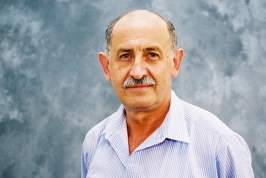
The study, conducted in the laboratory of Prof. David Wallach of the Biological Chemistry Department, focused on a group of signaling enzymes, including caspase 8, which was discovered by Wallach nearly two decades ago. Earlier studies by scientists in the United States, China and Europe had shown that this group of proteins induces “programmed,” or deliberate, necrosis intended to kill off damaged or infected cells. This revelation had generated the hope that by blocking the induction of necrotic cell death by these proteins, it might be possible to prevent excessive tissue damage in various diseases.

But in the new study, reported in Immunity, Wallach’s team sounds a warning. The researchers have revealed that under conditions favoring inflammation – that is, in the presence of certain bacterial components or other irritants – the same group of signaling enzymes can trigger an entirely different process in certain cells. It can activate a previously unknown cascade of biochemical reactions that causes inflammation more directly, without inducing necrosis, by stimulating the production of hormone-like regulatory proteins called cytokines. The research, mainly based on experiments in transgenic mice lacking caspase 8 in certain immune cells, was spearheaded by postdoctoral fellow Dr. Tae-Bong Kang. Team members Seung-Hoon Yang, Dr. Beata Toth and Dr. Andrew Kovalenko made important contributions to the study.

These findings suggest that prior to developing targeted necrosis-controlling therapies, researchers need to learn more about the signals transmitted by caspase 8 and its molecular partners: Since this signaling can lead to several entirely different outcomes, the scientists need to determine when exactly it results directly in necrosis and when it does not. Clarifying this matter is of enormous importance: Tissue necrosis occurs in a variety of disorders affecting billions of people, from the above-mentioned stroke and heart attack to viral infections and alcoholism-related degeneration of the liver.

Prof. David Wallach’s research is supported by the Leona M. and Harry B. Helmsley Charitable Trust; and Merck Serono. Prof. Wallach is the incumbent of the Joseph and Bessie Feinberg Professorial Chair.

Tags:
  • Biological Chemistry,
  • Caspase,
  • Cytokine,
  • David Wallach,
  • Heart disease,
  • Inflammation,
  • Stroke,
  • ""
  • Print this page »

Search Press Releases

Related Articles

Learning the Language
Shedding Light on Infertility
Protein 'Heroes' Block Genetic Mutations
1997 Teva Founders Prize To Weizmann Institute's Prof. David Wallach
More Related links »
Crystals
Crystals
Edit block | Delete block

Edit block | Delete block

Download our FREE Interface Magazine App for iPad and Android

Secondary Links

  • Contact Us
  • Visit Us
  • How to Get Here
  • Campus Map
  • Site Map
  • Privacy
  • Terms of Use
  • Supporting Committees
  • Credits

Get RSS
© Weizmann Institute of Science 2012. All rights reserved
Follow us on:
[Jump to Top] [Jump to Main Content]