[[Skip Header and Navigation] [Jump to Main Content]
« עברית
  • Home
  • News
    • Press Releases
    • In the News
    • Subscribe to Press Releases
    • Honors and Awards
    • Visits
    • Events

    Press Releases

    16 May 2013
    Weather on the Outer Planets Only Goes So Deep
    18 Apr 2013
    Neural Activity in Bats Measured In Flight
    18 Mar 2013
    Programmed Destruction

    More »

    Research Highlights

    GeneCards
    Noncoding Sequences Get Equal Listing

    A greatly expanded database will give scientists around the world a powerful new tool for life sciences research

    gut cells
    The Spies Inside

    How does the immune system in the gut distinguish between helpful microbes and those that wish us harm?

    Ron Diskin
    Mutations Trump Invasion

    The process of HIV infection is just one of the subjects protein researcher Dr. Ron Diskin is investigating in his new lab

    More »

    Honors & Awards

    Dr. Zohar Komargodski has been awarded the Gribov Medal by the EPS High Energy Particle Physics Division Prizes
    More »

    Full list »

    |
    | | | | | |
    |
  • Research
    • By Subject
    • What We Are Doing About:
    • From Basic Research to Benefiting Humanity
    • Shaping the Future

    By Subject

    Alternative Energy Materials Science
    Astrophysics Mathematics
    Biochemistry  Molecular Cell Biology
    Bioinformatics Nanoscience
    Biomedical Biology Neuroscience
    Cancer Particle Physics
    Chemistry Physics
    Computer Science Plant Sciences
    Environment Quantum Physics
    Evolution Scientific Archaeology
    Genetics Structural Biology

    What We Are Doing About:

    • Cancer
    • Diabetes
    • The Environment
    • Nanoscience
    • Energy

    Benefiting Humanity

    Prof. Amos Breskin
    Prof. Amos Breskin develops advanced radiation detectors, which have an important impact on many fields of research, such as particle, nuclear and atomic physics, medical diagnostics, biology and materials science.
     
    Application

    More »

    Full list »

    |
    | | | | | |
    |
  • Magazines and Multimedia
    • Annual Report
    • Interface - Online Magazine
    • The Weizmann International Magazine of Science and People
    • Books
    • Nano Comics
    • Galleries
    • Horizons - Online Magazine
    Annual Report 2012
    The 2012 Report
    Annual Report 2012
    2012 and Beyond
    Research Highlights
    New Developments
    Technology Transfer
    Summary of Operating Results
    More »

    Magazines

    Current Issue: Spring 2013
    Interface magazine Spring 2013
    Magazine Sections
    Science Feature Articles
    Made at the Institute
    Time Tunnel

    Archive »

    Latest Videos

    CRASH
    The Race for the Higgs Boson
    • Monitoring Carbon Exchange
    • Thanks for the Memories
    • Quantum Computing
    • Back to Basics - Forward to the Future
    More »
    |
    | | | | | |
    |
  • About the Institute
    • Overview
    • History
    • Virtual Tour
    • Visiting the Institute

    Overview

    • Multidisciplinary Research
    • Facts and Figures
    • Pioneering Progress
    • Training Future Scientists
    • Science is for Sharing
    • Advancing Israel
    • New Horizons
    • Beauty in Science

    History

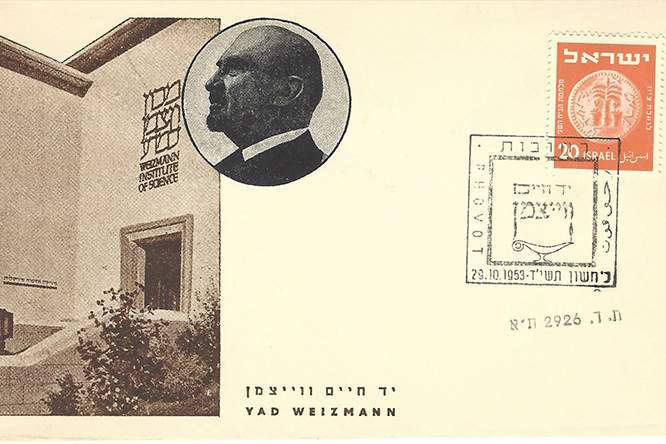
    Dr. Chaim Weizmann

    Chaim Weizmann was born in 1874 to a traditional Jewish family in the small town of Motol in White Russia (Belarus). After graduating with honors from the Real-Gymnasium in Pinsk, he decided to establish himself professionally

    More »
    Weizmann House
    • History and Architecture
    • The Collection
    • The Tour
    • The Garden
    • The Grave
    • Erich Mendelsohn
    • The Presidential Car Vintage Wheels

    Visiting the Institute


    • Visitors Center
    • Weizmann House
    • Clore Garden of Science
    |
    | | | | | |
    |
  • Weizmann Institute Homepage
Home » Press Room » Press Releases
News
  • Press Releases
    • English
    • Hebrew
    • Spanish
    • French
    • German
  • In the News
  • Subscribe to Press Releases
  • Honors and Awards
  • Visits
  • Events

twitter block


Follow @WeizmannScience

Thanks for the Memories

30 Jun
2011
Neuroscience
 
Embargoed until 2:00 PM, U.S. Eastern Time, Thursday 30 June 2011
 
How easy is it to falsify memory? New research at the Weizmann Institute shows that a bit of social pressure may be all that is needed. The study, which appears Friday in Science, reveals a unique pattern of brain activity when false memories are formed – one that hints at a surprising connection between our social selves and memory.
 
The experiment, conducted by Prof. Yadin Dudai and research student Micah Edelson of the Institute’s Neurobiology Department with Prof. Raymond Dolan and Dr. Tali Sharot of University College London, took place in four stages. In the first, volunteers watched a documentary film in small groups. Three days later, they returned to the lab individually to take a memory test, answering questions about the film. They were also asked how confident they were in their answers.


They were later invited back to the lab to retake the test while being scanned in a functional MRI (fMRI) that revealed their brain activity. This time, the subjects were also given a “lifeline”: the supposed answers of the others in their film viewing group (along with social-media-style photos). Planted among these were false answers to questions the volunteers had previously answered correctly and confidently. The participants conformed to the group on these “planted” responses, giving incorrect answers nearly 70% of the time.

But were they simply conforming to perceived social demands, or had their memory of the film actually undergone a change? To find out, the researchers invited the subjects back to the lab to take the memory test once again, telling them that the answers they had previously been fed were not those of their fellow film watchers, but random computer generations. Some of the responses reverted back to the original, correct ones, but close to half remained erroneous, implying that the subjects were relying on false memories implanted in the earlier session.

An analysis of the fMRI data showed differences in brain activity between the persistent false memories and the temporary errors of social compliance. The most outstanding feature of the false memories was a strong co-activation and connectivity between two brain areas: the hippocampus and the amygdala. The hippocampus is known to play a role in long-term memory formation, while the amygdala, sometimes known as the emotion center of the brain, plays a role in social interaction. The scientists think that the amygdala may act as a gateway connecting the social and memory processing parts of our brain; its “stamp” may be needed for some types of memories, giving them approval to be uploaded to the memory banks. Thus social reinforcement could act on the amygdala to persuade our brains to replace a strong memory with a false one.

 
 
Prof. Yadin Dudai’s research is supported by the Norman and Helen Asher Center for Human Brain Imaging, which he heads; the Nella and Leon Benoziyo Center for Neurological Diseases; the Carl and Micaela Einhorn-Dominic Institute of Brain Research, which he heads; the Marc Besen and the Pratt Foundation, Australia; Lisa Mierins Smith, Canada; Abe and Kathryn Selsky Memorial Research Project; and Miel de Botton, UK. Prof. Dudai is the incumbent of the Sara and Michael Sela Professorial Chair of Neurobiology.
 

Tags:
  • Learning and memory,
  • Neurobiology,
  • Yadin Dudai,
  • ""
  • Print this page »

Search Press Releases

Related Articles

Tumor Tip-Off
Personnel Management in the Brain
Windows on your Mind: Weizmann Institute Scientists Reveal That Imagination Can Enhance Visual Perception
Pacman in the Brain: Protein Chews up Vital Memory Chemical
More Related links »
A conversation between nerve cells in the brain
Edit block | Delete block

Edit block | Delete block

Download our FREE Interface Magazine App for iPad and Android

Secondary Links

  • Contact Us
  • Visit Us
  • How to Get Here
  • Campus Map
  • Site Map
  • Privacy
  • Terms of Use
  • Supporting Committees
  • Credits

Get RSS
© Weizmann Institute of Science 2012. All rights reserved
Follow us on:
[Jump to Top] [Jump to Main Content]