[[Skip Header and Navigation] [Jump to Main Content]
« עברית
  • Home
  • News
    • Press Releases
    • In the News
    • Subscribe to Press Releases
    • Honors and Awards
    • Visits
    • Events

    Press Releases

    16 May 2013
    Weather on the Outer Planets Only Goes So Deep
    18 Apr 2013
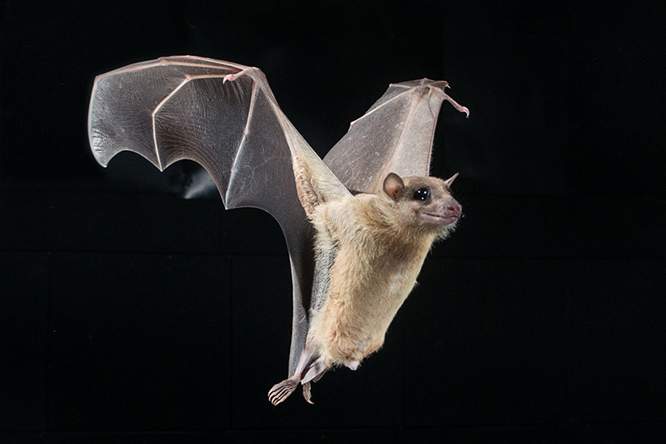
    Neural Activity in Bats Measured In Flight
    18 Mar 2013
    Programmed Destruction

    More »

    Research Highlights

    GeneCards
    Noncoding Sequences Get Equal Listing

    A greatly expanded database will give scientists around the world a powerful new tool for life sciences research

    gut cells
    The Spies Inside

    How does the immune system in the gut distinguish between helpful microbes and those that wish us harm?

    Ron Diskin
    Mutations Trump Invasion

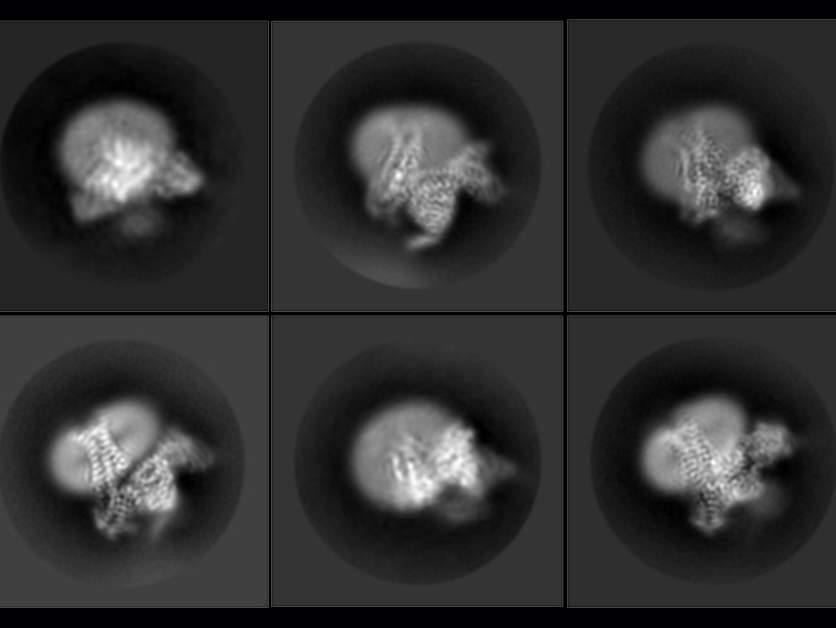
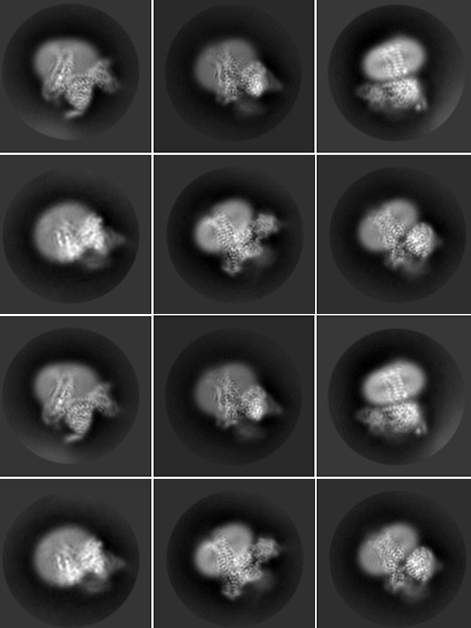
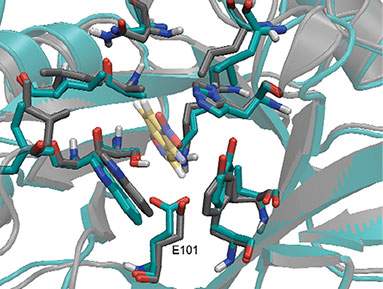
    The process of HIV infection is just one of the subjects protein researcher Dr. Ron Diskin is investigating in his new lab

    More »

    Honors & Awards

    Dr. Zohar Komargodski has been awarded the Gribov Medal by the EPS High Energy Particle Physics Division Prizes
    More »

    Full list »

    |
    | | | | | |
    |
  • Research
    • By Subject
    • What We Are Doing About:
    • From Basic Research to Benefiting Humanity
    • Shaping the Future

    By Subject

    Alternative Energy Materials Science
    Astrophysics Mathematics
    Biochemistry  Molecular Cell Biology
    Bioinformatics Nanoscience
    Biomedical Biology Neuroscience
    Cancer Particle Physics
    Chemistry Physics
    Computer Science Plant Sciences
    Environment Quantum Physics
    Evolution Scientific Archaeology
    Genetics Structural Biology

    What We Are Doing About:

    • Cancer
    • Diabetes
    • The Environment
    • Nanoscience
    • Energy

    Benefiting Humanity

    Prof. Amos Breskin
    Prof. Amos Breskin develops advanced radiation detectors, which have an important impact on many fields of research, such as particle, nuclear and atomic physics, medical diagnostics, biology and materials science.

     
    Application

    More »

    Full list »

    |
    | | | | | |
    |
  • Magazines and Multimedia
    • Annual Report
    • Interface - Online Magazine
    • The Weizmann International Magazine of Science and People
    • Books
    • Nano Comics
    • Galleries
    • Horizons - Online Magazine
    Annual Report 2012
    The 2012 Report
    Annual Report 2012
    2012 and Beyond
    Research Highlights
    New Developments
    Technology Transfer
    Summary of Operating Results
    More »

    Magazines

    Current Issue: Spring 2013
    Interface magazine Spring 2013
    Magazine Sections
    Science Feature Articles
    Made at the Institute
    Time Tunnel

    Archive »

    Latest Videos

    CRASH
    The Race for the Higgs Boson
    • Monitoring Carbon Exchange
    • Thanks for the Memories
    • Quantum Computing
    • Back to Basics - Forward to the Future
    More »
    |
    | | | | | |
    |
  • About the Institute
    • Overview
    • History
    • Virtual Tour
    • Visiting the Institute

    Overview

    • Multidisciplinary Research
    • Facts and Figures
    • Pioneering Progress
    • Training Future Scientists
    • Science is for Sharing
    • Advancing Israel
    • New Horizons
    • Beauty in Science

    History

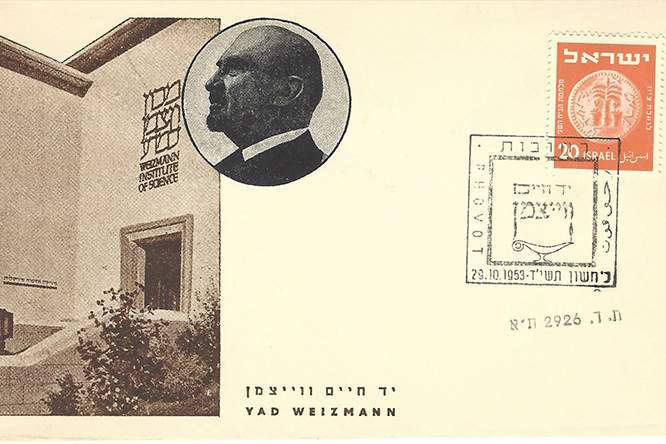
    Dr. Chaim Weizmann

    Chaim Weizmann was born in 1874 to a traditional Jewish family in the small town of Motol in White Russia (Belarus). After graduating with honors from the Real-Gymnasium in Pinsk, he decided to establish himself professionally

    More »
    Weizmann House
    • History and Architecture
    • The Collection
    • The Tour
    • The Garden
    • The Grave
    • Erich Mendelsohn
    • The Presidential Car Vintage Wheels

    Visiting the Institute


    • Visitors Center
    • Weizmann House
    • Clore Garden of Science
    |
    | | | | | |
    |
  • Weizmann Institute Homepage
Home » Press Room » Press Releases
News
  • Press Releases
    • English
    • Hebrew
    • Spanish
    • French
    • German
  • In the News
  • Subscribe to Press Releases
  • Honors and Awards
  • Visits
  • Events

twitter block


Follow @WeizmannScience

New Invention at the Weizmann Institute Enables Severely Disabled People to Communicate and Steer a Wheelchair by Sniffing

27 Jul
2010
Biomedical Research
A unique device based on sniffing – inhaling and exhaling through the nose – might enable numerous disabled people to navigate wheelchairs or communicate with their loved ones. Sniffing technology might even be used in the future to create a sort of ‘third hand,’ to assist healthy surgeons or pilots.
 

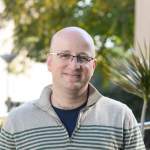
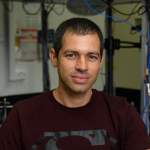
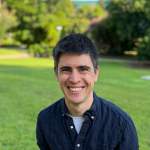
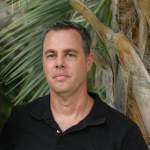
Developed by Prof. Noam Sobel, electronics engineers Dr. Anton Plotkin and Aharon Weissbrod and research student Lee Sela in the Weizmann Institute’s Neurobiology Department, the new system identifies changes in air pressure inside the nostrils and translates these into electrical signals. The device was tested on healthy volunteers as well as quadriplegics, and the results showed that the method is easily mastered. Users were able to navigate a wheelchair around a complex path or play a computer game with nearly the speed and accuracy of a mouse or joystick.

 
Sobel: ‘The most stirring tests were those we did with locked-in syndrome patients. These are people with unimpaired cognitive function who are completely paralyzed – ‘locked into’ their bodies. With the new system, they were able to communicate with family members, and even initiate communication with the outside. Some wrote poignant messages to their loved ones, sharing with them, for the first time in a very long time, their thoughts and feelings.’ Four of those who participated in the experiments are already using the new writing system, and Yeda Research and Development Company, Ltd., – the technology transfer arm of the Weizmann Institute – is investigating the possibilities for developing and distributing the technology.
 
Sniffing is a precise motor skill that is controlled, in part, by the soft palate – the flexible divider that moves to direct air in or out through the mouth or nose. The soft palate is controlled by several nerves that connect to it directly through the braincase. This close link led Sobel and his scientific team to theorize that the ability to sniff – that is, to control soft palate movement – might be preserved even in the most acute cases of paralysis. Functional magnetic resonance imaging (fMRI) lent support to the idea, showing that a number of brain areas contribute to soft palate control. This imaging revealed a significant overlap between soft palate control and the language areas of the brain, hinting to the scientists that the use of sniffing to communicate might be learned intuitively.
 
To test their theory, the researchers created a device with a sensor that fits on the nostril’s opening and measures changes in air pressure. For patients on respirators, they developed a passive version of the device, which diverts airflow to the patient’s nostrils. About 75% of the subjects on respirators were able to control their soft palate movement to operate the device. Initial tests, carried out with healthy volunteers, showed that the device compared favorably with a mouse or joystick for playing computer games. In the next stage, carried out in collaboration with Prof. Nachum Soroker of Loewenstein Hospital Rehabilitation Center in Raanana, quadriplegics and locked-in patients tested the device.
 
One patient who had been locked in for seven months following a stroke learned to use the device over a period of several days, writing her first message to her family. Another, who had been locked in since a traffic accident 18 years earlier wrote that the new device was much easier to use than one based on blinking. Another ten patients, all quadriplegics, succeeded in operating a computer and writing messages through sniffing.
 
In addition to communication, the device can function as a sort of steering mechanism for wheelchairs: Two successive sniffs in tell it to go forward, two out mean reverse, out and then in turn it left, and in and out turn it right. After fifteen minutes of practice, a subject who is paralyzed from the neck down managed to navigate a wheelchair through a complex route – sharp turns and all – as well as a non-disabled volunteer.
 
Sniffs can be in or out, strong or shallow, long or short; and this gives the device’s developers the opportunity to create a complex ‘language’ with multiple signals. The new system is relatively inexpensive to produce, and simple and quick to learn to operate in comparison with other brain-machine interfaces. Sobel believes that this invention may not only bring new hope to severely disabled people, but it could be useful in other areas, for instance as a control for a ‘third arm’ for surgeons and pilots.

Prof. Noam Sobel’s research is supported by the Nella and Leon Benoziyo Center for Neurosciences; the J&R Foundation; and Regina Wachter, NY.
 
 
The Weizmann Institute of Science in Rehovot, Israel, is one of the world's top-ranking multidisciplinary research institutions. Noted for its wide-ranging exploration of the natural and exact sciences, the Institute is home to 2,600 scientists, students, technicians and supporting staff. Institute research efforts include the search for new ways of fighting disease and hunger, examining leading questions in mathematics and computer science, probing the physics of matter and the universe, creating novel materials and developing new strategies for protecting the environment.

Weizmann Institute news releases are posted on the World Wide Web at http://wis-wander.weizmann.ac.il/ and are also available at http://www.eurekalert.org/
 
Tags:
  • Communication,
  • Electronic device,
  • Neurobiology,
  • Noam Sobel,
  • Nose,
  • Smell,
  • Yeda,
  • ""
  • Print this page »

Search Press Releases

Related Articles

How Can We Get to Know a Single Photon, Atom or Molecule?
Tumor Tip-Off
Personnel Management in the Brain
Windows on your Mind: Weizmann Institute Scientists Reveal That Imagination Can Enhance Visual Perception
More Related links »

Download our FREE Interface Magazine App for iPad and Android

Secondary Links

  • Contact Us
  • Visit Us
  • How to Get Here
  • Campus Map
  • Site Map
  • Privacy
  • Terms of Use
  • Supporting Committees
  • Credits

Get RSS
© Weizmann Institute of Science 2012. All rights reserved
Follow us on:
[Jump to Top] [Jump to Main Content]