[[Skip Header and Navigation] [Jump to Main Content]
« עברית
  • Home
  • News
    • Press Releases
    • In the News
    • Subscribe to Press Releases
    • Honors and Awards
    • Visits
    • Events

    Press Releases

    16 May 2013
    Weather on the Outer Planets Only Goes So Deep
    18 Apr 2013
    Neural Activity in Bats Measured In Flight
    18 Mar 2013
    Programmed Destruction

    More »

    Research Highlights

    GeneCards
    Noncoding Sequences Get Equal Listing

    A greatly expanded database will give scientists around the world a powerful new tool for life sciences research

    gut cells
    The Spies Inside

    How does the immune system in the gut distinguish between helpful microbes and those that wish us harm?

    Ron Diskin
    Mutations Trump Invasion

    The process of HIV infection is just one of the subjects protein researcher Dr. Ron Diskin is investigating in his new lab

    More »

    Honors & Awards

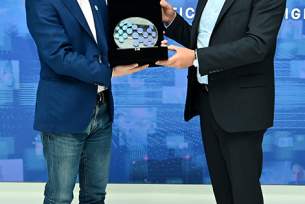
    Dr. Zohar Komargodski has been awarded the Gribov Medal by the EPS High Energy Particle Physics Division Prizes
    More »

    Full list »

    |
    | | | | | |
    |
  • Research
    • By Subject
    • What We Are Doing About:
    • From Basic Research to Benefiting Humanity
    • Shaping the Future

    By Subject

    Alternative Energy Materials Science
    Astrophysics Mathematics
    Biochemistry  Molecular Cell Biology
    Bioinformatics Nanoscience
    Biomedical Biology Neuroscience
    Cancer Particle Physics
    Chemistry Physics
    Computer Science Plant Sciences
    Environment Quantum Physics
    Evolution Scientific Archaeology
    Genetics Structural Biology

    What We Are Doing About:

    • Cancer
    • Diabetes
    • The Environment
    • Nanoscience
    • Energy

    Benefiting Humanity

    Prof. Amos Breskin
    Prof. Amos Breskin develops advanced radiation detectors, which have an important impact on many fields of research, such as particle, nuclear and atomic physics, medical diagnostics, biology and materials science.
     
    Application

    More »

    Full list »

    |
    | | | | | |
    |
  • Magazines and Multimedia
    • Annual Report
    • Interface - Online Magazine
    • The Weizmann International Magazine of Science and People
    • Books
    • Nano Comics
    • Galleries
    • Horizons - Online Magazine
    Annual Report 2012
    The 2012 Report
    Annual Report 2012
    2012 and Beyond
    Research Highlights
    New Developments
    Technology Transfer
    Summary of Operating Results
    More »

    Magazines

    Current Issue: Spring 2013
    Interface magazine Spring 2013
    Magazine Sections
    Science Feature Articles
    Made at the Institute
    Time Tunnel

    Archive »

    Latest Videos

    CRASH
    The Race for the Higgs Boson
    • Monitoring Carbon Exchange
    • Thanks for the Memories
    • Quantum Computing
    • Back to Basics - Forward to the Future
    More »
    |
    | | | | | |
    |
  • About the Institute
    • Overview
    • History
    • Virtual Tour
    • Visiting the Institute

    Overview

    • Multidisciplinary Research
    • Facts and Figures
    • Pioneering Progress
    • Training Future Scientists
    • Science is for Sharing
    • Advancing Israel
    • New Horizons
    • Beauty in Science

    History

    Dr. Chaim Weizmann

    Chaim Weizmann was born in 1874 to a traditional Jewish family in the small town of Motol in White Russia (Belarus). After graduating with honors from the Real-Gymnasium in Pinsk, he decided to establish himself professionally

    More »
    Weizmann House
    • History and Architecture
    • The Collection
    • The Tour
    • The Garden
    • The Grave
    • Erich Mendelsohn
    • The Presidential Car Vintage Wheels

    Visiting the Institute


    • Visitors Center
    • Weizmann House
    • Clore Garden of Science
    |
    | | | | | |
    |
  • Weizmann Institute Homepage
Home » Press Room » Press Releases
News
  • Press Releases
    • English
    • Hebrew
    • Spanish
    • French
    • German
  • In the News
  • Subscribe to Press Releases
  • Honors and Awards
  • Visits
  • Events

twitter block


Follow @WeizmannScience

Uncovering the Genome’s Regulatory Code

09 Sep
2012
Genetics

A new, automated method for mapping protein-DNA interactions may lead to advances in personalized medicine

 
Since the sequencing of the human genome in 2001, all our genes – around 20,000 in total – have been identified. But much is still unknown – for instance where and when each is active. Next to each gene sits a short DNA segment, and the activity of this regulatory segment determines whether the gene will be turned on, where and how strongly. These short regulatory segments are as – if not more – important than the genes, themselves. Indeed, 90% of the mutations that cause disease occur in these regulatory areas. They are responsible for the proper development of tissues and organs, determining, for instance, that eye cells – and only eye cells – contain light receptors, while only pancreatic cells function to produce insulin. Clearly, a deeper understanding of this regulatory system – its mechanisms and possibilities for malfunction – may lead to advances in biomedical research, especially in developing targeted therapies for individual patients.

In spite of their importance, the “regulatory code” is not well understood. To address this problem, a research team led by Dr. Ido Amit of the Weizmann Institute Immunology Department, together with scientists from the Broad Institute in Massachusetts, including Manuel Garber, Nir Yosef and Aviv Regev, and Nir Friedman of the Hebrew University of Jerusalem, developed an advanced, automated system for mapping these sites, and then used this system to uncover important principles how these regulatory elements function. Among other things, their study, which appeared in Molecular Cell, revealed a hierarchical structure for the regulatory code. By mapping a large number of regulatory factors, the team succeeded in revealing an overall plan for gene regulation as well as the intimate details of the mechanisms involved in the immune response.

“We are seeing a race to map the regulatory code and uncover its ties to disease and human variation that is reminiscent of the race to sequence the human genome,” says Amit. “But until now, participants have faced a serious hurdle: The process used for the past 30 years to map regulatory elements has been complicated, complex and labor-intensive, requiring huge scientific consortiums. With the new method, just a handful of researchers were able to conduct a study on a similar scale to the mega-team ones, and in a fraction of the time.”
 
gene regulation hierarchy
Regulatory factor hierarchy: The highest level (top) determines a cell’s basic identity; the second (middle) shapes its properties; the third (bottom) activates genes according to changing conditions
Their highly efficient, automated method enabled Amit and his team to measure a large number of regulatory proteins and their binding sites in parallel. They exposed immune cells to bacteria – setting the stage for gene activation – and then traced the actions of several dozen different regulatory proteins known to play a role in the immune response over four points in time. Not only were the researchers able to identify the binding locations of each and the genes they activate, but the levels of activation and the mechanisms employed.

One of their more significant findings was that the actions of these regulatory factors can be neatly classified into three levels in a sort of regulatory hierarchy. In the bottom tier are those factors that create the rough divisions into main cell types by directing cell differentiation. These factors are the “basic identity” guides that can, on their own, determine whether a cell will have the characteristics of a muscle cell, a nerve cell, etc. On the second tier are the regulatory factors that determine a cell’s sub-identity, which they do by controlling the strength of a gene’s expression. These factors are in charge of producing closely-related sub-types, for instance, muscle fibers that are either smooth or striated, or closely-related immune cells. Regulatory factors in the third tier are even more specialized: They only affect the expression of certain genes that are called into action in response to signals from outside the cell – bacterial invaders, hormones, hunger pangs, etc.

The hope is that understanding the ins and outs of the regulatory code will help researchers to understand and predict how diseases arise and progress due to malfunctions in regulatory mechanisms. In the future, understanding the regulatory program may lead to advances in rehabilitative medicine. Regulatory mechanisms could be used to redirect the differentiation of a patient’s cells, which could then be reimplanted, thus avoiding the problems inherent in using donor cells.
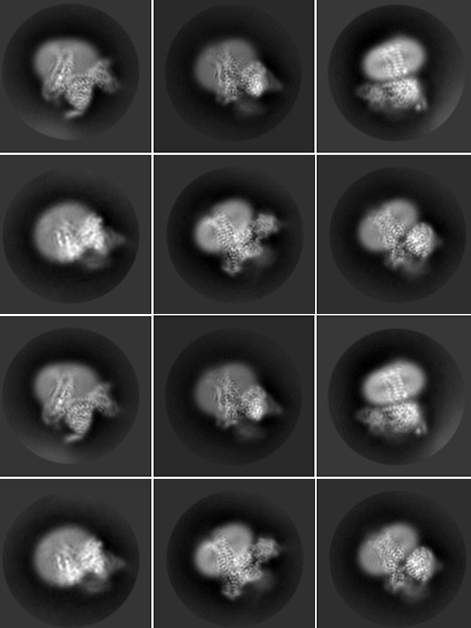

Amit: “The new method for mapping the gene’s regulatory plan may open new vistas for investigating all sorts of biological processes, including the system failures that occur in disease.”

Dr. Ido Amit’s research is supported by the Abramson Family Center for Young Scientists; the Abisch Frenkel Foundation for the Promotion of Life Sciences; Sam Revusky, Canada; the Leona M. and Harry B. Helmsley Charitable Trust; the M.D. Moross Institute for Cancer Research; Drs. Herbert and Esther Hecht, Beverly Hills, CA; the estate of Ernst and Anni Deutsch; and the estate of Irwin Mandel.

 
Tags:
  • Gene code,
  • Gene regulation,
  • Ido Amit,
  • Immune cells,
  • Immunology,
  • Personalized medicine,
  • ""
  • Print this page »

Search Press Releases

Related Articles

Cell Detective
Supernannies
Learning the Language
Unlikely Brain Boosters
More Related links »
Bacterium organizing its genetic material into a liquid crystal
Edit block | Delete block

Edit block | Delete block

Download our FREE Interface Magazine App for iPad and Android

Secondary Links

  • Contact Us
  • Visit Us
  • How to Get Here
  • Campus Map
  • Site Map
  • Privacy
  • Terms of Use
  • Supporting Committees
  • Credits

Get RSS
© Weizmann Institute of Science 2012. All rights reserved
Follow us on:
[Jump to Top] [Jump to Main Content]