[[Skip Header and Navigation] [Jump to Main Content]
« עברית
  • Home
  • News
    • Press Releases
    • In the News
    • Subscribe to Press Releases
    • Honors and Awards
    • Visits
    • Events

    Press Releases

    16 May 2013
    Weather on the Outer Planets Only Goes So Deep
    18 Apr 2013
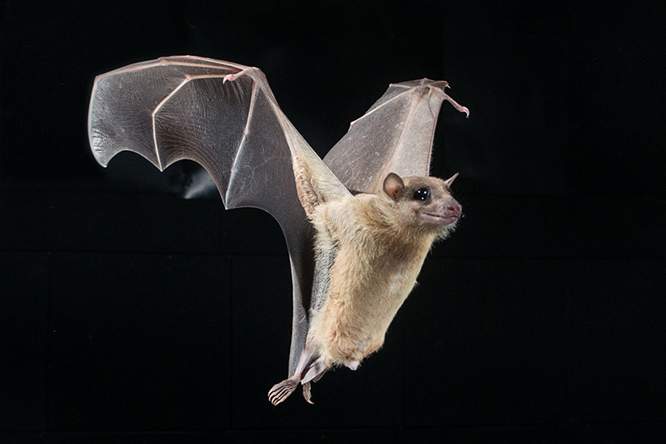
    Neural Activity in Bats Measured In Flight
    18 Mar 2013
    Programmed Destruction

    More »

    Research Highlights

    GeneCards
    Noncoding Sequences Get Equal Listing

    A greatly expanded database will give scientists around the world a powerful new tool for life sciences research

    gut cells
    The Spies Inside

    How does the immune system in the gut distinguish between helpful microbes and those that wish us harm?

    Ron Diskin
    Mutations Trump Invasion

    The process of HIV infection is just one of the subjects protein researcher Dr. Ron Diskin is investigating in his new lab

    More »

    Honors & Awards

    Dr. Zohar Komargodski has been awarded the Gribov Medal by the EPS High Energy Particle Physics Division Prizes
    More »

    Full list »

    |
    | | | | | |
    |
  • Research
    • By Subject
    • What We Are Doing About:
    • From Basic Research to Benefiting Humanity
    • Shaping the Future

    By Subject

    Alternative Energy Materials Science
    Astrophysics Mathematics
    Biochemistry  Molecular Cell Biology
    Bioinformatics Nanoscience
    Biomedical Biology Neuroscience
    Cancer Particle Physics
    Chemistry Physics
    Computer Science Plant Sciences
    Environment Quantum Physics
    Evolution Scientific Archaeology
    Genetics Structural Biology

    What We Are Doing About:

    • Cancer
    • Diabetes
    • The Environment
    • Nanoscience
    • Energy

    Benefiting Humanity

    Prof. Amos Breskin
    Prof. Amos Breskin develops advanced radiation detectors, which have an important impact on many fields of research, such as particle, nuclear and atomic physics, medical diagnostics, biology and materials science.

     
    Application

    More »

    Full list »

    |
    | | | | | |
    |
  • Magazines and Multimedia
    • Annual Report
    • Interface - Online Magazine
    • The Weizmann International Magazine of Science and People
    • Books
    • Nano Comics
    • Galleries
    • Horizons - Online Magazine
    Annual Report 2012
    The 2012 Report
    Annual Report 2012
    2012 and Beyond
    Research Highlights
    New Developments
    Technology Transfer
    Summary of Operating Results
    More »

    Magazines

    Current Issue: Spring 2013
    Interface magazine Spring 2013
    Magazine Sections
    Science Feature Articles
    Made at the Institute
    Time Tunnel

    Archive »

    Latest Videos

    CRASH
    The Race for the Higgs Boson
    • Monitoring Carbon Exchange
    • Thanks for the Memories
    • Quantum Computing
    • Back to Basics - Forward to the Future
    More »
    |
    | | | | | |
    |
  • About the Institute
    • Overview
    • History
    • Virtual Tour
    • Visiting the Institute

    Overview

    • Multidisciplinary Research
    • Facts and Figures
    • Pioneering Progress
    • Training Future Scientists
    • Science is for Sharing
    • Advancing Israel
    • New Horizons
    • Beauty in Science

    History

    Dr. Chaim Weizmann

    Chaim Weizmann was born in 1874 to a traditional Jewish family in the small town of Motol in White Russia (Belarus). After graduating with honors from the Real-Gymnasium in Pinsk, he decided to establish himself professionally

    More »
    Weizmann House
    • History and Architecture
    • The Collection
    • The Tour
    • The Garden
    • The Grave
    • Erich Mendelsohn
    • The Presidential Car Vintage Wheels

    Visiting the Institute


    • Visitors Center
    • Weizmann House
    • Clore Garden of Science
    |
    | | | | | |
    |
  • Weizmann Institute Homepage
Home » Press Room » Press Releases
News
  • Press Releases
    • English
    • Hebrew
    • Spanish
    • French
    • German
  • In the News
  • Subscribe to Press Releases
  • Honors and Awards
  • Visits
  • Events

twitter block


Follow @WeizmannScience

Weizmann Institute Scientists Make Significant Contributions to LHC Findings

13 Dec
2011
Particle Physics
 
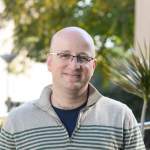
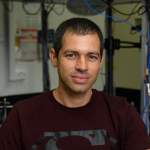
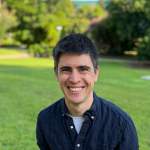
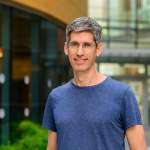
Today’s announcement from the Large Hadron Collider (LHC) at CERN points to promising signs for the existence of the Higgs boson. Weizmann Institute scientists have been prominent participants in ATLAS, one of the two experiments to produce results in the search for this elementary particle. Prof. Giora Mikenberg was the ATLAS Muon Project leader for many years and now heads the Israeli LHC team. Prof. Ehud Duchovni heads the Weizmann ATLAS group as well as a small group looking for SUSY signals. Prof Eilam Gross is currently the ATLAS Higgs physics group convener. All are members of the Weizmann Institute’s Particle Physics and Astrophysics Department, and they have been part of the effort to find the Higgs since 1987.
ATLAS and its sister experiment in the LHC, CMS, have been searching for the Higgs boson, thought to be the particle that gives all the other elementary particles their mass. The Higgs is predicted by the Standard Model of Particle Physics, which provides a framework for all of the subatomic particles in nature. The Higgs is the one piece of the Standard Model that has not been proven to exist, and some scientists believe that the model will have to be rethought if the Higgs is not found.

Gross: “In 2011 the LHC particle accelerator in Geneva collided over 300 trillion (a million million) protons. All of that enormous energy (7 trillion electron volts) went into the effort to produce the Higgs boson. But in each collision, other similar particles are created and there is no way to foresee what we will find. The chances of a collision producing a Higgs boson are so small that only about a hundred are expected to be observed over the course of a year.”

Finding possible signs of a Higgs involved looking for statistical anomalies in the data (compared to what the results would look like if there were no Higgs) in the expected mass range. The problem is that once these anomalies appear, the scientists had to rule out statistical flukes. But several weeks ago, it was noticed that “extra” events in the probable Higgs range had accumulated in the experimental results during 2011. Gross: “We couldn’t believe our eyes -- we looked at the screen for ages before we started to digest what we were seeing. In the past three weeks, the entire Higgs search team in the ATLAS experiment have checked and rechecked the results from every possible angle. We checked for errors… for bugs in the program.”
 
The ATLAS results suggest that there could be a Higgs boson with a mass of around 126 GeV, and that there is just a 1 in 5000 chance that the extra events they observed in this particular mass are the result of a statistical fluke and not the creation of a Higgs boson. Such fluctuations might still disappear, so  the proof is still not at all conclusive, but scientists believe that it bodes well for the next round of LHC collisions, set to begin in April 2012.
 

Results of a collision that could represent a Higgs boson

Results of a collision that could represent a Higgs boson from the ATLAS experiment


Prof. Ehud Duchovni’s research is supported by the Friends of Weizmann Institute in memory of Richard Kronstein; the Nella and Leon Benoziyo Center for High Energy Physics; andthe Yeda-Sela Center for Basic Research. Prof. Duchovni is the incumbent of the Professor Wolfgang Gentner Chair of Nuclear Physics.

Prof. Eilam Gross’s research is supported by the Friends of Weizmann Institute in memory of Richard Kronstein.

Prof. Giora Mikenberg’s research is supported by the Nella and Leon Benoziyo Center for High Energy Physics, which he heads. Prof. Mikenberg is the incumbent of the Lady Davis Chair of Experimental Physics.


Crash: The race for the Higgs boson


Tags:
  • CERN,
  • Ehud Duchovni,
  • Eilam Gross,
  • Giora Mikenberg,
  • Higgs boson,
  • LHC,
  • Particle Physics and Astrophysics,
  • ""
  • Print this page »

Search Press Releases

Related Articles

Getting a Bang Out of the Experiment
Weizmann Institute and Cambridge University Tie for First Place in Physics Competition
Weizmann's Particle Detectors Used In International Collider Project
The World of Science Salutes the Weizmann Institute
More Related links »
Particle collision in a particle accelerator
Edit block | Delete block

Edit block | Delete block

Download our FREE Interface Magazine App for iPad and Android

Secondary Links

  • Contact Us
  • Visit Us
  • How to Get Here
  • Campus Map
  • Site Map
  • Privacy
  • Terms of Use
  • Supporting Committees
  • Credits

Get RSS
© Weizmann Institute of Science 2012. All rights reserved
Follow us on:
[Jump to Top] [Jump to Main Content]