[[Skip Header and Navigation] [Jump to Main Content]
« עברית
  • Home
  • News
    • Press Releases
    • In the News
    • Subscribe to Press Releases
    • Honors and Awards
    • Visits
    • Events

    Press Releases

    16 May 2013
    Weather on the Outer Planets Only Goes So Deep
    18 Apr 2013
    Neural Activity in Bats Measured In Flight
    18 Mar 2013
    Programmed Destruction

    More »

    Research Highlights

    GeneCards
    Noncoding Sequences Get Equal Listing

    A greatly expanded database will give scientists around the world a powerful new tool for life sciences research

    gut cells
    The Spies Inside

    How does the immune system in the gut distinguish between helpful microbes and those that wish us harm?

    Ron Diskin
    Mutations Trump Invasion

    The process of HIV infection is just one of the subjects protein researcher Dr. Ron Diskin is investigating in his new lab

    More »

    Honors & Awards

    Dr. Zohar Komargodski has been awarded the Gribov Medal by the EPS High Energy Particle Physics Division Prizes
    More »

    Full list »

    |
    | | | | | |
    |
  • Research
    • By Subject
    • What We Are Doing About:
    • From Basic Research to Benefiting Humanity
    • Shaping the Future

    By Subject

    Alternative Energy Materials Science
    Astrophysics Mathematics
    Biochemistry  Molecular Cell Biology
    Bioinformatics Nanoscience
    Biomedical Biology Neuroscience
    Cancer Particle Physics
    Chemistry Physics
    Computer Science Plant Sciences
    Environment Quantum Physics
    Evolution Scientific Archaeology
    Genetics Structural Biology

    What We Are Doing About:

    • Cancer
    • Diabetes
    • The Environment
    • Nanoscience
    • Energy

    Benefiting Humanity

    Prof. Amos Breskin
    Prof. Amos Breskin develops advanced radiation detectors, which have an important impact on many fields of research, such as particle, nuclear and atomic physics, medical diagnostics, biology and materials science.

     
    Application

    More »

    Full list »

    |
    | | | | | |
    |
  • Magazines and Multimedia
    • Annual Report
    • Interface - Online Magazine
    • The Weizmann International Magazine of Science and People
    • Books
    • Nano Comics
    • Galleries
    • Horizons - Online Magazine
    Annual Report 2012
    The 2012 Report
    Annual Report 2012
    2012 and Beyond
    Research Highlights
    New Developments
    Technology Transfer
    Summary of Operating Results
    More »

    Magazines

    Current Issue: Spring 2013
    Interface magazine Spring 2013
    Magazine Sections
    Science Feature Articles
    Made at the Institute
    Time Tunnel

    Archive »

    Latest Videos

    CRASH
    The Race for the Higgs Boson
    • Monitoring Carbon Exchange
    • Thanks for the Memories
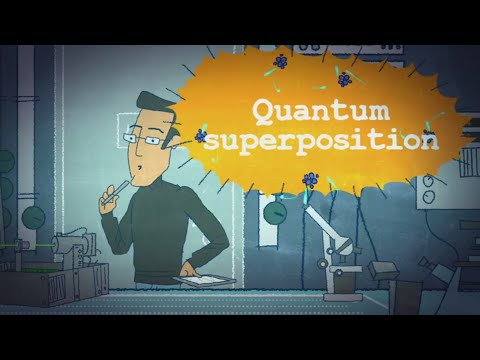
    • Quantum Computing
    • Back to Basics - Forward to the Future
    More »
    |
    | | | | | |
    |
  • About the Institute
    • Overview
    • History
    • Virtual Tour
    • Visiting the Institute

    Overview

    • Multidisciplinary Research
    • Facts and Figures
    • Pioneering Progress
    • Training Future Scientists
    • Science is for Sharing
    • Advancing Israel
    • New Horizons
    • Beauty in Science

    History

    Dr. Chaim Weizmann

    Chaim Weizmann was born in 1874 to a traditional Jewish family in the small town of Motol in White Russia (Belarus). After graduating with honors from the Real-Gymnasium in Pinsk, he decided to establish himself professionally

    More »
    Weizmann House
    • History and Architecture
    • The Collection
    • The Tour
    • The Garden
    • The Grave
    • Erich Mendelsohn
    • The Presidential Car Vintage Wheels

    Visiting the Institute


    • Visitors Center
    • Weizmann House
    • Clore Garden of Science
    |
    | | | | | |
    |
  • Weizmann Institute Homepage
Home » Press Room » Press Releases
News
  • Press Releases
    • English
    • Hebrew
    • Spanish
    • French
    • German
  • In the News
  • Subscribe to Press Releases
  • Honors and Awards
  • Visits
  • Events

twitter block


Follow @WeizmannScience

Weizmann Institute Scientists Observe Quantum Effects in Cold Chemistry

12 Oct
2012
Chemistry

At close to absolute zero, chemical reactions take on new features

 
At very low temperatures, close to absolute zero, chemical reactions may proceed at a much higher rate than classical chemistry says they should – because in this extreme chill, quantum effects enter the picture. A Weizmann Institute team has now confirmed this experimentally; their results would not only provide insight into processes in the intriguing quantum world in which particles act as waves, it might explain how chemical reactions occur in the vast frigid regions of interstellar space.
Long-standing predictions are that quantum effects should allow the formation of a transient bond – one that will force colliding atoms and molecules to orbit each other, instead of separating after the collision. Such a state would be very important, as orbiting atoms and molecules could have multiple chances to interact chemically. In this theory, a reaction that would seem to have a very low probability of occurring would proceed very rapidly at certain energies.

Dr. Ed Narevicius and his team in the Institute’s Chemical Physics Department managed, for the first time, to experimentally confirm this elusive process in a reaction they performed at chilling temperatures of just a fraction of a degree above the absolute zero – 0.01 K. Their results appeared in Science on Friday.
 
 “The problem,” says Narevicius, “is that in classical chemistry, we think of reactions in terms of colliding billiard balls held together by springs on the molecular level. In the classical picture, reaction barriers block those billiard balls from approaching one another, whereas in the quantum physics world, reaction barriers can be penetrated by particles, as these acquire wave-like qualities at ultra-low temperatures.“

The quest to observe quantum effects in chemical reactions started over half a century ago with pioneering experiments by Dudley Herschbach and Yuan T. Lee, who later received a Nobel Prize for their work. They succeeded in observing chemical reactions at unprecedented resolution by colliding two low-temperature, supersonic beams. However, the collisions took place at relative speeds that were much too high to resolve many quantum effects: When two fast beams collide, the relative velocity sets the collision temperature at above 100 K, much too warm for quantum effects to play a significant role. Over the years, researchers had used various ingenious techniques, including changing the angle of the beams and slowing them down to a near-halt. These managed to bring the temperatures down to around 5 K – close, but still a miss for those seeking to observe chemical reactions in quantum conditions.

The innovation that Narevicius and his team, including Alon B. Henson, Sasha Gersten, Yuval Shagam and Julia Narevicius, introduced was to merge the beams rather than collide them. One beam was produced in a straight line, and the second beam was bent using a magnetic device until it was parallel with the first. Even though the beams were racing at high-speed, the relative speed of the particles in relation to the others was zero. Thus a much lower collision temperature of only 0.01 K could be achieved. One beam contained helium atoms in an excited state, the other either argon atoms or hydrogen molecules. In the ensuing chemical reaction, the argon or hydrogen molecules became ionized – releasing electrons.

To see if quantum phenomena were in play, the researchers looked at reaction rates – a measure of how fast a reaction proceeds – at different collision energies. At high collision energies, classical effects dominated and the reaction rates slowed down gradually as the temperature dropped. But below about 3 K, the reaction rate in the merged beams suddenly took on peaks and valleys. This is a sign that a quantum phenomenon known as scattering resonances due to tunneling was occurring in the reactions. At low energies, particles started behaving as waves: Those waves that were able to tunnel through the potential barrier interfered constructively with the reflected waves upon collision. This creates a standing wave that corresponds to particles trapped in orbits around one another. Such interference occurs at particular energies and is marked by a dramatic increase in reaction rates.

Narevicius: “Our experiment is the first proof that the reaction rate can change dramatically in the cold reaction regime. Beyond the surprising results, we have shown that such measurements can serve as an ultrasensitive probe for reaction dynamics. Our observations already prove that our understanding of even the simplest ionization reaction is far from complete; it requires a thorough rethinking and the construction of better theoretical models. We expect that our method will be used to solve many puzzles in reactions that are especially relevant to interstellar chemistry, which generally occurs at ultra-low temperatures.”
 
Dr. Edvardas Narevicius is the incumbent of the Ernst and Kaethe Ascher Career Development Chair.
 
cold chemistry
The experimental system: two supersonic valves followed by two skimmers. The blue beam passes through a curved magnetic quadrupole guide, and the merged beam (purple) enters a quadrupole mass spectrometer. B is a front view of the quadrupole guide


Tags:
  • Absolute zero,
  • Chemical Physics,
  • Chemistry,
  • Ed Narevicius,
  • Quantum physics,
  • ""
  • Print this page »

Search Press Releases

Related Articles

Overview
Prof. Ada Yonath has been awarded the Nobel Prize in Chemistry
Saving Up Sunshine
From Curie to Yonath
More Related links »
The structures of ribosomal particles
Edit block | Delete block

Edit block | Delete block

Download our FREE Interface Magazine App for iPad and Android

Secondary Links

  • Contact Us
  • Visit Us
  • How to Get Here
  • Campus Map
  • Site Map
  • Privacy
  • Terms of Use
  • Supporting Committees
  • Credits

Get RSS
© Weizmann Institute of Science 2012. All rights reserved
Follow us on:
[Jump to Top] [Jump to Main Content]