[[Skip Header and Navigation] [Jump to Main Content]
« עברית
  • Home
  • News
    • Press Releases
    • In the News
    • Subscribe to Press Releases
    • Honors and Awards
    • Visits
    • Events

    Press Releases

    17 Jun 2013
    Mice in a “Big Brother” Setup Develop Social Structures
    16 May 2013
    Weather on the Outer Planets Only Goes So Deep
    18 Apr 2013
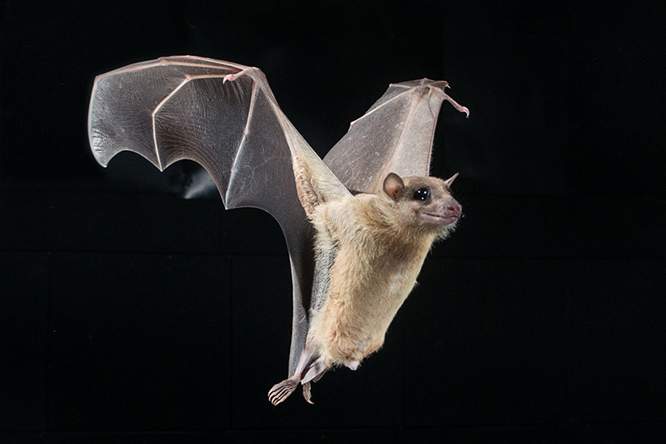
    Neural Activity in Bats Measured In Flight

    More »

    Research Highlights

    germ cells
    Alternate Endings
    A newly discovered cell-death pathway could help fight cancer
    side effects
    Side Effects

    “Feel-good” drugs like Prozac may have an unwanted side effect: diabetes

    overgrown leaf
    Limits to Growth

    Most of the many factors for determining leaf size turn out to put on the brakes, rather than promote growth

    More »

    Honors & Awards

    Prof. Irit Sagi was awarded the Juludan Research Prize from the Technion
    More »

    Full list »

    |
    | | | | | |
    |
  • Research
    • By Subject
    • What We Are Doing About:
    • From Basic Research to Benefiting Humanity
    • Shaping the Future

    By Subject

    Alternative Energy Materials Science
    Astrophysics Mathematics
    Biochemistry  Molecular Cell Biology
    Bioinformatics Nanoscience
    Biomedical Biology Neuroscience
    Cancer Particle Physics
    Chemistry Physics
    Computer Science Plant Sciences
    Environment Quantum Physics
    Evolution Scientific Archaeology
    Genetics Structural Biology

    What We Are Doing About:

    • Cancer
    • Diabetes
    • The Environment
    • Nanoscience
    • Energy

    Benefiting Humanity

    Prof. Amos Breskin
    Prof. Amos Breskin develops advanced radiation detectors, which have an important impact on many fields of research, such as particle, nuclear and atomic physics, medical diagnostics, biology and materials science.

     
    Application

    More »

    Full list »

    |
    | | | | | |
    |
  • Magazines and Multimedia
    • Annual Report
    • Interface - Online Magazine
    • The Weizmann International Magazine of Science and People
    • Books
    • Nano Comics
    • Galleries
    • Horizons - Online Magazine
    Annual Report 2012
    The 2012 Report
    Annual Report 2012
    2012 and Beyond
    Research Highlights
    New Developments
    Technology Transfer
    Summary of Operating Results
    More »

    Magazines

    Current Issue: Spring 2013
    Interface magazine Spring 2013
    Magazine Sections
    Science Feature Articles
    Made at the Institute
    Time Tunnel

    Archive »

    Latest Videos

    CRASH
    The Race for the Higgs Boson
    • Monitoring Carbon Exchange
    • Thanks for the Memories
    • Quantum Computing
    • Back to Basics - Forward to the Future
    More »
    |
    | | | | | |
    |
  • About the Institute
    • Overview
    • History
    • Virtual Tour
    • Visiting the Institute

    Overview

    • Multidisciplinary Research
    • Facts and Figures
    • Pioneering Progress
    • Training Future Scientists
    • Science is for Sharing
    • Advancing Israel
    • New Horizons
    • Beauty in Science

    History

    Dr. Chaim Weizmann

    Chaim Weizmann was born in 1874 to a traditional Jewish family in the small town of Motol in White Russia (Belarus). After graduating with honors from the Real-Gymnasium in Pinsk, he decided to establish himself professionally

    More »
    Weizmann House
    • History and Architecture
    • The Collection
    • The Tour
    • The Garden
    • The Grave
    • Erich Mendelsohn
    • The Presidential Car Vintage Wheels

    Visiting the Institute


    • Visitors Center
    • Weizmann House
    • Clore Garden of Science
    |
    | | | | | |
    |
  • Weizmann Institute Homepage
Home » Press Room » Press Releases
News
  • Press Releases
    • English
    • Hebrew
    • Spanish
    • French
    • German
  • In the News
  • Subscribe to Press Releases
  • Honors and Awards
  • Visits
  • Events

twitter block


Tweets by @WeizmannScience

Weizmann Institute scientists show: How Adversity Dulls Our Perceptions

11 May
2011
Neuroscience
 
Adversity, we are told, heightens our senses, imprinting sights and sounds precisely in our memories. But new Weizmann Institute research, which appeared in Nature Neuroscience this week, suggests the exact opposite may be the case: Perceptions learned in an aversive context are not as sharp as those learned in other circumstances. The findings, which hint that this tendency is rooted in our species’ evolution, may help to explain how post-traumatic stress syndrome and other anxiety disorders develop in some people.
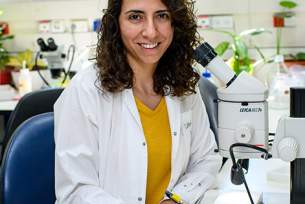
To investigate learning in unfavorable situations, Dr. Rony Paz of the Institute’s Neurobiology Department, together with his student Jennifer Resnik, had volunteers learn that some tones lead to an offensive outcome (e.g. a very bad odor), whereas other tones are followed by pleasant a outcome, or else by nothing. The volunteers were later tested for their perceptual thresholds – that is, how well they were able to distinguish either the “bad” or “good” tones from other similar tones.
 
As expected from previous studies, in the neutral or positive conditions, the volunteers became better with practice at discriminating between tones. But surprisingly, when they found themselves exposed to a negative, possibly disturbing stimulus, their performance worsened.
 
The differences in learning were really very basic differences in perception. After learning that a stimulus is associated with highly unpleasant experience, the subjects could not distinguish it from other similar stimuli, even though they could do so beforehand, or in normal conditions. In other words, no matter how well they normally learned new things, the subjects receiving the “aversive reinforcement” experienced the two tones as the same.
 
Paz: “This likely made sense in our evolutionary past: If you’ve previously heard the sound of a lion attacking, your survival might depend on a similar noise sounding the same to you – and pushing the same emotional buttons. Your instincts, then, will tell you to run, rather than to consider whether that sound was indeed identical to the growl of the lion from the other day.”
 
Paz believes that this tendency might be stronger in people suffering from post-traumatic stress syndrome. As an example, he points to the 9-11 terror attacks in New York. Many of those who witnessed the strikes on the towers developed post-traumatic stress syndrome, which, for many of them, can be triggered by tall buildings. Intellectually, they may know the building before them bears little similarity to the destroyed towers, but on a more fundamental, instinctive level, they might perceive all tall buildings to be the same and thus associate them with terrifying destruction.
 
The scientific team is now investigating this idea in continuing research, in which they hope, among other things, to identify the areas in the brain that are involved in setting the different levels of perception. Paz: “We think this is a trick of the brain that evolved to help us cope with threats, but is now dysfunctional in many cases. Besides revealing this very basic aspect of our perception, we hope to shed light on the development of such anxiety disorders as post-traumatic stress syndrome.”
 
Survival in the face of adversity


Dr. Rony Paz’s research is supported by the Nella and Leon Benoziyo Center for Neurological Diseases; the Carl and Micaela Einhorn-Dominic Brain Research Institute; the Kahn Family Research Center for Systems Biology of the Human Cell; the Ruth and Herman Albert Scholars Program for New Scientists; the Candice Appleton Family Trust; the Abraham and Sonia Rochlin Foundation; Katy and Gary Leff, Calabasas, CA; Pascal and Ilana Mantoux, Israel; and Sam Revusky, Canada. Dr. Paz is the incumbent of the Beracha Foundation Career Development Chair.

Tags:
  • Anxiety,
  • Perception,
  • Post-traumatic stress syndrome,
  • Rony Paz,
  • Sensory stimulus,
  • ""
  • Print this page »

Search Press Releases

Related Articles

Windows on your Mind: Weizmann Institute Scientists Reveal That Imagination Can Enhance Visual Perception
Twitching Whiskers Tell All
It’s Only a Game of Chance
To See or Not to See
More Related links »
A conversation between nerve cells in the brain
Edit block | Delete block

Edit block | Delete block

Download our FREE Interface Magazine App for iPad and Android

Secondary Links

  • Contact Us
  • Visit Us
  • How to Get Here
  • Campus Map
  • Site Map
  • Privacy
  • Terms of Use
  • Supporting Committees
  • Credits

Get RSS
© Weizmann Institute of Science 2012. All rights reserved
Follow us on:
[Jump to Top] [Jump to Main Content]