[[Skip Header and Navigation] [Jump to Main Content]
« עברית
  • Home
  • News
    • Press Releases
    • In the News
    • Subscribe to Press Releases
    • Honors and Awards
    • Visits
    • Events

    Press Releases

    16 May 2013
    Weather on the Outer Planets Only Goes So Deep
    18 Apr 2013
    Neural Activity in Bats Measured In Flight
    18 Mar 2013
    Cell on a Chip Reveals Protein Behavior

    More »

    Research Highlights

    GeneCards
    Noncoding Sequences Get Equal Listing

    A greatly expanded database will give scientists around the world a powerful new tool for life sciences research

    gut cells
    The Spies Inside

    How does the immune system in the gut distinguish between helpful microbes and those that wish us harm?

    Ron Diskin
    Mutations Trump Invasion

    The process of HIV infection is just one the subjects protein researcher Dr. Ron Diskin is investigating in his new lab

    More »

    Honors & Awards

    Dr. Zohar Komargodski has been awarded the Gribov Medal by the EPS High Energy Particle Physics Division Prizes
    More »

    Full list »

    |
    | | | | | |
    |
  • Research
    • By Subject
    • What We Are Doing About:
    • From Basic Research to Benefiting Humanity
    • Shaping the Future

    By Subject

    Alternative Energy Materials Science
    Astrophysics Mathematics
    Biochemistry  Molecular Cell Biology
    Bioinformatics Nanoscience
    Biomedical Biology Neuroscience
    Cancer Particle Physics
    Chemistry Physics
    Computer Science Plant Sciences
    Environment Quantum Physics
    Evolution Scientific Archaeology
    Genetics Structural Biology

    What We Are Doing About:

    • Cancer
    • Diabetes
    • The Environment
    • Nanoscience
    • Energy

    Benefiting Humanity

    Prof. Amos Breskin
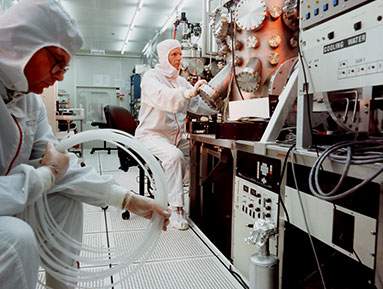
    Prof. Amos Breskin develops advanced radiation detectors, which have an important impact on many fields of research, such as particle, nuclear and atomic physics, medical diagnostics, biology and materials science.

     
    Application

    More »

    Full list »

    |
    | | | | | |
    |
  • Magazines and Multimedia
    • Annual Report
    • Interface - Online Magazine
    • The Weizmann International Magazine of Science and People
    • Books
    • Nano Comics
    • Galleries
    • Horizons - Online Magazine
    Annual Report 2011
    Art and Science on the Move
    Administering the Institute
    Research
    Financial Highlights
    Roll of Honor
    Supporting Network
    More »

    Magazines

    Current Issue: Spring 2013
    Interface magazine Spring 2013
    Magazine Sections
    Science Feature Articles
    Made at the Institute
    Time Tunnel

    Archive »

    Latest Videos

    CRASH
    The Race for the Higgs Boson
    • Monitoring Carbon Exchange
    • Thanks for the Memories
    • Quantum Computing
    • Back to Basics - Forward to the Future
    More »
    |
    | | | | | |
    |
  • About the Institute
    • Overview
    • History
    • Virtual Tour
    • Visiting the Institute

    Overview

    • Multidisciplinary Research
    • Facts and Figures
    • Pioneering Progress
    • Training Future Scientists
    • Science is for Sharing
    • Advancing Israel
    • New Horizons
    • Beauty in Science

    History

    Dr. Chaim Weizmann

    Chaim Weizmann was born in 1874 to a traditional Jewish family in the small town of Motol in White Russia (Belarus). After graduating with honors from the Real-Gymnasium in Pinsk, he decided to establish himself professionally

    More »
    Weizmann House
    • History and Architecture
    • The Collection
    • The Tour
    • The Garden
    • The Grave
    • Erich Mendelsohn
    • The Presidential Car Vintage Wheels

    Visiting the Institute


    • Visitors Center
    • Weizmann House
    • Clore Garden of Science
    |
    | | | | | |
    |
  • Weizmann Institute Homepage
Home » Press Room » Press Releases
News
  • Press Releases
    • English
    • Hebrew
    • Spanish
    • French
    • German
  • In the News
  • Subscribe to Press Releases
  • Honors and Awards
  • Visits
  • Events

twitter block


Follow @WeizmannScience

Bureau Of Missing Masses

01 Jun
1997
One of the most intriguing mysteries of astrophysics is the so-called "missing mass" problem: the mass of heavenly bodies as estimated on the basis of how much light they emit is vastly smaller than their mass as calculated through Newton's laws of gravity and motion.

A standard explanation for this conundrum is the supposed existence of invisible or "dark" matter that does not emit light or other radiation and therefore has so far escaped detection. Prof. Mordechai Milgrom of the Weizmann Institute's Condensed Matter Physics Department has proposed a radically different explanation.

According to Milgrom, the mystery disappears if we modify Newton's laws when dealing with gigantic galactic systems. In a study reported in the Astrophysical Journal (March 20, 1997, Vol. 478, No. 1), Milgrom provides new evidence for this theory, and applies it to the largest definable bodies of mass known to exist - galaxy superclusters having the form of long threads and referred to as large-scale filaments.

Milgrom maintains that Newtonian physics works fine for celestial bodies such as planets and stars, but not for more complex groupings of these bodies. For example, according to Newton's law of inertia, the force (F) required to produce any level of acceleration (a) of a body of mass (m) is equal to m times a , or F = ma . Milgrom claims that for very small accelerations - like those in complex heavenly configurations such as galaxies - force is proportional to the square of the acceleration and not to just the acceleration itself.

These and other proposed modifications of Newtonian physics would have a major impact on inquiries into the origin and composition of the universe.

In previous studies Milgrom's calculations were applied to galaxies (measuring tens of thousands of light years across), galaxy clusters (a few million light years in diameter) and galaxy superclusters (some 10 million light years in diameter). In the latest study, his calculations are extended to the large-scale filaments, which are tightly packed bunches of galaxy superclusters with a length of some 200 million light years each. If the mass of such bodies is determined in accordance with Milgrom's theory, referred to as MOdified Nonrelativistic Dynamics, then it is possible to account for all the matter estimated on the basis of the light they emit.

The Weizmann Institute of Science is a major center of scientific research and graduate study located in Rehovot, Israel
Tags:
  • Astrophysics,
  • Condensed Matter Physics,
  • Dark matter,
  • Galaxy,
  • Missing mass ,
  • Mordehai Milgrom,
  • ""
  • Print this page »

Search Press Releases

Related Articles

Weizmann Institute Astrophysicist Hot on the Tracks of a New "Strange" Star
Zooming Star Points to Supermassive Black Hole at the Center of the Milky Way
Prof. Daniel Zajfman nominated as next President of the Weizmann Institute
Time in Space
More Related links »

Press RoomRSS

16 May 2013
Weather on the Outer Planets Only Goes So Deep
18 Apr 2013
Neural Activity in Bats Measured In Flight
18 Mar 2013
Causing Collapse

Full press release list »

In The NewsRSS

21 Nov 2012
Jerusalem Post
Science and Art

All in the news »

Download our FREE Interface Magazine App for iPad and Android

Secondary Links

  • Contact Us
  • Visit Us
  • How to Get Here
  • Campus Map
  • Site Map
  • Privacy
  • Terms of Use
  • Supporting Committees
  • Credits

Get RSS
© Weizmann Institute of Science 2012. All rights reserved
Follow us on:
[Jump to Top] [Jump to Main Content]