[[Skip Header and Navigation] [Jump to Main Content]
« עברית
  • Home
  • News
    • Press Releases
    • In the News
    • Subscribe to Press Releases
    • Honors and Awards
    • Visits
    • Events

    Press Releases

    16 May 2013
    Weather on the Outer Planets Only Goes So Deep
    18 Apr 2013
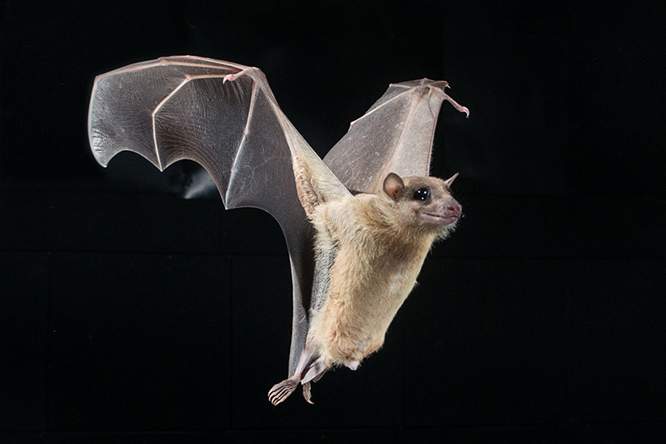
    Neural Activity in Bats Measured In Flight
    18 Mar 2013
    Causing Collapse

    More »

    Research Highlights

    GeneCards
    Noncoding Sequences Get Equal Listing

    A greatly expanded database will give scientists around the world a powerful new tool for life sciences research

    gut cells
    The Spies Inside

    How does the immune system in the gut distinguish between helpful microbes and those that wish us harm?

    Ron Diskin
    Mutations Trump Invasion

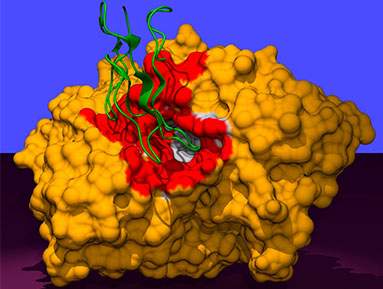
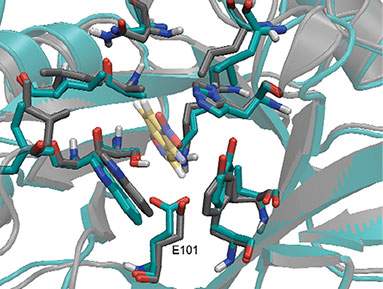
    The process of HIV infection is just one of the subjects protein researcher Dr. Ron Diskin is investigating in his new lab

    More »

    Honors & Awards

    Dr. Zohar Komargodski has been awarded the Gribov Medal by the EPS High Energy Particle Physics Division Prizes
    More »

    Full list »

    |
    | | | | | |
    |
  • Research
    • By Subject
    • What We Are Doing About:
    • From Basic Research to Benefiting Humanity
    • Shaping the Future

    By Subject

    Alternative Energy Materials Science
    Astrophysics Mathematics
    Biochemistry  Molecular Cell Biology
    Bioinformatics Nanoscience
    Biomedical Biology Neuroscience
    Cancer Particle Physics
    Chemistry Physics
    Computer Science Plant Sciences
    Environment Quantum Physics
    Evolution Scientific Archaeology
    Genetics Structural Biology

    What We Are Doing About:

    • Cancer
    • Diabetes
    • The Environment
    • Nanoscience
    • Energy

    Benefiting Humanity

    Prof. Amos Breskin
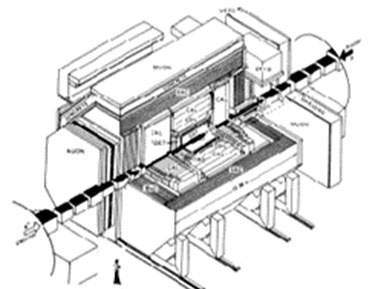
    Prof. Amos Breskin develops advanced radiation detectors, which have an important impact on many fields of research, such as particle, nuclear and atomic physics, medical diagnostics, biology and materials science.

     
    Application

    More »

    Full list »

    |
    | | | | | |
    |
  • Magazines and Multimedia
    • Annual Report
    • Interface - Online Magazine
    • The Weizmann International Magazine of Science and People
    • Books
    • Nano Comics
    • Galleries
    • Horizons - Online Magazine
    Annual Report 2011
    Art and Science on the Move
    Administering the Institute
    Research
    Financial Highlights
    Roll of Honor
    Supporting Network
    More »

    Magazines

    Current Issue: Spring 2013
    Interface magazine Spring 2013
    Magazine Sections
    Science Feature Articles
    Made at the Institute
    Time Tunnel

    Archive »

    Latest Videos

    CRASH
    The Race for the Higgs Boson
    • Monitoring Carbon Exchange
    • Thanks for the Memories
    • Quantum Computing
    • Back to Basics - Forward to the Future
    More »
    |
    | | | | | |
    |
  • About the Institute
    • Overview
    • History
    • Virtual Tour
    • Visiting the Institute

    Overview

    • Multidisciplinary Research
    • Facts and Figures
    • Pioneering Progress
    • Training Future Scientists
    • Science is for Sharing
    • Advancing Israel
    • New Horizons
    • Beauty in Science

    History

    Dr. Chaim Weizmann

    Chaim Weizmann was born in 1874 to a traditional Jewish family in the small town of Motol in White Russia (Belarus). After graduating with honors from the Real-Gymnasium in Pinsk, he decided to establish himself professionally

    More »
    Weizmann House
    • History and Architecture
    • The Collection
    • The Tour
    • The Garden
    • The Grave
    • Erich Mendelsohn
    • The Presidential Car Vintage Wheels

    Visiting the Institute


    • Visitors Center
    • Weizmann House
    • Clore Garden of Science
    |
    | | | | | |
    |
  • Weizmann Institute Homepage
Home » Press Room » Press Releases
News
  • Press Releases
    • English
    • Hebrew
    • Spanish
    • French
    • German
  • In the News
  • Subscribe to Press Releases
  • Honors and Awards
  • Visits
  • Events

twitter block


Follow @WeizmannScience

Why Chemotherapy Fails

29 May
2012
Bioinformatics

Research led by Weizmann Institute scientists shows why leukemia often returns


The fight against cancer is not won in a single battle: Long after a cancer has been beaten into remission, it can return. The reason for this is under debate, and much is unclear. New research led by Weizmann Institute scientists shows that, at least for one type of blood cancer, the source of cancer recurrence is in a set of cells that do not proliferate as quickly as regular cancer cells, and thus able to survive chemotherapy. The findings, which appeared today in the journal Blood, have some important implications for the future of the war on cancer.

Cancer involves a breakdown in the mechanism that regulates the pace of cell division. When this happens, cells divide rapidly, leading to unchecked growth that overruns the body. The most common chemotherapy drugs are those which specifically attack cells that are undergoing rapid division, and these, indeed, often destroy all the cancer and cure the patient.

But there are also quite a few leukemia patients who go through chemotherapy only to have the cancer return. Why does this happen? Several explanations have been proposed. One is that the chemotherapy does not kill every last cancer cell, leaving a few to continue dividing out of control until the disease returns in full force. A second explanation proposes that chemotherapy does get all the regular cancer cells, but there is another type of cancer cell that hides in the body. As opposed to the rapidly dividing majority of cancer cells, these undergo slow division, enabling them to evade the chemotherapy drugs. These insidious cells can give rise to new rapidly-dividing cancer cells, which is why they are known as “cancer stem cells.”
Which explanation is correct? The debate is an important one because, if the first explanation holds true, improving upon the existing treatments might help, while the second implies that a completely different approach to treatment will be needed to root out the slowly dividing cancer stem cells.

To attempt to resolve that debate, the team of Prof. Ehud Shapiro of the Weizmann Institute’s Biological Chemistry, and Applied Mathematics and Computer Sciences Departments, worked with scientists and physicians from Rambam Medical Center and the Technion, both in Haifa. They used a method of reconstructing cell lineage trees that has been developed over the past few years in Shapiro’s lab. This method is based on the fact that the genetic material in different body cells accumulates unique mutations during cell division, and these mutations are passed on to daughter cells during cell division. By comparing mutations, one can map out cells’ detailed family trees, and thus determine how far back they share a common ancestor. The end product of this analysis is a tree that reconstructs the genealogy of the cells from their earliest forebears at the base of the tree to the youngest cells at the tips of the branches.

To reconstruct the cancer cell lineage tree, the team used two sets of blood samples: the first taken from leukemia patients right after the disease was diagnosed, and the second from those patients who had undergone chemotherapy and in whom the cancer had returned. The researchers could then trace the relationships of the recurring cancer cells back to see if they descended from the original cancer cells. The lineage tree showed that, at least in some of the patients, the source of the renewed cancer was not in the rapidly proliferating cancer cells, but rather in cells that were close to the root of the tree. These cells had only divided a few times. In other words, the cancer arose from cells that divide very slowly, making them resistant to the attacks of chemotherapy drugs.
 

Hairy cell leukemia       Leukemia cells. Image: Wikimedia commons, NIH


Shapiro: “We know that in many cases, chemotherapy alone is not able to cure leukemia. Our results suggest that to completely eliminate it, we must look for a treatment that will not only eliminate the rapidly dividing cells, but also target the cancer stem cells that are resistant to conventional treatment.”


Participating in the research were Dr. Liran Shlush of the Technion’s Rappaport Faculty of Medicine and Rambam Medical Center; Noa Chapal-Ilani and Dr. Rivka Adar of the Weizmann Institute; Profs. Karl Skorecki and Jacob Rowe of the Technion; Dr. Tsila Zuckerman of Rambam and the Technion; Prof. Clara D. Bloomfield of Ohio State University; and additional investigators.
 

Prof. Ehud Shapiro’s research is supported by the Paul Sparr Foundation; Miel de Botton, UK. The Carolito Stiftung; and the European Research Council. Prof. Shapiro is the incumbent of the Harry Weinrebe Professorial Chair of Computer Science and Biology. His research is also supported by an ERC Advanced Grant.

 
Tags:
  • Applied Mathematics and Computer Science,
  • Biological Chemistry,
  • Cancer,
  • Cancer cell survival,
  • Cell lineage,
  • Ehud Shapiro,
  • ""
  • Print this page »

Search Press Releases

Related Articles

World's Most Prestigious Award in Computer Science to Weizmann Institute's Prof. Amir Pnueli
The Envelope Please....
Found in the Desert
Practical Math
More Related links »

Edit block | Delete block

Download our FREE Interface Magazine App for iPad and Android

Secondary Links

  • Contact Us
  • Visit Us
  • How to Get Here
  • Campus Map
  • Site Map
  • Privacy
  • Terms of Use
  • Supporting Committees
  • Credits

Get RSS
© Weizmann Institute of Science 2012. All rights reserved
Follow us on:
[Jump to Top] [Jump to Main Content]